Tata and Intel Launch Landmark Partnership to Build India’s First Major Chip Foundry and Accelerate AI-Powered PCs

Tata and Intel Launch Landmark Partnership to Build India’s First Major Chip Foundry and Accelerate AI-Powered PCs
By
Calder Monroe
Last updated:
December 9, 2025
First Published:
December 9, 2025

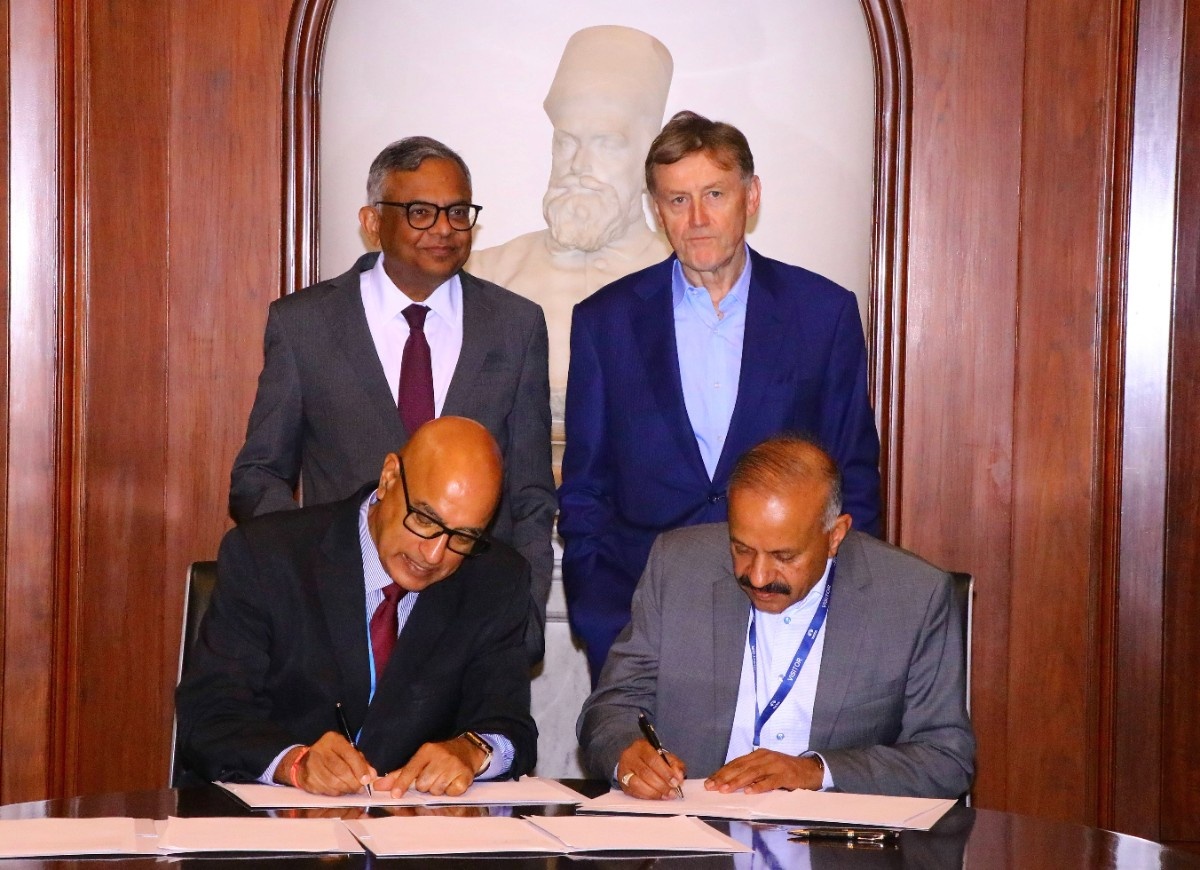
Photo: Tata Electronics
A Major Breakthrough for India’s Semiconductor Vision
Tata Electronics and Intel have entered a strategic partnership that could redefine India’s position in the global semiconductor arena. The agreement, announced this week, outlines a plan to manufacture and package Intel’s chips at Tata’s upcoming fabrication and assembly facilities — signaling one of the most ambitious steps India has taken toward building a self-reliant electronics supply chain.
The collaboration supports India’s long-term goal of reducing dependence on imported chips and building a resilient local ecosystem. Tata described the partnership as a foundational step toward creating an end-to-end electronics and semiconductor value chain entirely based within the country.
What the Partnership Will Build
Tata Electronics is currently investing billions of dollars to develop what is expected to be India’s first true pure-play semiconductor foundry. This includes:
- A fabrication plant capable of handling high-volume production of advanced semiconductor wafers
- Facilities for chip assembly, packaging, and testing
- Manufacturing lines aimed at supplying chips for AI systems, automotive features, data storage, and high-performance computing
With Intel now positioned as a prospective customer, Tata’s upcoming foundry will have access to world-class chip designs right from the start. The partnership will also allow both companies to explore domestic packaging for Intel products — an essential step to move India closer to full-stack semiconductor capability.
The scale of this build-out could support monthly wafer capacities that align with global mid-range chip fabs, and industry projections suggest that the combined manufacturing and OSAT facilities may employ tens of thousands of skilled workers across the supply chain.
Localized AI PCs and Advanced Computing Systems
The alliance goes beyond semiconductor fabrication. Intel and Tata also plan to develop AI-optimized PCs specifically designed for Indian consumers and businesses. These systems are expected to integrate next-generation AI accelerators, security features, and performance enhancements tailored for education, enterprise, and creative industries.
India’s PC market has been one of the fastest-growing globally, boosted by hybrid work, digital learning, and expanding access to AI applications. This makes India an ideal launchpad for a new generation of domestically produced AI-ready computers.
India’s Larger Push Toward Chip Independence
India currently imports almost all of its semiconductors despite being one of the world’s largest consumers of electronics. The government’s “India Semiconductor Mission” aims to reverse this trend by approving large-scale manufacturing and design projects nationwide. The combined value of approved semiconductor initiatives already exceeds $18 billion, with more expected as global supply chains diversify.
This mission has drawn increasing interest from major technology and electronics firms. The Tata–Intel partnership stands out as one of the most significant collaborations yet, combining India’s industrial scale with Intel’s semiconductor leadership.
Why This Partnership Matters
This alliance represents a pivotal moment for India’s technological future:
- It positions the country to become a major semiconductor manufacturing hub
- It encourages technology transfer, advanced skill development, and high-value job creation
- It shortens India’s supply chain for electronics, reducing reliance on global bottlenecks
- It supports the rise of an India-made computing ecosystem, especially in AI, automotive, and data infrastructure
Intel’s leadership has called the partnership a tremendous opportunity to scale rapidly in one of the world’s fastest-growing compute markets — a sentiment that reflects India’s expanding role in next-generation technology.
The Tata–Intel collaboration is more than a business agreement — it is a structural shift that could shape India’s industrial and technological capabilities for decades.
.webp)
Popular articles



Subscribe to unlock premium content
Immersive Worlds on Stage

Freedom on Wheels in Portugal

a very very descriptive final thoughts

Immersive Worlds on Stage
Freedom on Wheels in Portugal
Immersive Worlds on Stage