Stripe Explores Potential PayPal Deal as Shares Jump on Takeover Buzz

Stripe Explores Potential PayPal Deal as Shares Jump on Takeover Buzz
By
Calder Monroe
Last updated:
February 25, 2026
First Published:
February 25, 2026

Getty Images
Market Reaction Signals Renewed Investor Interest
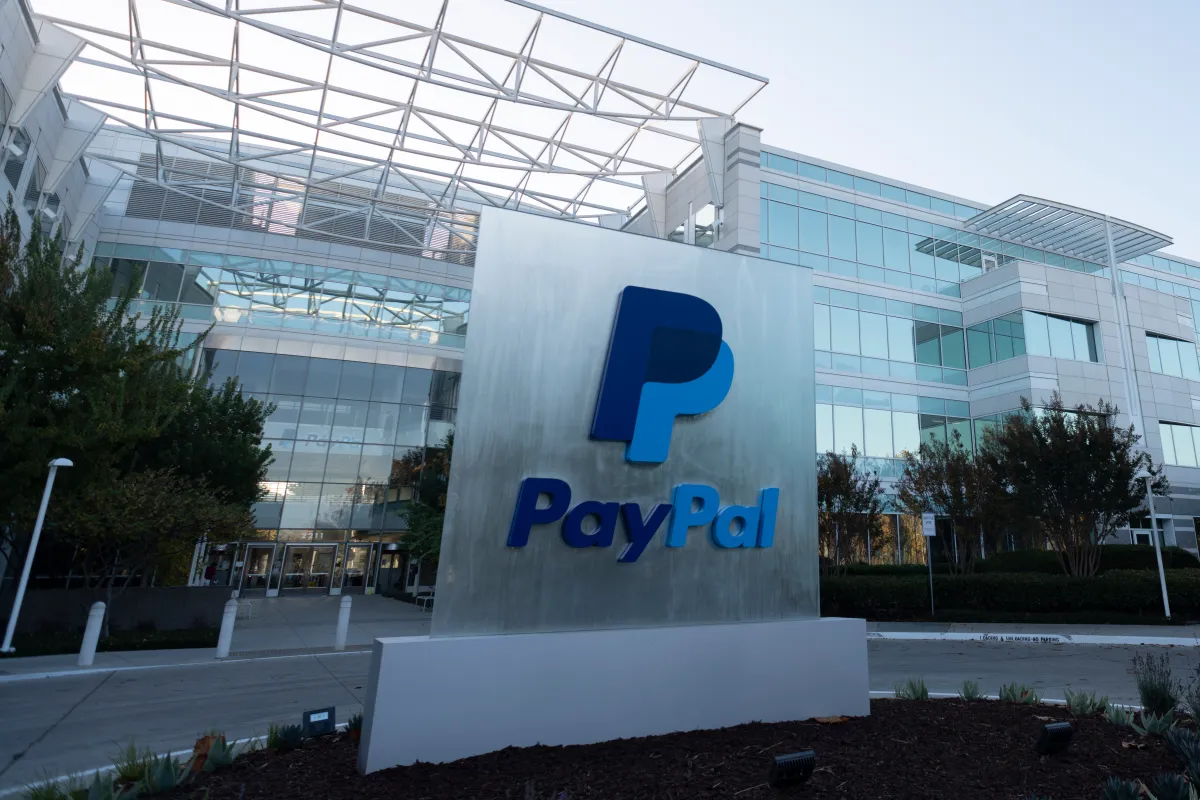
Shares of PayPal climbed close to 7% after reports surfaced that privately held fintech powerhouse Stripe is evaluating a possible acquisition of the payments giant. The surge added billions to PayPal’s market capitalization in a single session, reflecting renewed investor optimism after a prolonged period of underperformance.
According to a report by Bloomberg, discussions are still preliminary and could involve a full takeover or the purchase of specific business units. While neither company confirmed the talks, the mere possibility of consolidation in the digital payments sector was enough to trigger a sharp market response.
PayPal’s Challenging Year Sets the Stage
The potential deal comes at a pivotal moment for PayPal, which has struggled with slowing transaction growth, margin pressure, and rising competition from newer fintech players and big-tech payment ecosystems.
The company’s stock has declined roughly 19% year-to-date and lost about one-third of its value over the past year, erasing tens of billions in shareholder value. Investor concerns intensified after the company issued softer-than-expected profit guidance earlier this month.
Leadership changes are also underway. PayPal recently named Enrique Lores, formerly CEO of HP, as its incoming chief executive, with his tenure set to begin in early March. Analysts view the leadership shift as an attempt to accelerate operational efficiency and reposition the company for its next growth phase.
Stripe’s Rapid Growth and Strategic Position
Meanwhile, Stripe continues to strengthen its position as one of the most valuable private fintech firms globally. Following a recent secondary share sale for employees and investors, the company reached a valuation of approximately $159 billion, up from about $91.5 billion a year earlier.
Stripe’s expanding product ecosystem — spanning payments, billing, fraud prevention, and financial infrastructure — has helped it capture a growing share of enterprise and developer-driven commerce. The company recently acquired billing platform Metronome, signaling its intention to deepen recurring-revenue capabilities.
In a recent interview with CNBC, co-founder and president John Collison indicated that Stripe is prioritizing product expansion and long-term growth rather than pursuing an initial public offering in the near term. That strategic flexibility could enable the company to explore large-scale acquisitions if compelling opportunities arise.
Industry Implications of a Potential Deal
A transaction between Stripe and PayPal — even a partial one — would represent one of the most significant consolidations in fintech history. Combined, the companies process trillions of dollars in payment volume annually and serve millions of merchants worldwide.
Such a move could reshape competitive dynamics across online checkout, digital wallets, and merchant services, potentially creating a more vertically integrated payments ecosystem. Analysts note that consolidation could also drive cost synergies, expand global reach, and accelerate innovation in areas like embedded finance and cross-border payments.
What Comes Next
At this stage, the talks remain exploratory, and there is no certainty that a transaction will materialize. Still, the development underscores how quickly sentiment can shift in the fintech sector, where valuations, growth expectations, and competitive positioning evolve rapidly.
For investors and industry observers alike, the situation highlights a broader theme: as digital payments mature, scale and diversification are becoming increasingly critical — and strategic deals may play a central role in determining the next generation of market leaders.

Popular articles


Subscribe to unlock premium content
Minimalism in Motion

Custom Glow in South Korea

Revving Up Revenue with Young Luxury Buyers

Minimalism in Motion
Custom Glow in South Korea
Minimalism in Motion