Stellantis Brings Back the Ram TRX V-8 as Emissions Pressure Eases

Stellantis Brings Back the Ram TRX V-8 as Emissions Pressure Eases
By
Junia Wells
Last updated:
January 2, 2026
First Published:
January 2, 2026

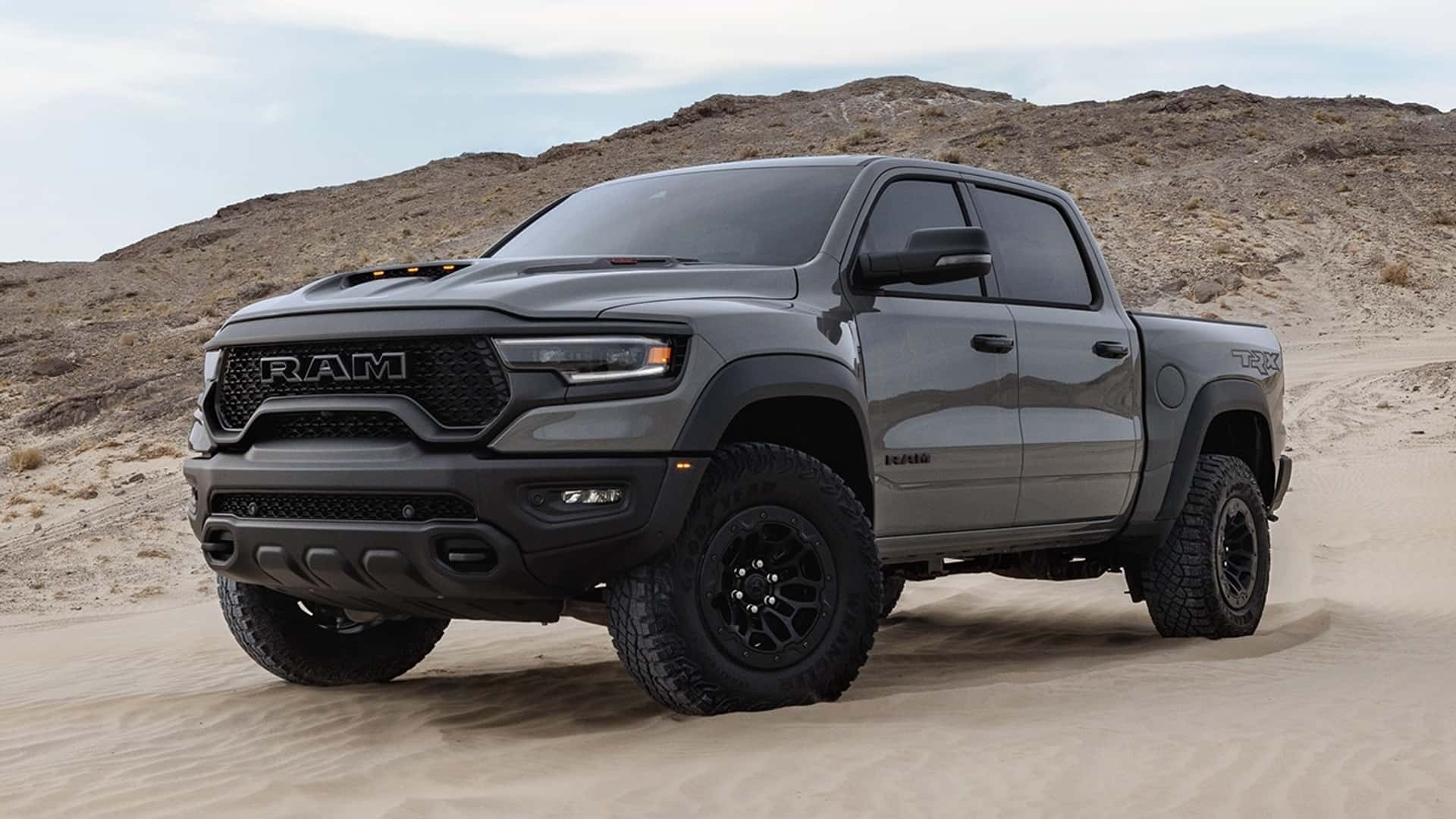
Photo: inkl
A High-Profile Comeback for Ram
Stellantis is reviving one of its most extreme performance trucks, announcing the return of the Ram TRX, a gas-powered V-8 pickup that had been shelved amid tighter emissions targets. The 2027 Ram 1500 SRT TRX is scheduled to arrive in late 2026, with pricing starting at $99,995, excluding destination fees.
The decision reflects both a shift in regulatory conditions and a broader strategic reset under Ram CEO Tim Kuniskis, who returned from retirement last year to lead a turnaround of Stellantis’ U.S. brands. The TRX was previously produced from model years 2021 through 2024 before being discontinued as the automaker scaled back its reliance on large-displacement engines.
Performance Remains the Core Identity
At the heart of the revived TRX is Stellantis’ supercharged 6.2-liter Hellcat V-8, delivering 777 horsepower and 680 pound-feet of torque. Ram says the truck can accelerate from 0 to 60 mph in 3.5 seconds and reach a top speed of 118 mph, positioning it as the most powerful production gas-powered pickup on the market.
Kuniskis described the return as a deliberate escalation rather than a simple revival, emphasizing that the new TRX has been pushed further to reinforce Ram’s performance credentials. While sales volumes are expected to remain limited due to the truck’s premium price, the TRX is designed to function as a halo vehicle, drawing attention to the brand and lifting demand across the broader Ram lineup.
Pricing Reflects a Shift Upmarket
The 2027 TRX’s base price of $99,995 rises to $102,590 once the mandatory $2,595 destination charge is included. By comparison, the original TRX launched in 2020 at $71,690, including destination, highlighting how inflation, higher input costs, and repositioning toward ultra-premium performance have reshaped pricing.
Alongside the TRX announcement, Ram also revealed a new 6.7-liter Cummins high-output turbo diesel engine for the 2027 Ram Power Wagon heavy-duty truck, producing 430 horsepower and an industry-leading 1,075 pound-feet of torque. The move reinforces Stellantis’ renewed emphasis on internal combustion options where customer demand remains strong.
Regulatory Rollbacks Change the Equation
The TRX’s return marks a clear departure from Stellantis’ earlier plans to phase out V-8 engines in response to stricter fuel economy penalties. Those policies have since been weakened or rolled back under the Trump administration, reducing regulatory pressure on high-emissions vehicles.
Kuniskis acknowledged that the regulatory shift helps, but said the strategic direction would have been pursued regardless. The broader goal is to reverse years of declining U.S. sales and reassert Stellantis’ presence in its most profitable market segments.
Rebuilding After a Steep Sales Decline
Stellantis’ U.S. business suffered significant erosion between 2021 and 2024 under former CEO Carlos Tavares, falling from the fourth-largest automaker in the U.S. to sixth. Sales through the third quarter of last year were 6% lower year over year, and industry estimates suggest Stellantis will finish the year with roughly 1.25 million U.S. vehicle sales, down 4.4% from 2024 and far below the more than 2 million vehicles sold in 2020.
With overall U.S. auto sales expected to be flat or slightly lower in 2026, analysts say Stellantis will need to win customers away from competitors rather than rely on industry growth. Kuniskis said both Ram and Jeep, the company’s two most important domestic brands, are now positioned to capture share as new products roll out.
Jeep Undergoes Its Own Reset
Ram is not the only Stellantis brand undergoing a strategic overhaul. Jeep, which peaked at more than 973,000 U.S. sales in 2018, has endured multiple consecutive years of declines. Under Jeep CEO Bob Broderdorf, the brand is executing a reset focused on pricing discipline, simplified model lines, and richer standard features.
The strategy streamlines Jeep’s lineup across segments, reducing overlap between models such as the Compass, Cherokee, Grand Cherokee, and Grand Wagoneer. Upcoming launches include a revived Cherokee midsize SUV and the all-electric Recon, inspired by the Wrangler’s off-road heritage.
Broderdorf has said Jeep remains profitable despite lower volumes and pricing adjustments, and that the changes are laying the foundation for sustainable growth. While 2025 could mark Jeep’s first U.S. sales increase since 2018, leadership acknowledges the outcome remains uncertain.
A Broader Bet on Performance and Identity
The resurrection of the Ram TRX underscores a broader recalibration at Stellantis, one that prioritizes brand identity, performance credibility, and emotional appeal alongside electrification. As regulatory pressure eases and consumer demand for high-powered trucks remains resilient, Stellantis is signaling that V-8 engines still have a strategic role to play in its North American recovery.
.webp)
Popular articles



Subscribe to unlock premium content
Iceland’s Geothermal Revolution
Bali’s Digital Detox Revolution

Step Into the Future of Art

Iceland’s Geothermal Revolution
Bali’s Digital Detox Revolution
Iceland’s Geothermal Revolution