Starbucks Workers Extend Three-Week Strike With Major Rally in NYC

Starbucks Workers Extend Three-Week Strike With Major Rally in NYC
By
Rachel Steinberg
Last updated:
December 5, 2025
First Published:
December 5, 2025

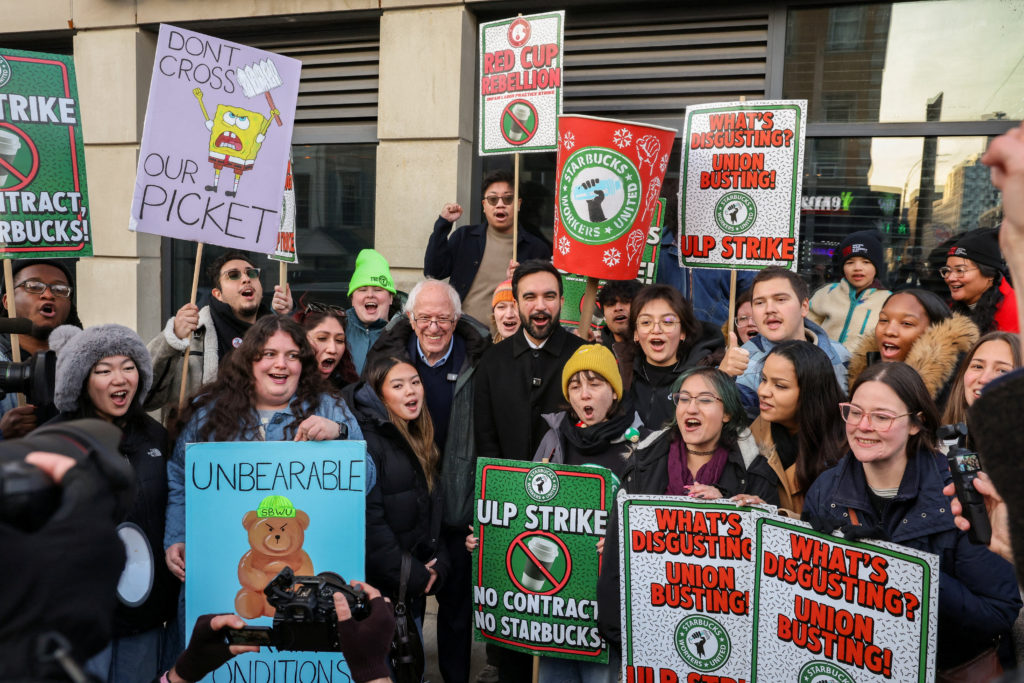
Photo: PBS
A Growing Labor Fight in the Heart of Manhattan
Starbucks Workers United staged a major rally outside the Empire State Building as its open-ended strike pushed into a third consecutive week, with no progress toward resolving the conflict. The demonstration drew several hundred workers, supporters, and union leaders to one of the busiest holiday areas in New York City, amplifying pressure on Starbucks during its peak sales season.
The Empire State Building location is symbolic. It houses a three-floor Starbucks Reserve store and the company’s regional headquarters, turning the rally into both a protest and a direct message to leadership.
Members of major unions, including the AFL-CIO and the Service Employees International Union, joined baristas in chants demanding a contract and accusing the company of anti-union behavior. SEIU President April Verrett emphasized that the strike represents a broader shift in U.S. labor sentiment, saying workers “are fed up with the status quo.”
Police arrested 12 demonstrators for blocking entrances to the building as the crowd grew throughout the afternoon.
Why Baristas Are Striking and What They Want
The strike began on Starbucks Red Cup Day last month — historically one of the company’s highest-traffic days — as workers pushed for improved scheduling, higher wages, and resolution of what the union describes as hundreds of unfair labor practice charges.
Of the 145 stores participating in the strike, 55 remained closed this week. Workers say store closures demonstrate the seriousness of their demands and the strain placed on understaffed locations nationwide.
Negotiations between the company and the union collapsed late last year, and neither side has returned to formal bargaining despite months of public pressure and repeated calls for mediation. The ongoing strike has not restored talks, and both parties continue to blame the other for the stalemate.
Impact on Starbucks’ Operations and Holiday Season
While the strike is disruptive, Starbucks maintains that its overall business remains intact. The company says 99% of its 17,000 U.S. stores are operating normally and that the strike has not caused meaningful financial harm. CEO Brian Niccol told employees that this year’s Red Cup Day was the strongest in company history, even as hundreds of baristas picketed nationwide.
A strong holiday season is critical to Starbucks’ broader turnaround strategy. The company recently ended nearly two years of declining same-store sales, making the final quarter of the year strategically important. Although past strikes have affected less than 1% of all U.S. stores, prolonged labor unrest poses risks to productivity, scheduling stability, and brand perception.
As part of its “Back to Starbucks” initiative, the company has pledged a $500 million investment to improve the employee experience, including updated scheduling tools, technology upgrades, and staffing increases. However, union members argue these measures fall short of formal contract guarantees.
Legal Pressure Mounts Amid the Fair Workweek Settlement
The New York rally followed a major legal setback for Starbucks, which recently agreed to pay $38.9 million after the city found the company had violated the Fair Workweek Law more than 500,000 times since 2021. The law requires predictable scheduling, advance notice of work hours, and limits on reducing employee shifts without business justification.
The city’s Department of Consumer and Worker Protection confirmed that the settlement and the strike occurring simultaneously were coincidental, but the timing highlights the complex regulatory environment Starbucks is navigating. Other major chains — including Chipotle — have also faced multimillion-dollar penalties under the same law, suggesting widespread compliance concerns across the industry.
Starbucks says it is committed to meeting legal standards while continuing to improve workplace conditions. The company maintains the Fair Workweek rules are “challenging” but insists they will adhere to all requirements.
Political Support for Baristas Intensifies
The strike has drawn high-profile political attention. New York City Mayor Eric Adams, Mayor-elect Zohran Mamdani, and Senator Bernie Sanders all expressed support for Starbucks workers in recent days. Sanders joined Brooklyn baristas earlier this week, continuing his long-running advocacy for service-sector labor rights.
Both Starbucks and Workers United claim they are ready to negotiate, but each insists the other must return to the bargaining table first. Hundreds of union delegates previously rejected an economic proposal from Starbucks in April, underscoring the deep divide that remains.
As the strike moves through its third week, pressure continues to build on Starbucks from workers, political allies, and a growing list of regulatory challenges. For now, there is still no sign of when contract negotiations will resume or how long picket lines will remain in place.
.webp)
Popular articles



Subscribe to unlock premium content
Immersive Worlds on Stage
Freedom on Wheels in Portugal

a very very descriptive final thoughts

Immersive Worlds on Stage
Freedom on Wheels in Portugal
Immersive Worlds on Stage