South Korea’s Stock Market Doubles in 2026 as Goldman Sachs Sees Further 35% Upside Potential

South Korea’s Stock Market Doubles in 2026 as Goldman Sachs Sees Further 35% Upside Potential
By
Augusta Parker
Last updated:
June 3, 2026
First Published:
June 3, 2026


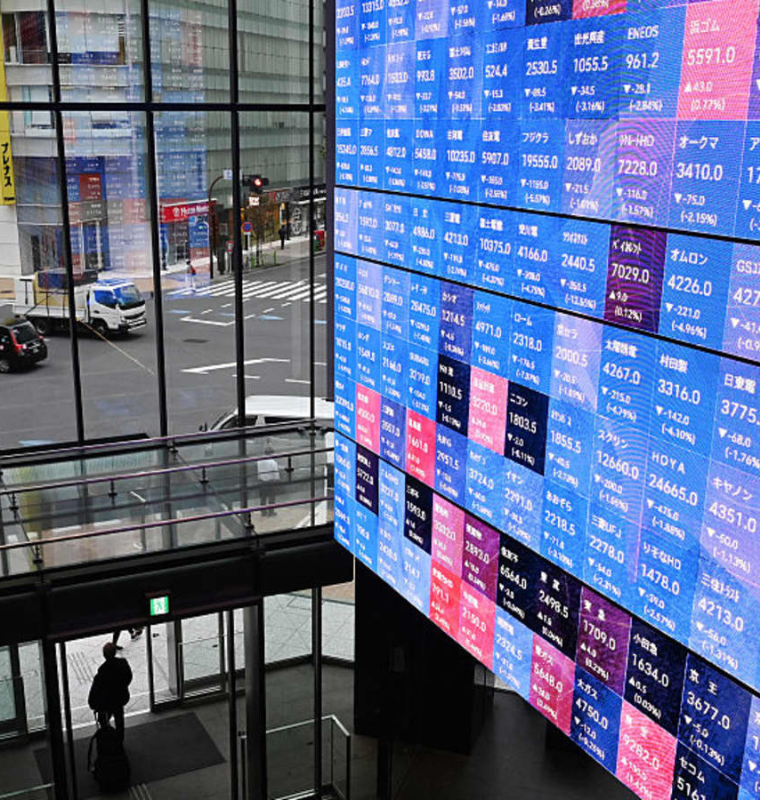
Photo: RADICE
South Korea’s equity market has staged one of the most dramatic rallies in global finance this year, with the benchmark Kospi index doubling in value in 2026 alone. Despite the extraordinary surge, Goldman Sachs believes the rally is not yet over, projecting further upside of more than 35% over the next 12 months.
The investment bank raised its Kospi target to 12,000, signaling continued confidence in the country’s technology-heavy equity landscape, particularly its world-leading semiconductor manufacturers.
The upgrade reinforces a broader market narrative that artificial intelligence demand is reshaping global equity leadership, with South Korea positioned as a central beneficiary due to its dominance in memory chip production.
Goldman Sachs Raises Outlook on Earnings Strength
Goldman Sachs strategists lifted their 12-month Kospi forecast to 12,000, citing stronger-than-expected corporate earnings and sustained momentum in the global semiconductor cycle.
According to the bank, Asian equity performance continues to be driven primarily by earnings growth rather than valuation expansion. The analysts, led by Timothy Moe, maintained an overweight stance on South Korean equities, highlighting what they describe as an underappreciated duration in the memory chip upcycle.
They also pointed to potential re-rating catalysts as investor sentiment toward the semiconductor sector continues to strengthen.
The revised forecast implies a potential upside of more than one-third from current index levels, even after a year in which the Kospi has already doubled.
A Historic Rally Driven by AI and Semiconductors
The Kospi has surged approximately 100% year-to-date, making it one of the best-performing major equity indices globally.
However, the rally has been far from broad-based.
Instead, performance has been heavily concentrated in a small number of large-cap technology companies, particularly SK Hynix and Samsung Electronics, both of which dominate global memory chip production.
These companies have benefited directly from surging demand for high-performance chips used in artificial intelligence data centers, cloud computing infrastructure, and advanced computing systems.
As AI adoption accelerates worldwide, demand for high-bandwidth memory and next-generation semiconductor components has created a powerful earnings tailwind for Korean chipmakers.
Market Breadth Concerns Emerge Amid Heavy Concentration
Despite strong index performance, analysts have raised concerns about the narrow leadership of the rally.
Market strategists at BTIG noted that recent gains have been driven disproportionately by a small group of heavyweight stocks, which now account for nearly half of the index’s total market capitalization.
According to BTIG’s Jonathan Krinsky, recent trading sessions have shown negative market breadth even as the headline index continues to rise, highlighting the extent of concentration risk within the rally.
This dynamic suggests that while the index is performing strongly, a significant portion of listed companies are not participating in the upside, increasing vulnerability if momentum in leading stocks slows.
Semiconductor Cycle Remains the Core Driver
The semiconductor industry remains the central pillar supporting South Korea’s equity performance.
Market strategists at KB Financial Group emphasized that the so-called “twin towers” of Samsung Electronics and SK Hynix continue to significantly outperform the broader market, with their earnings trajectory closely tied to global chip demand cycles.
Industry analysts note that memory chip pricing has entered a strong recovery phase after a period of oversupply, driven by rapid expansion in AI infrastructure spending by major technology companies in the United States and Asia.
This recovery has led to improved margins, stronger cash flows, and increased capital expenditure across the semiconductor supply chain.
As a result, the semiconductor cycle is now seen as the dominant force shaping South Korea’s equity market direction.
Economic Weakness Contrasts With Market Strength
While equity markets continue to surge, South Korea’s underlying economic conditions present a more cautious picture.
Economists highlight several structural challenges, including sluggish wage growth, weak employment creation, and pressure from rising energy import costs.
Additionally, concerns persist over the competitiveness of Korean exporters as Chinese manufacturers continue to expand their global market share in key industrial sectors.
This divergence between strong financial markets and weaker macroeconomic fundamentals has raised questions about the sustainability of the rally.
Some analysts warn that equity performance may be increasingly disconnected from domestic economic realities, driven instead by global AI investment flows and semiconductor demand cycles.
Policymaker Challenges Increase Amid Asset Price Growth
The strength in equity and property markets has added complexity to the policy environment.
While asset prices have surged, broader economic indicators suggest uneven growth, creating a difficult balancing act for policymakers.
Authorities are faced with the challenge of managing financial stability risks while supporting economic activity in an environment where household consumption and labor market conditions remain relatively subdued.
Rising asset prices, particularly in equities and real estate, contrast sharply with slower wage growth and persistent cost-of-living pressures, widening economic disparities across households.
Global Investors Continue to Favor AI-Driven Earnings
Despite risks, global investors remain heavily focused on artificial intelligence as the dominant investment theme shaping global markets.
Goldman Sachs projects approximately 60% earnings-per-share growth across Asia-Pacific equities in 2026, with technology expected to remain the strongest-performing sector.
South Korea’s deep integration into global semiconductor supply chains positions it as a key beneficiary of this trend, particularly as AI infrastructure spending continues to accelerate worldwide.
Investors appear willing to tolerate valuation concerns and macroeconomic uncertainty in exchange for exposure to what is perceived as one of the most powerful structural growth cycles in global equity markets.
Outlook: Momentum Versus Concentration Risk
The outlook for South Korea’s stock market remains defined by a tension between strong earnings momentum and increasing concentration risk.
On one hand, the AI-driven semiconductor cycle continues to provide powerful support for index performance and corporate profitability. On the other, the heavy reliance on a small number of large-cap technology stocks introduces volatility risks if sentiment or pricing dynamics shift.
For now, however, the combination of global AI demand, improving semiconductor fundamentals, and sustained foreign investor interest continues to support bullish expectations.
Even after a historic doubling in value, analysts like Goldman Sachs believe the market may still have room to run, provided the semiconductor cycle remains intact.
.webp)
Popular articles



Subscribe to unlock premium content
Redefining Luxury Through Experience
.png)
The Rise of Bespoke Adventure on Wheels

Nike’s Custom Sneaker Studios Are Rewriting Urban Culture
.png)
Redefining Luxury Through Experience
The Rise of Bespoke Adventure on Wheels
Redefining Luxury Through Experience