SK Hynix Surpasses Samsung in Annual Profit for the First Time as AI Memory Demand Reshapes Korea’s Chip Industry

SK Hynix Surpasses Samsung in Annual Profit for the First Time as AI Memory Demand Reshapes Korea’s Chip Industry
By
Alina Sinclair
Last updated:
January 29, 2026
First Published:
January 29, 2026

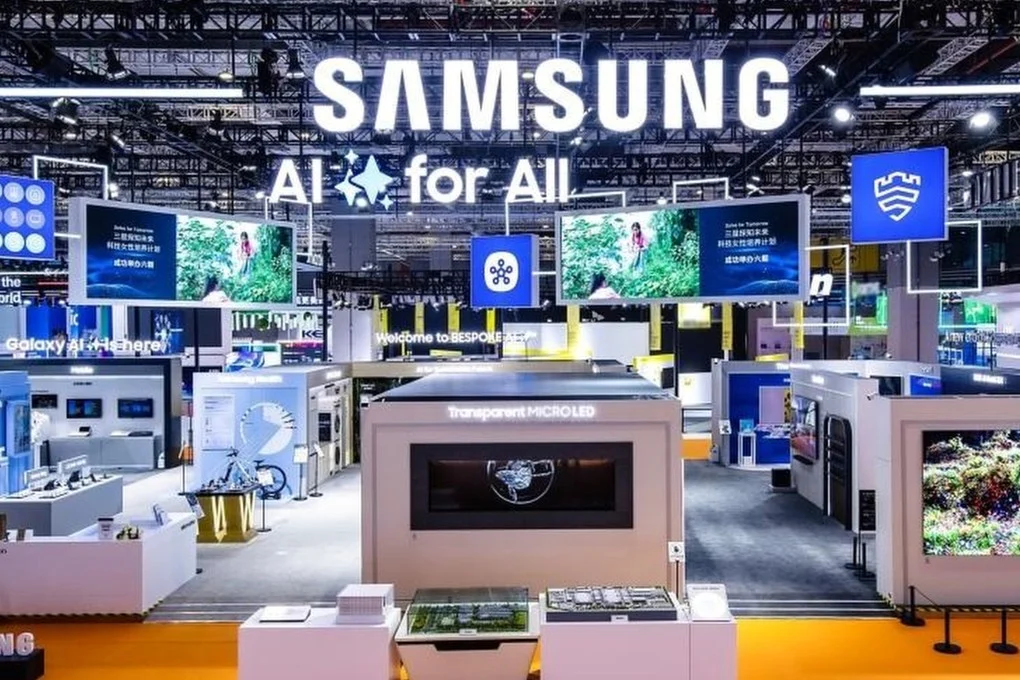
Photo: South China Morning Post
A Historic Turning Point for South Korea’s Chip Giants
For the first time in their long rivalry, SK Hynix has overtaken Samsung Electronics in annual operating profit, marking a defining moment for South Korea’s semiconductor industry. The milestone, achieved in 2025, reflects how artificial intelligence is rapidly transforming the memory chip market and rewarding companies with a focused strategy on AI infrastructure.
SK Hynix reported a record full year operating profit of 47.2 trillion won (approximately $35 billion), surpassing Samsung’s 43.6 trillion won. While Samsung remains a far larger company by overall revenue, the profit comparison highlights how SK Hynix’s deep specialization in memory chips, especially AI focused products, is paying off in a big way.
The results were released back to back this week, with SK Hynix announcing earnings on Wednesday and Samsung following on Thursday, offering a clear snapshot of how differently the two companies are benefiting from the AI boom.
Focus Beats Diversification in the AI Era
A major reason behind SK Hynix’s surge is its narrow focus. The company is almost entirely dedicated to memory semiconductors, while Samsung operates across a wide range of businesses including smartphones, home appliances, displays, and contract chip manufacturing.
Samsung’s memory division generated about 24.9 trillion won in operating profit during 2025, a strong performance on its own, but diluted at the group level by weaker results in consumer electronics and foundry operations. SK Hynix, by contrast, was able to fully capitalize on rising memory prices and booming demand from data centers and AI server manufacturers.
This contrast underscores a broader industry trend: in the current AI cycle, specialization is proving more profitable than diversification.
High Bandwidth Memory Powers SK Hynix’s Lead
At the heart of SK Hynix’s success is its dominance in high bandwidth memory, or HBM, a specialized type of DRAM stacked vertically to deliver extremely fast data transfer speeds. HBM has become essential for training and running large AI models and is widely used in advanced processors from companies such as Nvidia.
SK Hynix is widely regarded as the global leader in HBM, supplying a significant share of memory used in Nvidia’s AI accelerators. According to Counterpoint Research, SK Hynix held an estimated 57% revenue share of the HBM market in the third quarter of last year, compared with Samsung’s 22%. By December, industry analysts said SK Hynix had further strengthened its position as demand accelerated.
MS Hwang, research director at Counterpoint, described SK Hynix as a clear “AI winner” in Asia, pointing to its advantages in both product quality and supply capacity. These strengths have allowed the company to secure long term contracts with major AI chipmakers and cloud service providers, helping drive record profits.
Local media reports this week also suggested that SK Hynix has secured more than two thirds of HBM supply orders for Nvidia’s upcoming Vera Rubin platform, reinforcing its role as a key partner in the next generation of AI hardware.
Beyond HBM: Strength Across the Memory Stack
SK Hynix is not only outperforming in HBM. The company has also edged ahead of Samsung in the broader DRAM market. DRAM, or Dynamic Random Access Memory, is used for temporary data storage in PCs, smartphones, servers, and large scale data centers.
As hyperscalers continue to expand AI infrastructure, demand for both conventional DRAM and advanced HBM has surged. This has supported higher average selling prices across the industry and improved margins for leading suppliers.
Although Samsung reclaimed the top spot in overall memory revenue during the fourth quarter of 2025, SK Hynix maintained its leadership in the most profitable segments tied directly to AI workloads.
Samsung Fights Back with Next Generation HBM
Competition in AI memory is intensifying. Samsung and Micron are both investing heavily to close the gap.
Samsung has been ramping up HBM shipments and confirmed it remains on schedule to begin delivering HBM4 this year. HBM4 represents the sixth generation of the technology and promises higher bandwidth, improved energy efficiency, and greater capacity per stack, features critical for next wave AI processors.
Ray Wang, an analyst at SemiAnalysis, expects Samsung to show a meaningful turnaround with HBM4, particularly as quality issues that affected earlier products are resolved. He noted that the HBM4 race is effectively a two horse contest between SK Hynix and Samsung, with both companies currently more competitive than Micron in this segment.
Even so, Wang and other analysts believe SK Hynix is likely to retain a leading market share in HBM4, thanks to its early mover advantage, deep relationships with AI chip designers, and proven manufacturing scale.
Micron, meanwhile, has also entered the HBM market and is expanding capacity in the United States and Asia, adding another layer of competition as governments push for more geographically diversified chip supply chains.
From $3 Billion Acquisition to AI Powerhouse
SK Hynix’s rise is particularly striking when viewed over the long term. The company was acquired by SK Telecom in 2012 for roughly $3 billion, a deal that at the time drew skepticism due to the cyclical nature of memory chips.
More than a decade later, that acquisition has reshaped South Korea’s tech landscape. SK Hynix is now one of the world’s most important suppliers of AI memory, playing a central role in the global buildout of data centers and advanced computing infrastructure.
In 2025 alone, the company invested tens of billions of dollars in new fabrication facilities, advanced packaging, and R&D, aiming to secure capacity for future HBM generations and maintain its technology edge.
What This Means for the Global Semiconductor Industry
SK Hynix overtaking Samsung in annual operating profit is more than a headline. It signals a structural shift in the semiconductor industry, where AI driven demand is redefining which technologies matter most and which companies capture the highest margins.
HBM has moved from a niche product to a core pillar of AI hardware, and leadership in this space now directly translates into financial performance. As AI adoption continues across cloud computing, enterprise software, autonomous systems, and consumer devices, memory suppliers with advanced capabilities stand to benefit disproportionately.
Looking ahead, analysts expect strong growth in HBM shipments through 2026 and beyond, with annual market expansion projected in the double digits as next generation GPUs and custom AI accelerators come online.
For now, SK Hynix sits firmly in the driver’s seat. Samsung is closing the gap, Micron is scaling up, and the race for AI memory supremacy is only getting started. But 2025 will be remembered as the year SK Hynix officially surpassed its larger rival, proving that in the AI era, precision focus can outperform scale.
.webp)
Popular articles



Subscribe to unlock premium content
LEGO Boutique Flagship Stores Are Redefining Global Play
How Boutique Safari Camps in Kenya Are Creating Premium Eco Experiences

Discovering Southeast Asia’s Private Culinary Travel Boom

LEGO Boutique Flagship Stores Are Redefining Global Play
How Boutique Safari Camps in Kenya Are Creating Premium Eco Experiences
LEGO Boutique Flagship Stores Are Redefining Global Play