SK Hynix Commits Nearly $13 Billion to Expand Chip Capacity as AI Memory Demand Accelerates

SK Hynix Commits Nearly $13 Billion to Expand Chip Capacity as AI Memory Demand Accelerates
By
Junia Wells
Last updated:
January 13, 2026
First Published:
January 13, 2026

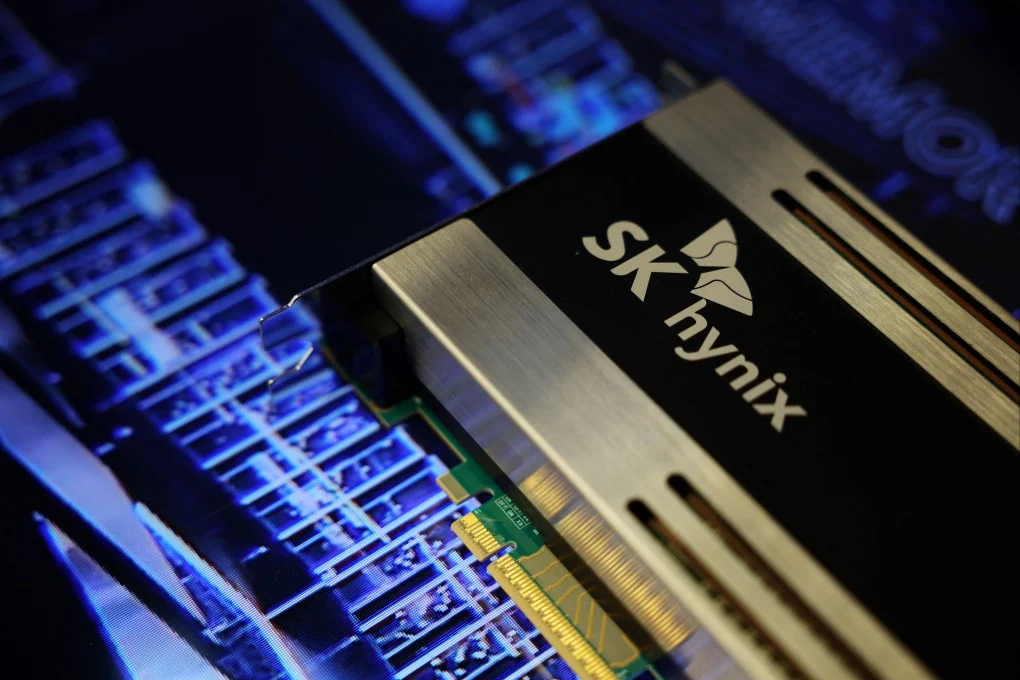
Photo: South China Morning Post
SK Hynix Bets Big on the AI Memory Boom
SK Hynix has announced a major investment of 19 trillion Korean won, equivalent to about $12.9 billion, to build a new advanced semiconductor packaging facility as it races to keep pace with surging global demand for memory chips driven by artificial intelligence.
The South Korea based chipmaker said the new plant will be constructed in Cheongju, a city where it already operates key production facilities. Construction is scheduled to begin in April, with operations expected to be completed by the end of 2027.
Focus on Advanced Packaging and Performance
The upcoming facility will specialize in advanced packaging technologies, a critical process that integrates multiple memory chips into a single compact unit. This approach significantly improves data processing speed, energy efficiency, and overall performance, while reducing physical space requirements.
Advanced packaging is especially important for high bandwidth memory, or HBM, which has become a core component in AI accelerators and data center processors. SK Hynix is currently the market leader in HBM, supplying memory used in AI chips designed by companies such as Nvidia.
Meeting Explosive Growth in HBM Demand
The investment reflects the rapid expansion of the AI ecosystem, where demand for faster and more power efficient memory has far outpaced supply. According to industry forecasts cited by SK Hynix, the global HBM market is expected to grow at a compound annual rate of roughly 33 percent between 2025 and 2030.
As competition intensifies among technology firms developing AI models and infrastructure, memory capacity has emerged as a bottleneck. This has pushed prices higher and made HBM one of the most profitable segments of the semiconductor industry.
Competitive Pressure Across the Industry
SK Hynix’s move comes as rivals also ramp up capacity. Samsung Electronics has recently outlined plans to significantly expand its own HBM production, underscoring how strategically important advanced memory has become for the broader semiconductor landscape.
However, producing HBM is far more complex than manufacturing conventional memory used in consumer electronics. As chipmakers divert resources toward AI focused products, supplies of standard memory have tightened, adding pressure across the electronics supply chain.
Rising Prices and Industry Wide Impact
Research firm TrendForce recently projected that average prices for dynamic random access memory, including HBM, could rise by 50 to 55 percent this quarter compared with the final quarter of 2025. DRAM is the primary volatile memory used in computers, servers, and many consumer devices.
While these price increases pose challenges for electronics manufacturers, they have significantly boosted profitability for memory producers. Samsung Electronics said it expects its operating profit for the December quarter to nearly triple year over year, highlighting the earnings leverage created by higher memory prices.
Market Performance and Strategic Outlook
SK Hynix has been one of the biggest beneficiaries of the memory upcycle. Its shares have risen sharply over the past year and are up around 12 percent so far this year, despite a modest pullback in the latest trading session.
The company is also reportedly evaluating a potential listing in the United States following a strong 2025 performance, a move that could broaden its investor base and enhance its global profile.
Long Term Positioning in the AI Era
With this latest investment, SK Hynix is signaling confidence that AI driven demand for advanced memory will remain strong for years to come. By expanding capacity and deepening its technological edge in HBM and advanced packaging, the company is positioning itself as a critical supplier at the center of the global AI supply chain.
.webp)
Popular articles



Subscribe to unlock premium content
Iceland’s Geothermal Revolution

Bali’s Digital Detox Revolution

Step Into the Future of Art

Iceland’s Geothermal Revolution
Bali’s Digital Detox Revolution
Iceland’s Geothermal Revolution