Singapore Emerges as Asia’s Capital Haven as Global Investors Seek Stability and Growth

Singapore Emerges as Asia’s Capital Haven as Global Investors Seek Stability and Growth
By
Rachel Steinberg
Last updated:
January 29, 2026
First Published:
April 25, 2026

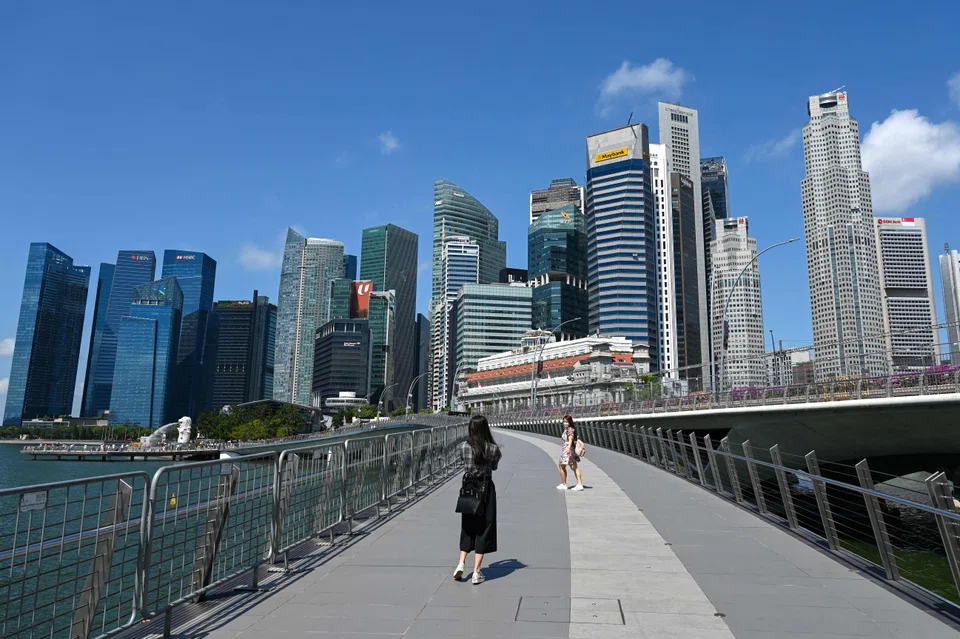
Photo: The Business Times
From “Little Red Dot” to Global Capital Magnet
When KPMG executive Anton Ruddenklau relocated from suburban London to Singapore in early 2021, he was struck by how frictionless it felt to do business.
“People are set up to build relationships here,” he said, reflecting on his move to lead KPMG’s financial services advisory practice in the city-state.
What stood out even more was Singapore’s policy mindset. Ruddenklau described a government that thinks long term and acts with a nation-building approach, creating an environment that actively enables business and investment.
On its own, Singapore is a small market with a population of under six million. But investors are not drawn by domestic consumption alone. They are attracted by its strategic location, English common-law system, sophisticated private capital markets, and role as a gateway to Asia. Together, these factors have positioned Singapore as a central hub for capital flowing into and out of the region.
Today, Singapore ranks among the world’s leaders in foreign direct investment relative to GDP, underscoring how deeply embedded it has become in global financial networks.
Credibility, Stability, and a Strong Currency
For many international investors, Singapore’s appeal starts with credibility.
Geoff Howie, market strategist at SGX Group, points to policy stability, strong institutions, and deep trade and financial connectivity as core strengths. He also highlighted the Singapore dollar, which is increasingly viewed as an anchor of macroeconomic discipline rather than a volatile emerging-market currency.
That confidence has shown up in foreign exchange markets. The Singapore dollar recently climbed to its strongest level against the U.S. dollar since 2014, trading near 1.26, reflecting sustained capital inflows and trust in the country’s monetary framework.
Over the past five years, Ruddenklau has watched Singapore evolve from what locals affectionately call a “little red dot” into something far more influential. He now sees it as a globally significant middle power, with growing sway across finance, technology, and regional development.
A Strategic Base for Southeast Asia
One of Singapore’s biggest advantages is its role as a launchpad into fast-growing Southeast Asian economies.
Standard Chartered’s Tian Ong Foo describes Singapore as a strategic base for accessing markets such as Indonesia, Malaysia, Thailand, Vietnam, and the Philippines, without forcing investors to navigate the regulatory and operational complexity of each country directly.
Many regional champions operate out of Singapore. Grab, for example, is headquartered in the city-state while running services across seven Southeast Asian markets. This structure allows investors to gain diversified regional exposure while remaining anchored in a stable legal and financial environment.
Srini Nagarajan, managing director and head of Asia at British International Investment, called Singapore the “perfect place” to deploy capital into emerging economies. His organization, which focuses on Vietnam, Indonesia, and the Philippines, has committed up to £500 million (about $685 million) toward green technology and climate projects in Southeast Asia by the end of this year.
In October, BII also invested $60 million into Singapore’s Green Investment Partnership, backed by the Monetary Authority of Singapore, supporting projects ranging from solar power to bio-energy.
For climate finance in particular, Nagarajan noted that Southeast Asia offers some of the fastest opportunities globally to reduce carbon emissions, making Singapore a natural coordination point for regional sustainability capital.
From Illiquid Safe Haven to Revitalized Equity Market
Historically, some investors viewed Singapore as an “illiquid safe haven,” a place to park capital rather than actively grow it. That perception is now changing.
Morgan Stanley highlighted a major policy shift aimed at revitalizing the local stock market, including an unprecedented $4 billion cash injection by the Monetary Authority of Singapore to boost liquidity in small and mid-cap stocks.
The bank projects that the MSCI Singapore Index could potentially double between 2025 and 2030, as the country enters what it described as a new phase of wealth creation.
The equity market is already showing signs of momentum. The Straits Times Index rose roughly 29% in the year to late January, marking its strongest rally in two decades. Gains have been driven largely by bank earnings, industrials, infrastructure firms, and companies with strong regional exposure.
Howie emphasized that this rally has been powered by earnings growth rather than speculation, reinforcing Singapore’s reputation for fundamentals-based investing.
Property, Fintech, and Digital Assets Add to the Appeal
Beyond equities, Singapore continues to attract capital across property and technology.
Residential real estate has drawn particular interest from U.S. investors, who are exempt from Singapore’s Additional Buyer’s Stamp Duty, a levy that can reach 60% of property value for buyers from most countries. Nationals from Norway, Switzerland, Iceland, and Liechtenstein also benefit from this exemption, making Singapore housing comparatively more accessible for these groups.
Fintech is another fast-growing pillar. The city-state recorded just over $1 billion in fintech investment in the first half of 2025, with payments, cryptocurrency, and AI-related deals leading activity. Singapore-based payments company Airwallex now carries a valuation of around $8 billion, reflecting the scale of ambition in the local startup ecosystem.
Singapore has also become one of the world’s most active hubs for stablecoin flows, with even luxury retailers beginning to accept digital currencies. Regulators have played a key role here, moving early on crypto oversight and stablecoin frameworks. In 2023, Singapore was among the first jurisdictions to formalize stablecoin regulation, and more recently the central bank announced trials of tokenized government bills using central bank digital currency.
Ruddenklau described Singapore’s financial regulator as consistently ahead of the curve, balancing innovation with strong safeguards.
A Refuge for Wealth, With Low Financial Crime
For high net worth individuals and family offices, Singapore increasingly serves as both a financial center and a personal safe harbor.
Lower levels of fraud and financial crime compared with much of the region add to its appeal. In the latest Global Fraud Index, Singapore ranked 10th out of 112 countries overall, maintaining a strong reputation for enforcement and transparency despite a slight drop in fraud resilience rankings year over year.
Ruddenklau said that for wealthy individuals and family offices, Singapore clearly functions as a refuge, offering predictable rules, strong governance, and long-term stability.
Reliable Returns Over High-Risk Bets
Singapore may not suit investors chasing extreme risk and rapid speculative gains. But that may be precisely its strength.
Howie argues that the city-state has shifted from being labeled “boring” to being “reliably investable.” In today’s uncertain global environment, resilience, governance, and downside protection matter more than ever.
“Investors do not want surprises,” Ruddenklau said. “They want predictable, and Singapore gives them that.”
Rather than simply offering shelter from volatility, Singapore is evolving into a marketplace that combines stability with access to growth across Southeast Asia. For global investors seeking both capital preservation and long-term opportunity, the city-state is no longer just a refuge. It is becoming a strategic engine of regional investment.
.webp)
Popular articles



Subscribe to unlock premium content
The Billionaire’s Symphony

Flying Above the Rest

Travel Like the Stars

The Billionaire’s Symphony
Flying Above the Rest
The Billionaire’s Symphony