Senate Moves to Rein In Trump’s Military Authority After Venezuela Operation

Senate Moves to Rein In Trump’s Military Authority After Venezuela Operation
By
Rachel Steinberg
Last updated:
January 9, 2026
First Published:
January 9, 2026

Getty Images
Senate Signals Pushback on Executive War Powers
The U.S. Senate voted 52–47 to block President Donald Trump from launching additional military action in Venezuela without congressional approval, marking a significant rebuke of the White House’s recent use of force abroad.
The vote came less than a week after Trump authorized a high-profile operation that resulted in the capture of Venezuelan President Nicolás Maduro. While the vote was procedural, it strongly suggests the measure has sufficient support to pass in a final Senate vote.
What the Resolution Would Do
The legislation, introduced under the War Powers Resolution, would require the president to seek explicit authorization from Congress before engaging in further military operations in Venezuela. The measure only needs a simple majority to pass the Senate, despite Republicans holding a narrow majority.
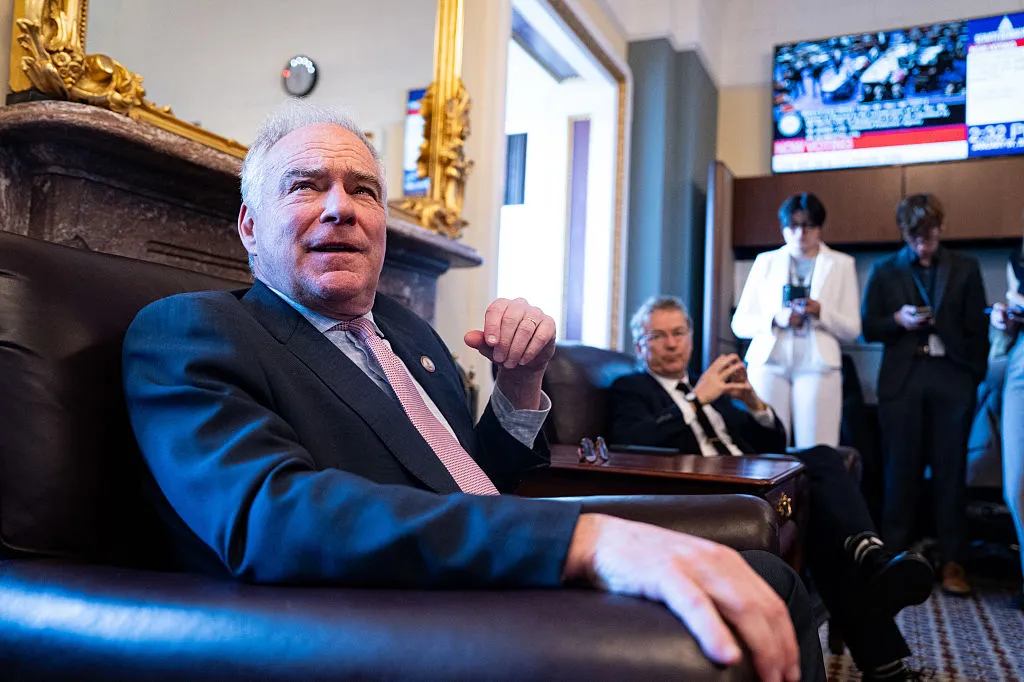
The resolution was co-sponsored by Democratic Senator Tim Kaine of Virginia and Republican Senator Rand Paul of Kentucky, highlighting rare bipartisan alignment on limiting presidential war-making authority.
If approved in a final Senate vote, the resolution would advance to the House of Representatives, where Republicans hold a razor-thin majority, making its outcome far less certain.
Bipartisan Breaks and Trump’s Reaction
Five Republican senators joined Democrats in supporting the measure: Rand Paul, Susan Collins of Maine, Lisa Murkowski of Alaska, Josh Hawley of Missouri, and Todd Young of Indiana. Their support proved decisive in pushing the resolution forward.
President Trump reacted sharply, criticizing the Republican senators who broke ranks. In a post on Truth Social, he accused them of undermining national security and attempting to strip the presidency of its ability to defend the United States. Trump went further, saying the lawmakers “should never be elected to office again.”
Senator Collins responded to the criticism by noting that opposing unchecked military action does not equate to opposing national security, adding pointedly that Trump’s remarks could have political consequences in her home state.
Constitutional Debate at the Core
Supporters of the resolution argue that the Constitution clearly grants Congress the authority to declare war and that the recent operation in Venezuela crossed a constitutional line.
“Bombing another nation’s capital and removing its leader is an act of war, plain and simple,” Senator Paul said in a statement. He emphasized that no provision in the Constitution grants the president unilateral authority to conduct such actions without congressional consent.
The Trump administration and its allies have countered that the operation was not a military act of war but a law enforcement mission. Maduro is now facing drug-related charges in New York, a point the White House has used to justify bypassing congressional approval.
A Shift From Previous Votes
The Senate rejected a similar War Powers resolution in November, when only two Republicans, Paul and Murkowski, joined Democrats in support. The latest vote shows a notable expansion of bipartisan concern following Trump’s monthslong military buildup around Venezuela and the subsequent operation.
Observers say the shift reflects growing unease among lawmakers about escalation risks and the precedent set by unilateral military actions.
Support for the Operation, Limits on Future Action
Despite voting for the resolution, some senators emphasized that their stance was not a rejection of the Maduro operation itself. Collins said she supported the mission that led to Maduro’s capture, describing it as “extraordinary in its precision and complexity.”
However, she drew a clear line against deeper or prolonged military involvement without congressional authorization, extending that concern to any future operations in Venezuela or Greenland.
What Comes Next
The procedural vote places pressure on Senate leadership to bring the measure to a final vote, where passage now appears likely. The bigger test will come in the House, where party margins are tight and political stakes are high.
Beyond Venezuela, the vote underscores a broader debate over presidential power, congressional authority, and how the United States engages militarily abroad. The outcome could shape not only future U.S. foreign interventions but also the balance of power between Congress and the White House for years to come.
.webp)
Popular articles



Subscribe to unlock premium content
Iceland’s Geothermal Revolution
Bali’s Digital Detox Revolution

Step Into the Future of Art

Iceland’s Geothermal Revolution
Bali’s Digital Detox Revolution
Iceland’s Geothermal Revolution