Senate Moves to Curb Trump’s Greenland Ambitions as Lawmakers Warn of NATO Fallout

Senate Moves to Curb Trump’s Greenland Ambitions as Lawmakers Warn of NATO Fallout
By
David Goldfarb
Last updated:
January 7, 2026
First Published:
January 7, 2026

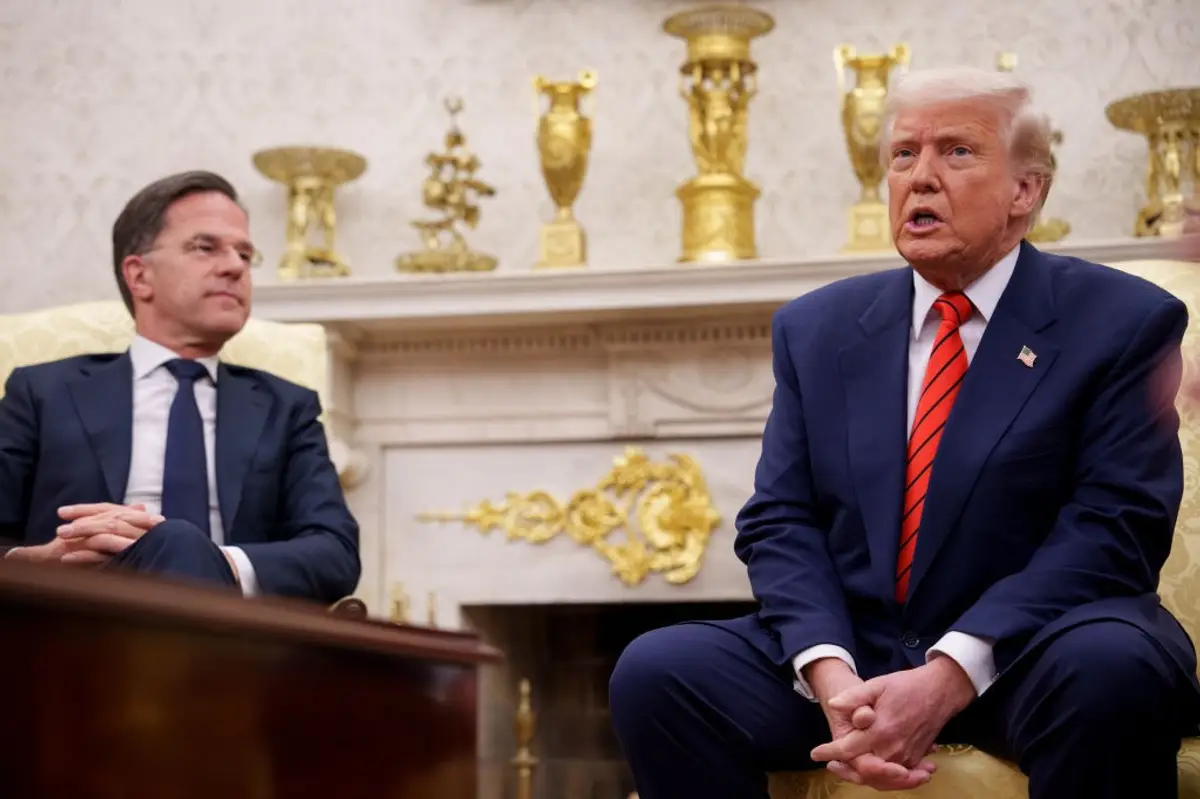
Photo: Common Dreams
A Preemptive Senate Challenge to Presidential Power
Sen. Ruben Gallego of Arizona has introduced a Senate resolution aimed at preventing President Donald Trump from using U.S. military force against Greenland, a self-governing territory within the Kingdom of Denmark. The move comes as concerns grow in Washington and Europe that increasingly aggressive rhetoric from the White House could translate into real-world action.
Gallego framed the resolution as a necessary check on executive authority, warning that recent U.S. military action abroad has heightened fears of unilateral interventions without congressional approval.
Rhetoric Fuels Alarm After Venezuela Operation
Lawmakers’ concerns intensified following the U.S. operation in Venezuela that resulted in the capture of President Nicolás Maduro. In media interviews shortly afterward, President Trump declined to rule out broader implications of that action, while reiterating his long-standing view that Greenland is strategically essential to U.S. interests.
Trump has repeatedly argued that Greenland is vital for missile defense, Arctic security, and countering growing Russian and Chinese activity in the region. Speaking aboard Air Force One, he asserted that Denmark lacks the capacity to adequately defend the territory, reinforcing speculation about a potential shift in U.S. policy.
Gallego’s Resolution and Funding Restrictions
In response, Gallego announced both a standalone resolution and an amendment to the Senate Defense Appropriations bill that would explicitly prohibit the use of federal funds for any military action against Greenland. His message was blunt, urging lawmakers to take the president’s statements seriously and act before events escalate.
The proposed funding ban mirrors past congressional efforts to limit unauthorized military engagements by tying restrictions directly to defense spending, one of Congress’s most effective tools for asserting its constitutional authority.
White House Defends Strategic Rationale
The White House pushed back against criticism, emphasizing that President Trump views Greenland through a national security lens rather than as a target for aggression. A spokesperson stated that the administration believes closer U.S. involvement would better protect Greenlanders from emerging Arctic threats and contribute to long-term global stability.
Officials also highlighted existing defense cooperation agreements that already grant the U.S. significant access to Greenland, particularly for radar installations and early-warning systems critical to North American defense.
Denmark and Greenland Seek Direct Talks
Diplomatic tensions escalated further as the governments of Denmark and Greenland formally requested high-level meetings with U.S. Secretary of State Marco Rubio. Greenland’s Foreign Minister Vivian Motzfeldt confirmed that repeated requests for ministerial-level dialogue throughout 2025 had gone unanswered.
Danish Prime Minister Mette Frederiksen publicly urged Washington to halt what she described as threats against a close ally, stressing that Greenland and Denmark have made clear they are not for sale and have no interest in changing sovereignty arrangements.
NATO Implications Raise Stakes
The controversy has reverberated across Capitol Hill, particularly among lawmakers focused on NATO unity. Sen. Chris Murphy of Connecticut warned that any U.S. move against Greenland could fundamentally undermine the alliance, noting that Greenland is covered under NATO’s collective defense clause.
Murphy emphasized that Article 5 was never designed to address a scenario in which a NATO member threatens another NATO-protected territory. Such an action, he argued, could force European allies to reconsider their participation in the alliance altogether.
Republican Divisions Over Arctic Strategy
Republican lawmakers have offered mixed reactions. Sen. Lindsey Graham of South Carolina voiced strong support for expanding the U.S. presence in Greenland to counter Russian and Chinese influence in the Arctic, calling the region strategically distinct from other recent conflicts.
At the same time, Graham acknowledged unresolved legal questions surrounding any change in the U.S.–Greenland relationship, suggesting that even supporters of a stronger Arctic posture recognize the diplomatic and legal complexity involved.
Existing Defense Agreements Underscore Tensions
Denmark has repeatedly pointed out that the United States already enjoys broad military access to Greenland under longstanding defense agreements dating back decades. These arrangements allow U.S. forces to operate bases and surveillance systems without infringing on Danish sovereignty.
Frederiksen underscored that Greenland’s status within NATO already provides robust security guarantees, arguing that cooperation—not coercion—remains the foundation of the U.S.–Danish relationship.
Why the Resolution Matters
While the resolution is unlikely to pass quickly, it signals growing bipartisan unease about unchecked presidential power in foreign policy and the potential consequences for global alliances. For investors, defense contractors, and multinational corporations watching Arctic development and geopolitical risk, the debate highlights how rapidly strategic rhetoric can evolve into market-moving uncertainty.
As Arctic competition intensifies and U.S. politics grow more polarized, Greenland has emerged as a flashpoint that blends national security, alliance politics, and the limits of executive authority—making Gallego’s move more than symbolic in an already volatile global landscape.
.webp)
Popular articles



Subscribe to unlock premium content
Iceland’s Geothermal Revolution
Bali’s Digital Detox Revolution

Step Into the Future of Art

Iceland’s Geothermal Revolution
Bali’s Digital Detox Revolution
Iceland’s Geothermal Revolution