Samsung Surges on AI Chip Demand Driving Record Profits

Samsung Surges on AI Chip Demand Driving Record Profits
By
Alina Sinclair
Last updated:
April 7, 2026
First Published:
April 7, 2026

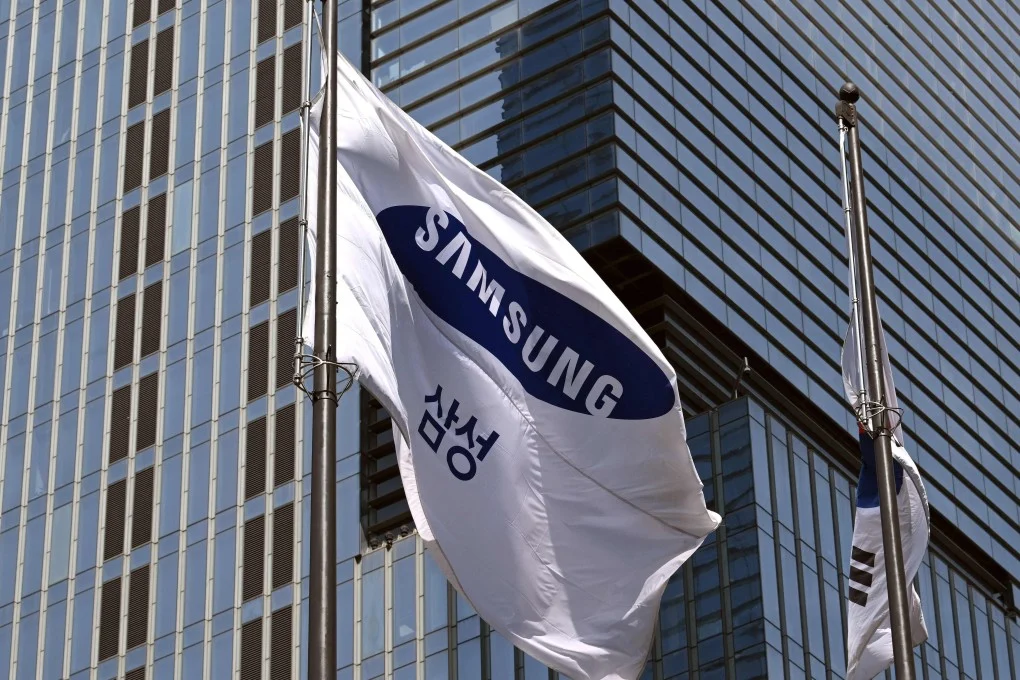
Photo: South China Morning Post
Samsung Electronics is entering a powerful new growth phase, propelled by the global surge in artificial intelligence infrastructure. The South Korean tech giant has signaled a historic earnings breakthrough, with preliminary guidance pointing to record quarterly profits fueled largely by soaring demand for advanced memory chips used in AI systems.
According to its early earnings outlook, Samsung expects operating profit for the January to March quarter to reach approximately 57.2 trillion Korean won, equivalent to about 37.8 billion dollars. This marks an extraordinary jump of more than 750 percent compared to the 6.69 trillion won reported in the same period last year. If achieved, this would not only shatter its previous quarterly records but also significantly outperform market expectations, which were hovering around 42.3 trillion won.
Revenue is also projected to deliver a substantial upside surprise. Samsung estimates consolidated sales of roughly 133 trillion won for the quarter, reflecting a year-on-year increase of nearly 70 percent. This sharp acceleration highlights the scale of demand being generated by AI-driven technologies across industries, from cloud computing to advanced data centers.
At the heart of this performance is Samsung’s memory chip division, a cornerstone of its semiconductor business. High-bandwidth memory, or HBM, has emerged as one of the most critical components in modern AI computing, enabling faster data processing and improved efficiency for complex machine learning workloads. Over the past 12 to 18 months, demand for HBM chips has surged dramatically, creating supply constraints across the global market and driving prices to multi-year highs.
Samsung’s Device Solutions segment, which houses its semiconductor operations, has become increasingly dominant in its overall business mix. In 2025, this division contributed approximately 39 percent of total revenue while accounting for an even larger 57 percent share of operating profits. With AI adoption accelerating globally, these figures are expected to climb further as chipmakers race to meet unprecedented demand.
The company’s latest guidance also signals a strategic comeback in the high-bandwidth memory segment. After initially falling behind domestic rival SK Hynix in the early stages of the HBM race, Samsung has been aggressively investing in advanced manufacturing processes and next-generation chip technologies. Recent improvements in yield rates, production capacity, and customer acquisition suggest that Samsung is regaining momentum and positioning itself as a key supplier for major AI hardware players.
Industry analysts estimate that the global HBM market could grow at an annual rate exceeding 40 percent over the next few years, with total market value potentially surpassing 20 billion dollars by 2027. This puts Samsung in a strong position to capitalize on one of the fastest-growing segments within the semiconductor industry.
Investor sentiment reflected this optimism immediately. Samsung shares surged by as much as 4.8 percent in early trading following the announcement, before settling slightly higher as the session progressed. The initial spike underscores growing confidence that the company is not only recovering from the semiconductor downturn of previous years but entering a new cycle of sustained profitability driven by AI.
Looking ahead, all eyes are on Samsung’s full earnings report expected later this month. Investors will be watching closely for detailed breakdowns of chip sales, margin expansion, and forward guidance, particularly in relation to AI-related demand. If current trends hold, Samsung could be on track to redefine its earnings trajectory and solidify its role as a central player in the global AI hardware ecosystem.
.webp)
Popular articles



Subscribe to unlock premium content
The Rise of Hyper-Personalized Safari Tours in Kenya and Tanzania

Greenland’s Remote Luxury Retreats Are Redefining Arctic Adventure

Private Desert Resorts in Morocco Are Curating Ultra-Luxury Experiences

The Rise of Hyper-Personalized Safari Tours in Kenya and Tanzania
Greenland’s Remote Luxury Retreats Are Redefining Arctic Adventure
The Rise of Hyper-Personalized Safari Tours in Kenya and Tanzania