Samsung Faces Massive Labor Standoff as Potential 47,000-Worker Strike Raises Economic Concerns in South Korea

Samsung Faces Massive Labor Standoff as Potential 47,000-Worker Strike Raises Economic Concerns in South Korea
By
Rachel Steinberg
Last updated:
May 19, 2026
First Published:
May 19, 2026

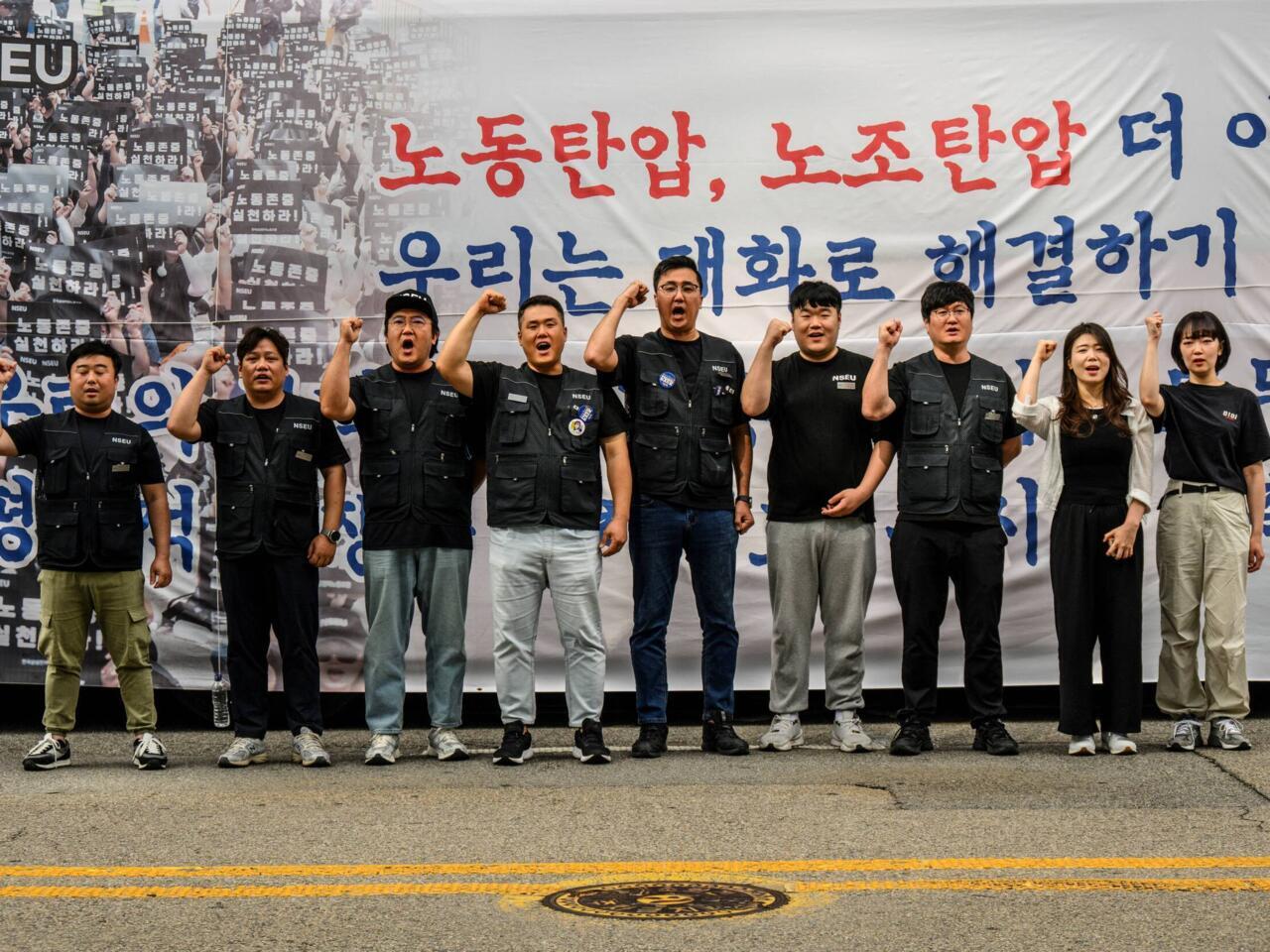
Photo: France 24
Samsung Electronics is moving toward one of the most significant labor challenges in its recent history as tensions between management and workers continue escalating. With more than 47,000 employees potentially participating in a planned strike, concerns are growing not only for Samsung itself but also for South Korea’s wider economy, which remains deeply tied to the technology giant’s performance.
The dispute has become a national issue as government officials, policymakers, and market analysts increasingly warn that prolonged disruptions at Samsung could extend far beyond the company and impact exports, manufacturing output, investor sentiment, and economic growth.
As both sides entered what many view as a critical phase of negotiations, South Korean leaders intensified calls for compromise and a balanced resolution.
South Korean President Calls for Balance Between Labor and Corporate Interests
South Korean President Lee Jae Myung publicly addressed the growing dispute, emphasizing the importance of protecting both labor rights and business stability.
The president stressed that labor rights and corporate management rights should be treated with equal importance, while warning against extreme positions from either side.
His remarks came as government officials increased efforts to encourage both parties to find common ground before the planned industrial action begins.
The comments also reflect broader concerns within South Korea that a prolonged labor dispute involving one of the nation's most influential companies could create economic consequences beyond the technology sector.
What Workers Are Demanding
The central issue in the dispute revolves around Samsung's performance-based compensation structure.
Samsung's labor union has argued that employees deserve a larger share of company performance gains and wants a more transparent and predictable bonus system.
Among the union's key demands are:
• Performance bonuses equal to 15% of Samsung's operating profit
• Removal of caps that limit bonus payouts
• A formalized and transparent bonus calculation structure
• Additional compensation-related improvements
Samsung management has reportedly proposed an alternative package that includes:
• Allocating 10% of operating profit toward bonuses
• A one-time special compensation payment
• Adjustments intended to improve employee benefits
Despite the proposal, negotiations have remained difficult as both sides continue debating long-term compensation frameworks.
More Than 47,000 Workers Could Join the Walkout
According to union estimates, over 47,000 employees could participate in the strike if negotiations fail.
That level of participation would represent one of the largest labor actions involving Samsung in recent memory.
The union previously pointed to a large-scale rally held earlier this year involving approximately 40,000 workers.
According to union estimates, the event contributed to noticeable operational disruptions, including:
• Foundry production dropping by approximately 58%
• Memory chip production declining around 18% during that period
If a larger and longer strike occurs, production pressures could intensify significantly.
The union estimates an 18-day strike could potentially result in approximately:
• 30 trillion won in losses
• Roughly $20 billion in financial impact
Samsung and government officials have not fully endorsed those projections, but concerns regarding production disruptions remain high.
Why Samsung Matters So Much to South Korea's Economy
Samsung Electronics occupies a uniquely powerful position within South Korea's economy.
The company is not simply a major technology producer; it is also one of the country's most important economic pillars.
Samsung's economic footprint includes:
• Approximately 22.8% of South Korea's exports
• Around 26% of the country's total stock market value
• Roughly 12.5% contribution relative to national GDP activity
These figures highlight why policymakers are treating the situation with urgency.
Any major interruption affecting Samsung could ripple through multiple sectors, including:
• Semiconductor manufacturing
• Global supply chains
• Employment markets
• Investor sentiment
• Export activity
Because South Korea's economy has significant exposure to a relatively small number of large corporations, analysts have repeatedly warned about concentration risks.
Government Signals Possible Emergency Measures
Government officials have indicated that stronger intervention remains possible if the labor dispute threatens broader economic stability.
South Korea's labor laws allow authorities to temporarily suspend industrial action through emergency measures if a strike is considered harmful to the national economy or public welfare.
Officials stated they are prepared to examine all available options if negotiations collapse.
Potential actions could include:
• Emergency adjustments to labor action timelines
• Temporary suspension measures
• Additional mediation efforts
• Economic stabilization responses
The country's prime minister reportedly described the ongoing discussions as a final opportunity to avoid potentially severe economic consequences.
Government estimates suggest:
• Direct economic losses could reach around 1 trillion won, or roughly $665 million
• Broader losses could rise substantially if semiconductor production lines experience prolonged disruptions
Semiconductor manufacturing presents unique challenges because interruptions during production cycles can sometimes force companies to scrap partially completed wafers, resulting in substantial costs.
Union Challenges Government Economic Warnings
Samsung's labor union has disputed some of the economic concerns raised by officials.
Union representatives argued that production pauses and temporary operational interruptions are not unusual inside semiconductor manufacturing environments.
According to the union, facilities periodically pause operations for:
• Equipment inspections
• Process adjustments
• Maintenance work
• Production optimization efforts
The union also criticized government assessments, claiming officials relied too heavily on management projections while failing to adequately consider labor responses.
The disagreement highlights the widening gap between both sides as negotiations continue.
Investors React as Uncertainty Builds
Despite concerns surrounding the labor dispute, Samsung shares initially moved sharply higher.
The company's stock rose as much as 6.65% before reducing gains and ending with a smaller increase.
The market reaction suggests investors remain focused on broader factors, including:
• Semiconductor demand recovery
• AI-related chip growth opportunities
• Memory market conditions
• Global technology spending trends
However, prolonged labor instability could introduce additional uncertainty for investors already monitoring global economic risks.
The Bigger Picture for Samsung and South Korea
The Samsung labor dispute has evolved into more than a disagreement over bonuses and compensation.
It has become a broader test of the relationship between labor, corporations, and economic policy in one of the world's largest technology-driven economies.
As negotiations approach a critical stage, both sides face increasing pressure.
For Samsung, prolonged disruptions could threaten production schedules and financial performance. For South Korea, the stakes may be even larger given the company's central role in exports, market activity, and economic growth.
The outcome of the discussions could influence not only Samsung's operations but also the direction of labor relations across South Korea's technology industry in the years ahead.
.webp)
Popular articles



Subscribe to unlock premium content
The $60 Million Market for Ultra-Exclusive Executive Pop-Up Experiences

Adrenaline Meets Prestige

Pampered Paws and Plush Palaces

The $60 Million Market for Ultra-Exclusive Executive Pop-Up Experiences
Adrenaline Meets Prestige
The $60 Million Market for Ultra-Exclusive Executive Pop-Up Experiences