Russia Reaps Oil Windfall From Iran Conflict as Structural Economic Risks Deepen

Russia Reaps Oil Windfall From Iran Conflict as Structural Economic Risks Deepen
By
David Goldfarb
Last updated:
April 1, 2026
First Published:
April 25, 2026

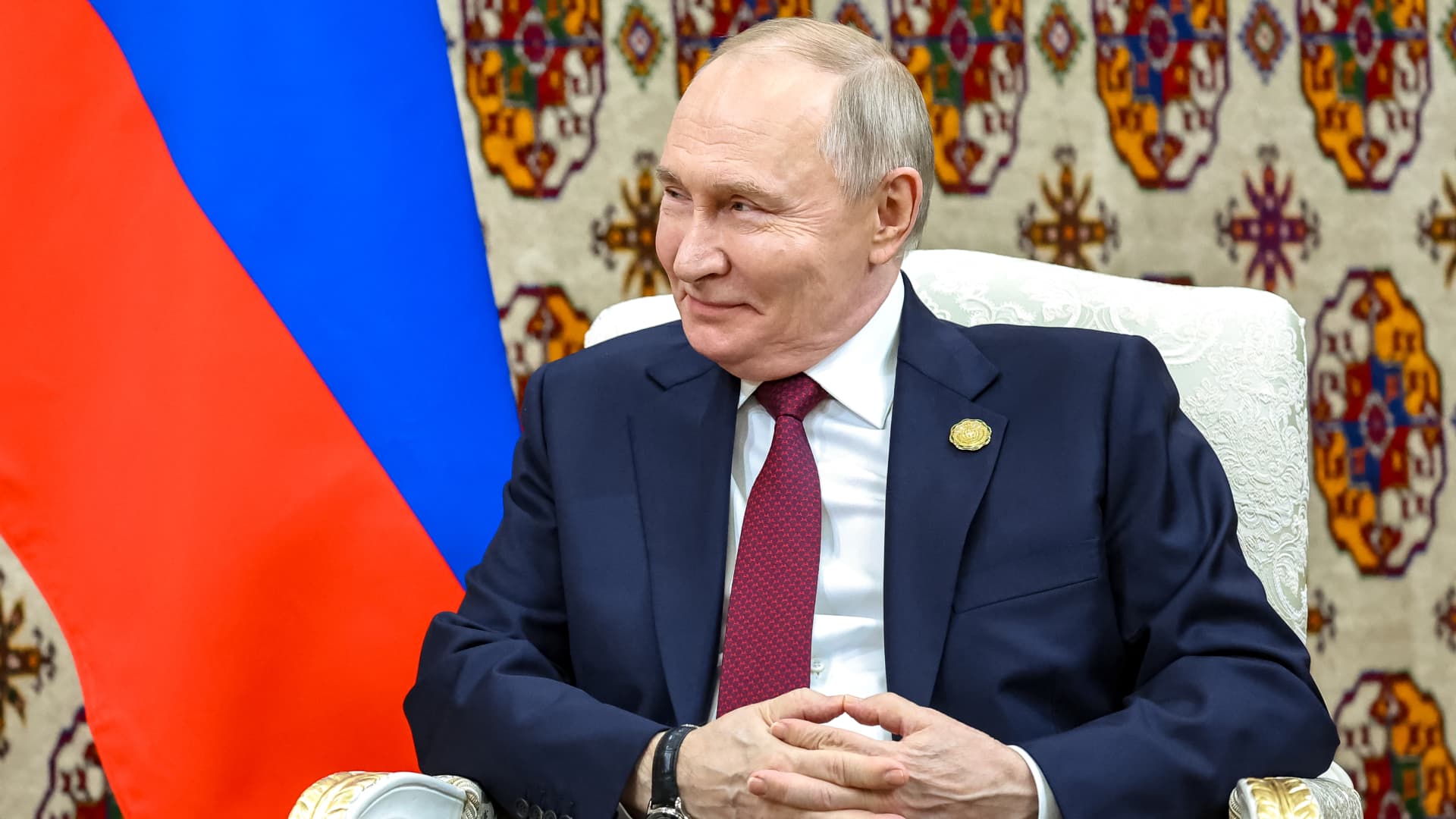
In this pool photograph distributed by the Russian state agency Sputnik, Russia’s President Vladimir Putin attends a meeting with Iranian President in Ashgabat on December 12, 2025.
Alexander Kazakov | Afp | Getty Images
The ongoing conflict involving Iran has created an unexpected financial boost for Russia, as soaring global energy prices drive a sharp increase in oil and gas revenues. However, despite this short-term windfall, economists and geopolitical analysts caution that the country’s broader economic foundations remain under severe strain.
The near shutdown of the Strait of Hormuz—a critical artery for roughly 20% of global oil shipments—has triggered a dramatic spike in crude prices. For Russia, one of the world’s largest energy exporters, this has translated into billions of dollars in additional monthly income. The price of its benchmark Urals crude has surged from around $57 per barrel before the conflict to approximately $115, effectively doubling in a matter of weeks.
According to market estimates, this price surge is generating close to $9 billion in additional monthly revenue for the Russian state. The spike has also reversed declining demand trends, with major buyers such as India increasing imports of Russian oil. Adding to this momentum, the United States issued a temporary 30-day waiver earlier in March, allowing countries to purchase sanctioned Russian oil shipments stranded at sea, in an effort to stabilize global markets.
Beyond oil, Russia has seen incremental gains in exports of commodities such as fertilizers, aluminum, and helium. However, these sectors contribute significantly less compared to hydrocarbons, which remain the backbone of the country’s fiscal structure.
This surge in revenue is providing short-term relief to the Kremlin. Facing a budget deficit of approximately $35 billion in just the first two months of the year, the government had been under pressure to cut spending across key sectors. The energy-driven windfall is now allowing President Vladimir Putin to delay unpopular fiscal tightening measures and sustain elevated levels of military expenditure.
Yet beneath the surface, structural weaknesses continue to intensify. Inflation in Russia remains elevated at around 5.9%, forcing the central bank to maintain high interest rates near 15% to contain price pressures. These challenges are being compounded by labor shortages, rising food costs, and the long-term impact of Western sanctions imposed following the Ukraine invasion.
The Russian economy has increasingly shifted toward a war-driven model, prioritizing defense production and state-led industrial activity. While this has supported short-term output, it has also reduced efficiency and constrained broader economic diversification. Analysts warn that such imbalances could lead to prolonged stagnation once external revenue boosts subside.
Geopolitically, the Iran conflict is also reshaping dynamics beyond energy markets. Ukrainian leadership has expressed concern that the situation is indirectly benefiting Russia by diverting Western military resources and attention. Volodymyr Zelenskyy has indicated that some allies are reconsidering strikes on Russian energy infrastructure due to fears of further driving up global oil prices.
Military resource allocation is also shifting. Reports suggest that the U.S. has deployed significantly more advanced defense systems in the Middle East during the early stages of the Iran conflict than it has supplied to Ukraine over several years. This reallocation could reduce support available to Kyiv, potentially altering the strategic balance on the battlefield.
Despite the immediate financial gains, experts remain cautious about Russia’s long-term outlook. Some have described the current situation as a temporary boost masking deeper vulnerabilities—an economy benefiting from external shocks while internally facing mounting pressure.
As global energy markets remain volatile, Russia’s economic trajectory will depend heavily on the duration of the Iran conflict and the sustainability of elevated oil prices. While the current environment offers breathing room, the underlying challenges suggest that the country’s economic resilience will continue to be tested in the years ahead.
.webp)
Popular articles



Subscribe to unlock premium content
Beyoncé’s Wellness Retreats Redefine Luxury Lifestyle

Skiing Above the Skyline
ED by Ellen Redefines Celebrity Media

Beyoncé’s Wellness Retreats Redefine Luxury Lifestyle
Skiing Above the Skyline
Beyoncé’s Wellness Retreats Redefine Luxury Lifestyle