Roomba’s Collapse Signals a Bigger Crisis for Tech Deals and Innovation

Roomba’s Collapse Signals a Bigger Crisis for Tech Deals and Innovation
By
Junia Wells
Last updated:
December 22, 2025
First Published:
December 22, 2025

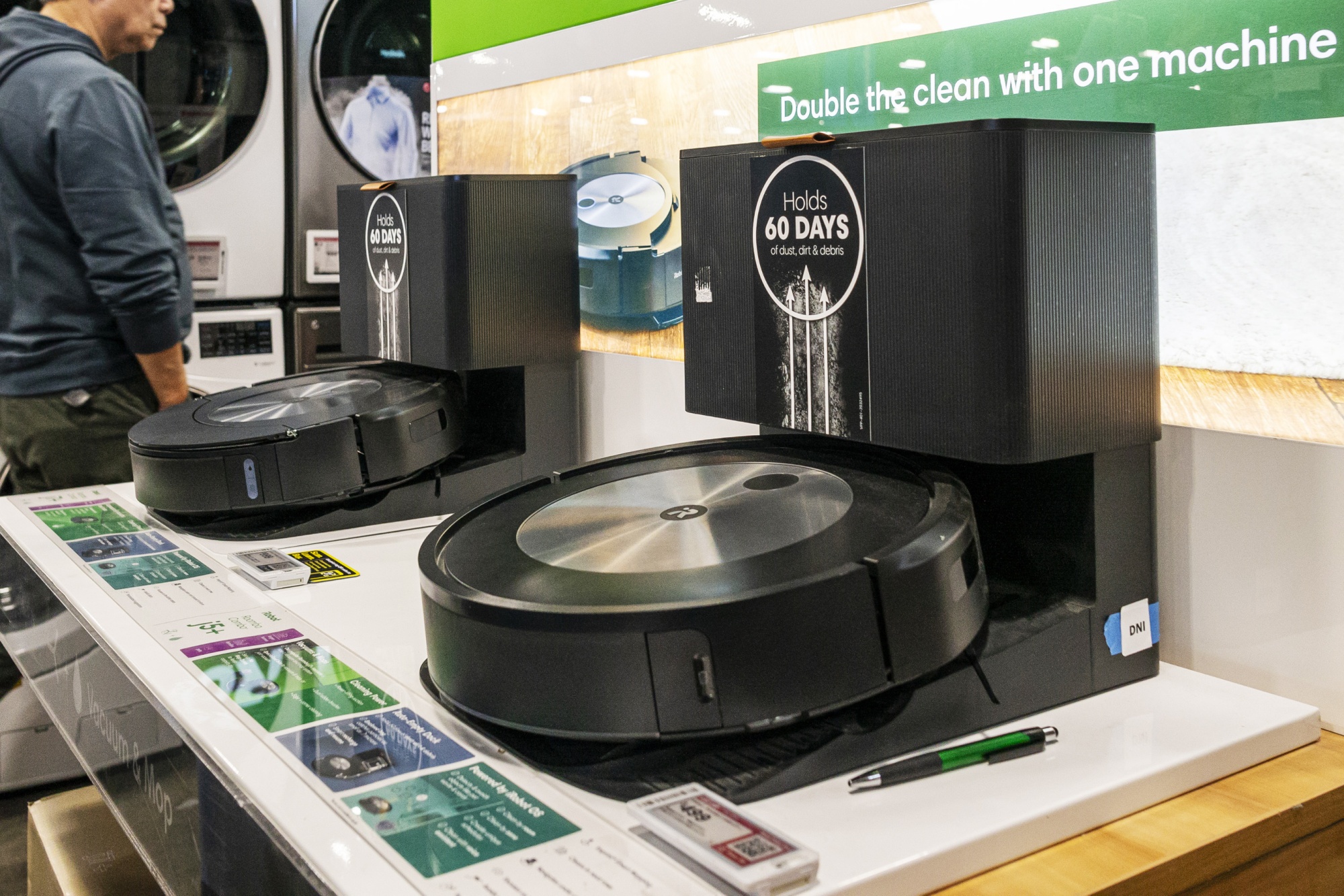
Photo: Bloomberg.com
The bankruptcy of iRobot, the maker of the iconic Roomba robot vacuum, may look like the fall of a single consumer electronics brand. In reality, it highlights a much deeper shift in the global technology landscape, one where tighter antitrust scrutiny, failed acquisitions, and geopolitical trade pressures are leaving vulnerable companies with fewer paths to survival.
Once a symbol of American innovation in home robotics, iRobot is now one of the most visible casualties of an era in which mergers and acquisitions, long considered a lifeline for struggling tech firms, are increasingly uncertain or outright blocked.
From category creator to bankruptcy court
For years, Roomba stood out in a crowded market flooded with cheaper knockoffs. Consumers often paid a premium for reliability, brand trust, and superior performance. Yet even that advantage was not enough to save the company.
iRobot filed for bankruptcy protection this week, reporting between $100 million and $500 million in assets and liabilities. Court filings show the company owes roughly $190 million in total debt, including about $100 million to its largest creditor, Shenzhen Picea Robotics, its contract manufacturer operating in China and Vietnam. That same manufacturer now owns the company following a bankruptcy led transaction.
Colin Angle, iRobot’s co founder and CEO, called the outcome profoundly disappointing and avoidable, warning that the collapse represents a loss not just for consumers but for the broader U.S. innovation economy.
The Amazon deal that never was
Much of iRobot’s fate traces back to a blocked acquisition. In 2022, Amazon agreed to acquire iRobot for $1.7 billion, a deal that the companies believed would help Roomba compete against intensifying global competition. But by early 2024, Amazon abandoned the deal after European regulators signaled their intention to block it on antitrust grounds.
Amazon CEO Andy Jassy later described the collapse of the deal as a sad outcome, arguing that the acquisition would have strengthened iRobot rather than harmed competition.
For iRobot, the failed acquisition proved devastating. Without the capital, scale, and distribution advantages Amazon could have provided, the company was left exposed to declining sales, rising costs, and mounting debt.
Antitrust scrutiny and unintended consequences
Some finance and M&A experts argue that iRobot’s bankruptcy illustrates how modern antitrust enforcement can produce outcomes opposite to its stated goals.
Kristina Minnick, a finance professor at Bentley University, said that when regulators prioritize hypothetical future harms over present financial realities, they risk destroying the very companies they aim to protect. By blocking what she described as the only viable exit for iRobot, regulators removed a safety net that has historically allowed struggling innovators to survive through acquisition.
Instead of preserving competition, critics argue, the result was the transfer of valuable intellectual property, brand equity, and manufacturing control to foreign partners, particularly in China, where many of iRobot’s rivals already dominate production.
A shifting M&A landscape favors giants, not startups
Large technology firms are adapting. Microsoft, Amazon, and Meta have increasingly structured deals to avoid full acquisitions, opting instead for asset purchases, licensing agreements, or hiring founders and engineering teams while leaving the corporate shell behind.
Examples include Microsoft’s arrangement with Inflection AI and Amazon’s deal with Adept. These so called reverse acqui hire structures allow big tech companies to access talent and technology while minimizing antitrust exposure.
For startups and mid sized firms, however, this shift is dangerous. Without a clean acquisition exit, many are left as underfunded zombie companies or pushed into bankruptcy, wiping out shareholder value and costing jobs.
The U.S. Federal Trade Commission has acknowledged these deal structures and scrutinized them, but the trend continues as companies seek ways around regulatory bottlenecks.
Trade policy and tariffs added fuel to the fire
Antitrust was not iRobot’s only challenge. Financial stress had been building for months. According to Creditsafe, iRobot began paying vendors weeks late as early as May, a classic warning sign of liquidity trouble. Its credit score steadily deteriorated, reaching a very high risk rating by June 2025.
Revenue declined as lower priced Chinese competitors gained ground, and tariffs emerged as a critical accelerant. Although many Roomba products are manufactured in Vietnam, new U.S. import levies added millions of dollars in costs and disrupted supply chain planning.
These trade policy shocks amplified existing weaknesses, pushing the company from operational stress into full blown insolvency. Analysts say iRobot’s downfall shows how hardware dependent businesses are especially vulnerable to sudden changes in trade rules and global costs.
Europe remains firm on tech oversight
While U.S. regulators under the current administration have signaled a more selective approach to mergers, Europe continues to apply strict scrutiny to big tech transactions. EU competition officials have made clear they intend to prevent dominant platforms from crowding out smaller rivals, even if that means blocking acquisitions outright.
For struggling companies like iRobot, that stance offers little comfort. With exit options shrinking, founders face a harsher reality where survival increasingly depends on flawless execution rather than strategic buyouts.
A warning for founders and investors
Many analysts believe iRobot will not be the last high profile casualty. If regulators continue to block acquisitions without viable alternatives, more tech and media companies may face disorderly bankruptcies instead of orderly consolidations.
The Roomba story has become a cautionary tale for founders who rely on a single mega deal as a rescue plan. In today’s global antitrust environment, that strategy carries far more risk than it once did.
For consumers, the impact may feel distant. But for the tech industry, iRobot’s bankruptcy is a signal that the machinery connecting innovation, capital, and growth is under strain. And unless that system adapts, the collapse of one robot vacuum maker may prove to be only the beginning.
.webp)
Popular articles



Subscribe to unlock premium content
Iceland’s Geothermal Revolution
Bali’s Digital Detox Revolution

Step Into the Future of Art
Iceland’s Geothermal Revolution
Bali’s Digital Detox Revolution
Iceland’s Geothermal Revolution