RFK Jr. Unveils Overhauled U.S. Nutrition Guidelines Emphasizing Protein and Real Foods

RFK Jr. Unveils Overhauled U.S. Nutrition Guidelines Emphasizing Protein and Real Foods
By
Leah Rosenfeld
Last updated:
January 9, 2026
First Published:
April 25, 2026

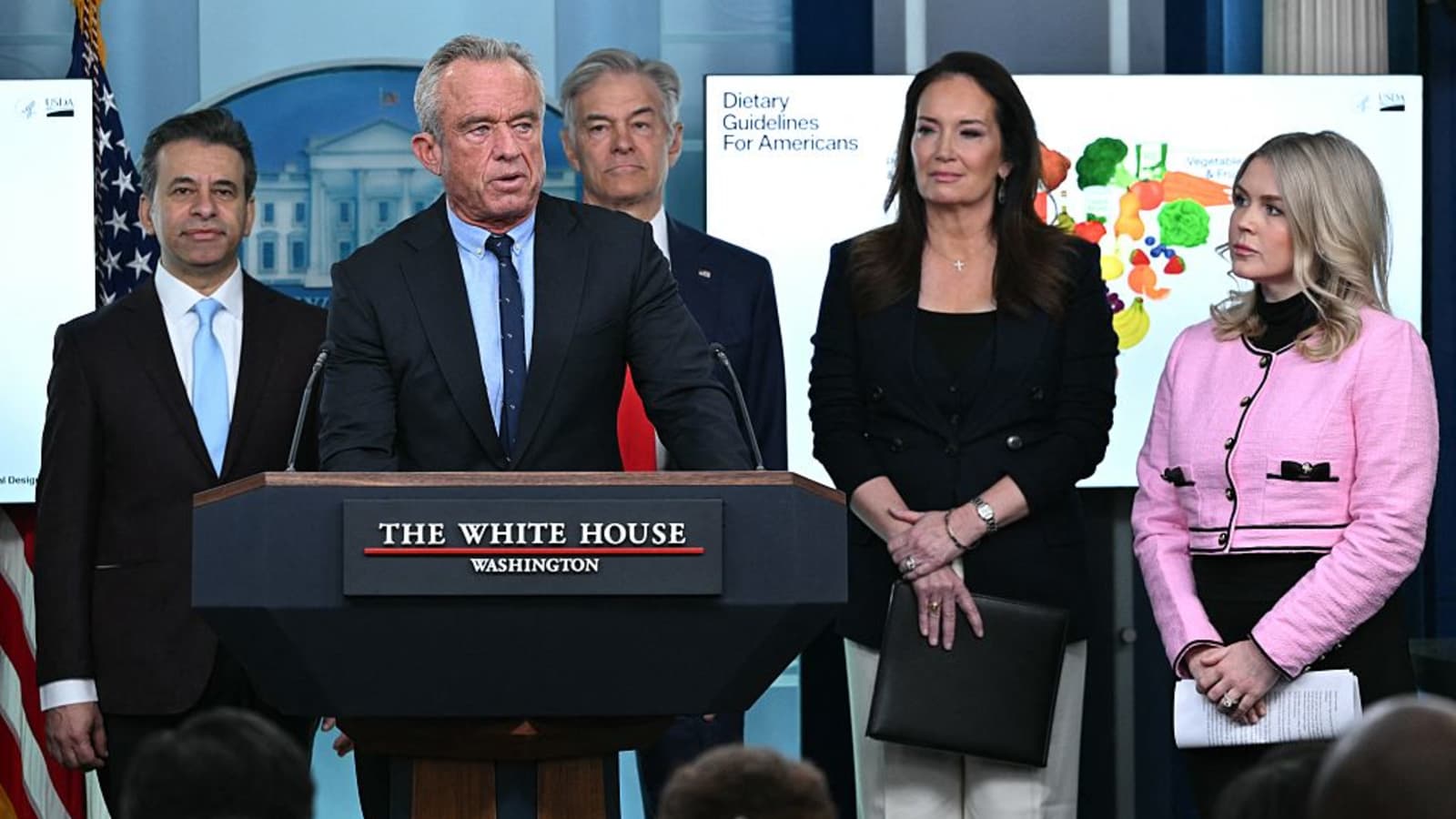
Secretary of Health and Human Services Robert F. Kennedy Jr. speaks during the daily briefing in the Brady Briefing Room of the White House in Washington, DC, on Jan. 7, 2026.
Mandel Ngan | AFP | Getty Images
Health and Human Services Secretary Robert F. Kennedy Jr. and Agriculture Secretary Brooke Rollins announced sweeping changes to U.S. dietary guidelines on Wednesday, marking what Kennedy called the “most significant reset of federal nutrition policy in history.” The updated guidance encourages Americans to consume more protein, full-fat dairy, and whole foods, while cutting back on highly processed items like white bread, chips, and candy.
Protein and healthy fats take center stage
The new food pyramid replaces the MyPlate diagram introduced under the Obama administration. Key updates include placing protein at the core of daily meals, promoting full-fat dairy instead of low-fat options, and incorporating healthy fats from sources such as avocados, olive oil, butter, and even beef tallow. Kennedy emphasized that the federal government is “ending the war on saturated fats” and advocating for diets richer in real, nutrient-dense foods.
Implications for public health and federal programs
The updated guidelines will influence school lunches, federal nutrition programs, and government health recommendations, affecting an estimated 25% of Americans directly. The “Make America Healthy Again” agenda aims to reduce chronic disease by shifting the population away from ultra-processed foods and sugary beverages. Kennedy highlighted that these changes are part of a broader effort to reshape American eating habits for long-term health benefits.
Industry response and regulation
Major food companies, including PepsiCo and J.M. Smucker, have already responded by announcing plans to phase out synthetic dyes and other artificial ingredients. While the USDA and HHS guidelines do not yet impose strict regulations, the industry anticipates more oversight on processed foods as these recommendations gain traction.
Historical context and future outlook
The U.S. releases updated dietary guidelines every five years to guide policymakers, healthcare providers, and nutrition experts. Although previous advisory committees recommended increased plant-based foods and reduced red meat and sugary drinks, the current guidelines reflect a different approach, placing stronger emphasis on protein, full-fat dairy, and minimally processed foods. Analysts predict that the ripple effects will extend beyond public programs, potentially influencing consumer behavior, food product formulations, and broader public health initiatives over the coming years.
.webp)
Popular articles



Subscribe to unlock premium content
Greece’s Tourism-Driven Economy: Lessons From Financial Crises

The Rise of Remote Work and the Quiet Transformation of Cities

Scented Sophistication Lights Up the Season

Greece’s Tourism-Driven Economy: Lessons From Financial Crises
The Rise of Remote Work and the Quiet Transformation of Cities
Greece’s Tourism-Driven Economy: Lessons From Financial Crises