Qualcomm’s AI Expansion Ignites Stock Rally as Wall Street Bets on the Next Wave of Smart Devices

Qualcomm’s AI Expansion Ignites Stock Rally as Wall Street Bets on the Next Wave of Smart Devices
By
Augusta Parker
Last updated:
May 23, 2026
First Published:
May 23, 2026

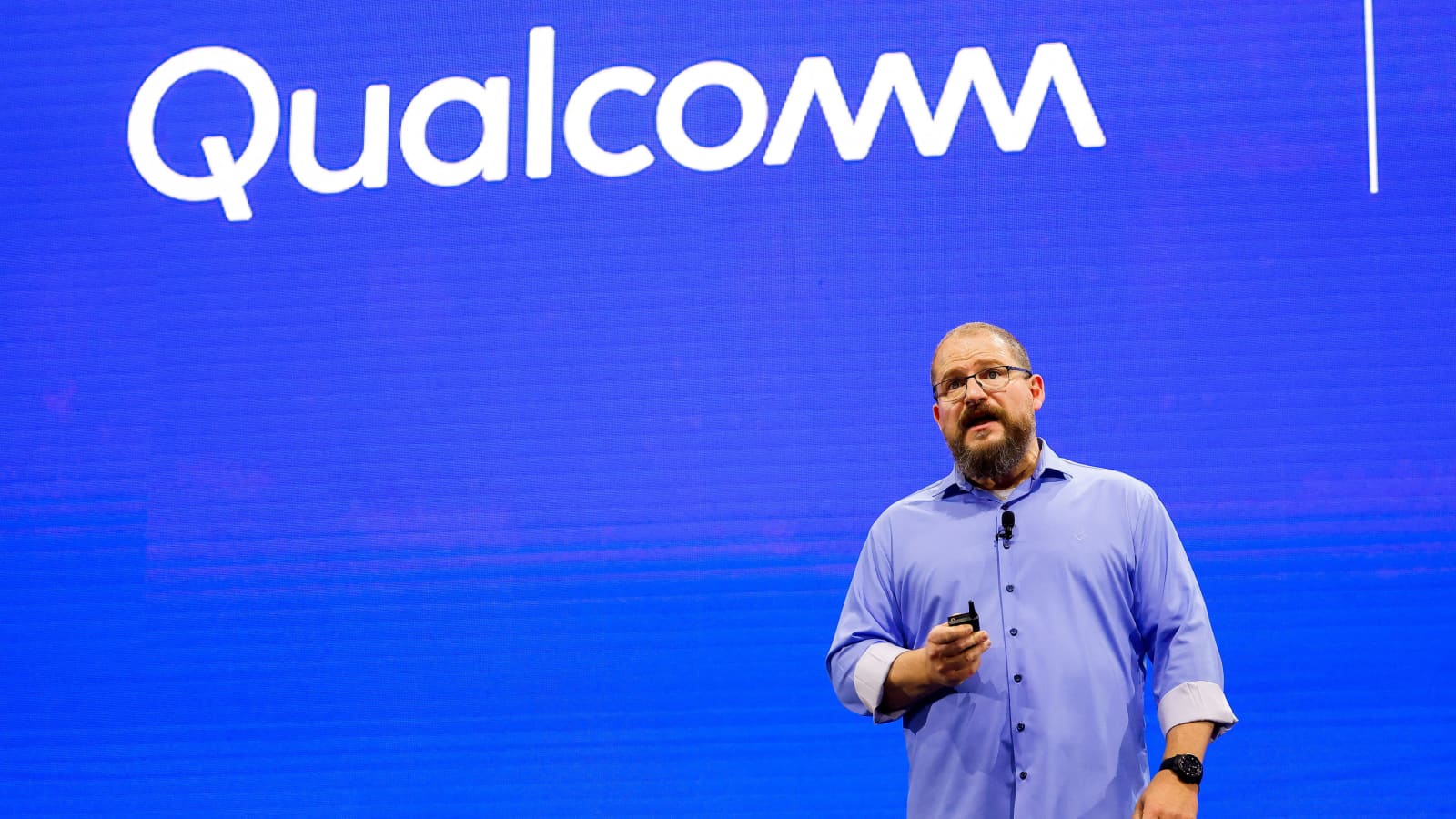
Qualcomm is rapidly becoming one of the biggest winners of the physical AI movement, with investors increasingly recognizing the company's growing influence beyond smartphones. Shares of the semiconductor giant surged 12% in a single trading session and have climbed approximately 75% over the past month, sending the stock to record levels and drawing fresh attention from Wall Street.
For years, Qualcomm was viewed primarily as a smartphone chip powerhouse. However, the company is now aggressively extending its technology ecosystem into AI-enabled devices, smart vehicles, edge computing, robotics, wearables, and future data center infrastructure.
The recent rally reflects a broader shift in investor sentiment as markets begin to recognize Qualcomm's expanding footprint across multiple high growth sectors.
Investors Are Reassessing Qualcomm's Position in the AI Race
The AI industry has largely been dominated by companies developing high performance chips for training large language models and cloud based workloads. Giants like Nvidia have captured much of the attention during the AI boom, creating trillion dollar market valuations and leading major stock market rallies.
Qualcomm has taken a different path.
Rather than competing directly in large scale AI model training, the company has focused heavily on bringing AI directly onto devices themselves. This strategy emphasizes "edge AI," where artificial intelligence processing happens on the device instead of sending data back and forth to cloud servers.
This approach offers several advantages:
• Lower power consumption
• Faster response times
• Improved privacy and security
• Reduced internet dependency
• Better real time performance
Analysts increasingly believe this trend could become one of the largest shifts in technology over the next decade.
According to market forecasts from various industry research firms, the global edge AI market could exceed hundreds of billions of dollars over the coming years as consumers and businesses demand smarter connected devices.
Investment firms are now paying closer attention.
Ivan Feinseth of Tigress Financial Partners said the market is starting to understand Qualcomm's broader role in connected technologies and the future of AI powered devices.
The renewed optimism suggests investors are beginning to see Qualcomm not simply as a smartphone supplier, but as a core infrastructure player for the next generation of intelligent hardware.
Smartphones Gave Qualcomm a Foundation for Expansion
Qualcomm built much of its success through smartphone processors and wireless technologies.
Its Snapdragon platform became one of the most widely used mobile chip systems in the world and powers millions of devices globally.
The company is now using that technological advantage as a launchpad into broader categories, including:
• AI capable personal computers
• Smart glasses
• Connected vehicles
• Industrial robotics
• Internet of Things devices
• Wearable technologies
The transition allows Qualcomm to leverage years of experience in power efficient computing and wireless communications while expanding into markets expected to grow significantly in the next decade.
Its Arm-based architecture has also become increasingly attractive because of its ability to deliver strong performance while maintaining energy efficiency.
This gives Qualcomm an advantage in battery dependent devices where performance and power management are equally important.
AI Devices Could Create an Entirely New Consumer Ecosystem
Reports suggesting potential collaboration between OpenAI and Qualcomm have added another layer of investor excitement.
The reported effort focuses on developing an AI-driven device powered by intelligent software agents capable of performing a wide range of tasks autonomously.
While details remain limited, speculation around the project has fueled discussions about the future of personal computing.
Industry observers believe future devices could move beyond traditional app based experiences and rely more heavily on AI systems capable of understanding user behavior, handling requests automatically, and performing complex actions independently.
If these technologies become mainstream, Qualcomm's processors could play a central role in powering such systems.
Automotive Business Is Becoming a Major Growth Driver
Qualcomm's automotive ambitions are becoming increasingly important to its long term strategy.
The company recently announced a partnership with automaker Stellantis to integrate Snapdragon processors throughout future vehicle platforms.
The technology will support:
• Vehicle cockpit systems
• Connectivity features
• Driver assistance technologies
• Advanced computing systems
• Digital experiences inside vehicles
Stellantis manages a large portfolio of automobile brands including Alfa Romeo, Chrysler, Dodge, Fiat, Jeep, Maserati, and several others.
The agreement adds to a growing list of automotive partnerships Qualcomm has secured over recent years.
The company has already established relationships with major industry players including:
• Bosch
• Volkswagen
• Hyundai
• BMW
Automotive growth has become one of Qualcomm's fastest expanding segments.
During its latest earnings report, the company reported automotive revenue growth of 38% year over year, reaching approximately $1.3 billion.
More than one million vehicles already operate autonomous or assisted driving systems using Qualcomm technology.
As vehicles become increasingly software driven and AI dependent, this market could become substantially larger.
Data Centers Represent Qualcomm's Next Big Opportunity
Another major catalyst behind the stock rally is investor enthusiasm surrounding Qualcomm's expansion into AI data centers.
The company previously introduced its AI200 and AI250 accelerator platforms, custom designed chips intended to compete in AI processing environments.
Unlike traditional graphics processors commonly used in AI workloads, these systems are designed to offer greater programmability and flexibility.
Qualcomm plans to make these chips available within complete rack-scale systems similar to next generation offerings entering the market.
This move places Qualcomm into a highly competitive but potentially enormous market opportunity.
Demand for AI infrastructure continues growing rapidly as technology companies increase spending on computing power to support AI applications and cloud services.
Chief Executive Cristiano Amon recently indicated that Qualcomm expects to begin delivering data center products to a large hyperscale customer within the calendar year.
Investors are expected to watch closely for further announcements during upcoming industry presentations and investor events.
The Bigger Picture
Qualcomm's recent stock surge reflects more than short term market enthusiasm.
The company is positioning itself at the intersection of several major technology trends including artificial intelligence, connected devices, automotive software, edge computing, and data center infrastructure.
While smartphone technology remains a key business pillar, investors increasingly see Qualcomm as a company preparing for a much broader future.
As AI moves beyond cloud servers and becomes embedded directly into everyday devices, Qualcomm may be entering a new chapter where its influence stretches far beyond the phone in people's pockets.
.webp)
Popular articles



Subscribe to unlock premium content
Celebrity-Endorsed High-Altitude Vineyards Transform Luxury Wine Market

Liquid Luxury on Ice

Hollywood’s Forgotten Treasures Become the Ultimate Status Symbol

Celebrity-Endorsed High-Altitude Vineyards Transform Luxury Wine Market
Liquid Luxury on Ice
Celebrity-Endorsed High-Altitude Vineyards Transform Luxury Wine Market