Prolonged Strait of Hormuz Shutdown Could Push Global Economy Into Recession

Prolonged Strait of Hormuz Shutdown Could Push Global Economy Into Recession
By
David Goldfarb
Last updated:
April 15, 2026
First Published:
April 15, 2026

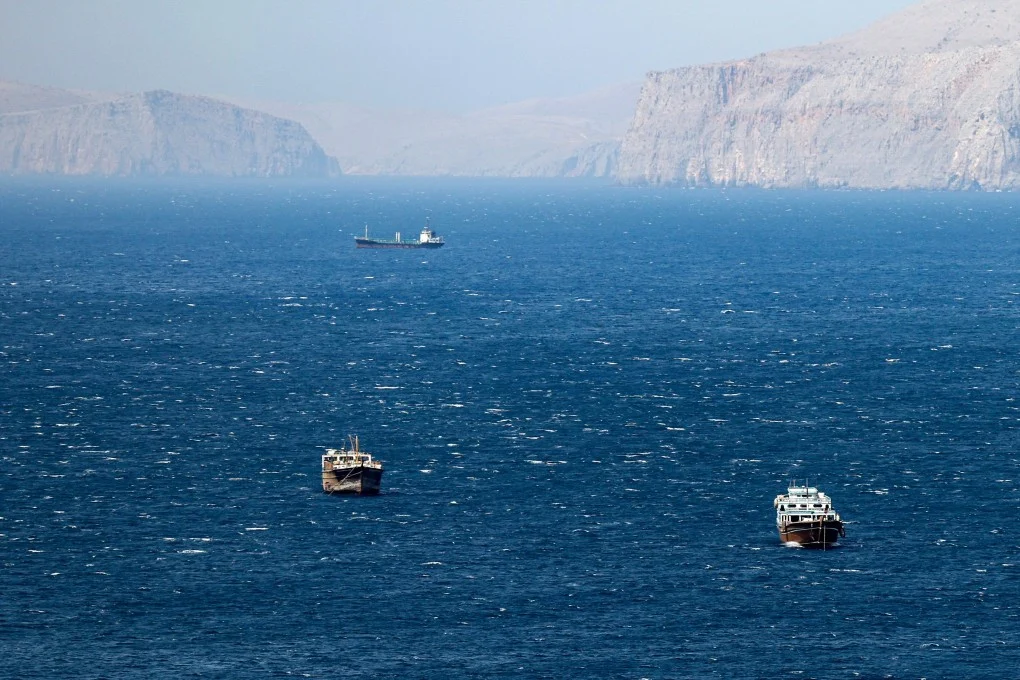
Photo: South China Morning Post
A Critical Chokepoint With Global Consequences
The potential closure of the Strait of Hormuz is emerging as one of the most serious economic threats facing global markets. According to Ken Griffin, a prolonged disruption lasting six to twelve months would almost certainly trigger a worldwide recession.
This narrow waterway handles roughly 20 percent of global oil supply, making it one of the most strategically important energy corridors in the world. Any sustained blockage would severely disrupt supply chains, drive up energy prices, and ripple across nearly every major economy.
Oil Prices at the Center of the Crisis
Energy markets are already reacting to heightened geopolitical tensions. Oil prices have surged to around $100 per barrel, significantly higher than pre-conflict levels, which were closer to $70.
While prices have pulled back slightly from peak wartime highs, they remain elevated enough to strain both developed and emerging economies. A full shutdown of the strait could push oil prices even higher, potentially exceeding $120 or more per barrel depending on the duration and severity of the disruption.
Higher energy costs feed directly into inflation, increasing transportation expenses, manufacturing costs, and consumer prices. This creates a cascading effect that slows economic growth and reduces purchasing power globally.
Why a Recession Becomes Unavoidable
Griffin’s warning is rooted in the scale of the disruption. Energy is a foundational input for nearly every sector of the economy. When supply is constrained and prices spike, the impact is immediate and widespread.
Countries heavily dependent on energy imports, particularly in Asia, would be among the hardest hit. Economies like Japan, South Korea, and India rely significantly on Middle Eastern oil flows passing through the Strait of Hormuz. A disruption would force them to seek alternative supplies at higher costs, putting pressure on trade balances and currency stability.
At the same time, central banks would face a difficult trade-off. Rising inflation driven by energy costs could limit their ability to cut interest rates, even as economic growth slows. This combination of high inflation and weak growth is a classic setup for a recessionary environment.
Markets Are Not Fully Pricing the Risk
Despite the seriousness of the situation, financial markets have shown a degree of resilience. Equity indices have largely recovered to levels seen before the initial escalation of conflict earlier this year.
However, this recovery may reflect optimism rather than a full assessment of risk. Many investors are betting that tensions will not escalate further or that any disruption will be short-lived.
Griffin and other market observers caution that this optimism could be misplaced. A prolonged conflict or sustained closure of critical supply routes is not fully priced into current valuations, leaving markets vulnerable to sudden corrections.
A Catalyst for Energy Transition
One of the longer-term implications of such a crisis would be an accelerated shift toward alternative energy sources. Griffin highlighted that a sustained oil shock would push governments and corporations to invest more aggressively in wind, solar, and nuclear energy.
This transition is already underway, but a major supply disruption could significantly speed up timelines. Countries may prioritize energy independence and diversification to reduce reliance on geopolitically sensitive regions.
Investments in renewable infrastructure, battery storage, and next-generation nuclear technologies could see a sharp increase as policymakers respond to the vulnerabilities exposed by the crisis.
Geopolitics and Strategic Timing
Griffin also pointed out that the current situation could have been even more severe under different circumstances. He suggested that delaying military action until adversaries had further strengthened their capabilities might have resulted in greater long-term instability.
This perspective highlights the complex interplay between geopolitics and economic outcomes. Decisions made in the context of national security can have far-reaching consequences for global markets, energy supply, and economic stability.
A Fragile Global Economy Faces Another Test
The global economy is still recovering from recent shocks, including pandemic disruptions, supply chain breakdowns, and inflationary pressures. A major energy crisis would add another layer of stress to an already fragile system.
With oil prices elevated, supply chains vulnerable, and geopolitical tensions unresolved, the margin for error is shrinking. The Strait of Hormuz remains a focal point, not just for energy markets, but for the broader trajectory of the global economy.
If the disruption proves temporary, markets may stabilize. But if it drags on, the consequences could extend far beyond energy, reshaping economic growth, investment strategies, and global trade patterns for years to come.
.webp)
Popular articles



Subscribe to unlock premium content
Namibia Is Quietly Building the Future of Ultra Remote Eco Luxury
.png)
Colombia’s Coffee Regions Are Becoming Luxury Travel Destinations Hidden in the Highlands

Chile’s Desert Skies Are Becoming the World’s Most Exclusive Destination

Namibia Is Quietly Building the Future of Ultra Remote Eco Luxury
Colombia’s Coffee Regions Are Becoming Luxury Travel Destinations Hidden in the Highlands
Namibia Is Quietly Building the Future of Ultra Remote Eco Luxury