Pope Leo Calls for Stronger AI Oversight and Warns Technology Could Push Humanity Toward Dangerous New Conflicts

Pope Leo Calls for Stronger AI Oversight and Warns Technology Could Push Humanity Toward Dangerous New Conflicts
By
Leah Rosenfeld
Last updated:
May 26, 2026
First Published:
May 26, 2026

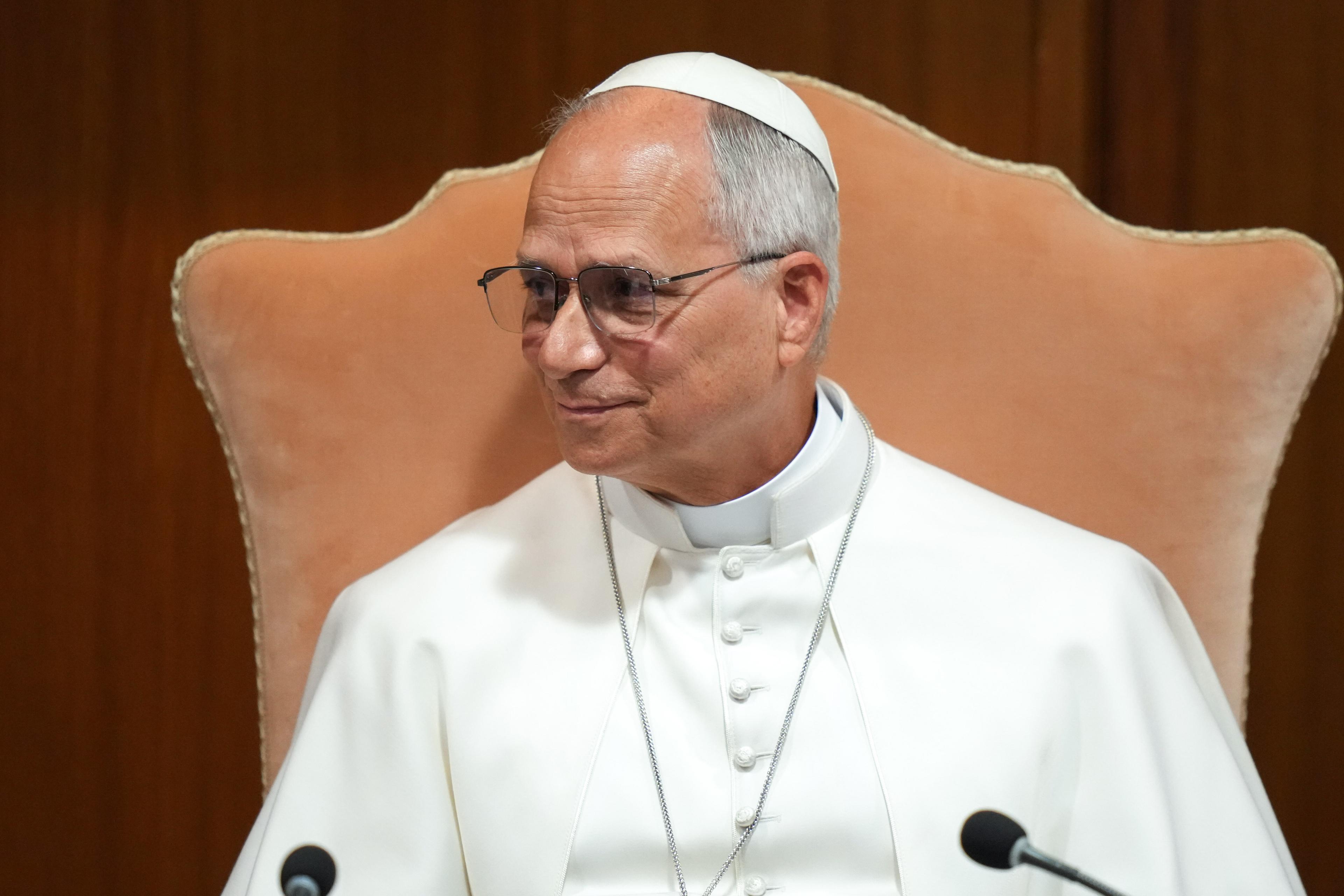
Photo: TIME
Pope Leo has delivered one of the strongest global warnings yet on artificial intelligence, calling for tighter oversight of rapidly advancing technologies and cautioning that AI systems could deepen global instability if left unchecked.
In his first major encyclical, a high-level teaching document addressed to the Catholic Church and broader society, the pope raised concerns over misinformation, autonomous warfare, unchecked corporate competition, and the concentration of technological power. He warned that accelerating AI development without meaningful safeguards could move the world toward prolonged conflict and social disruption.
The message signals a growing global debate surrounding artificial intelligence as governments, technology companies, and researchers race to develop increasingly powerful systems capable of transforming economies and societies.
Pope Leo Places Artificial Intelligence at the Center of His First Encyclical
The document, titled "Magnifica Humanitas" or "Magnificent Humanity," spans approximately 43,000 words, making it one of the most substantial early policy statements of Pope Leo's leadership.
Encyclicals represent one of the highest forms of papal teaching and are distributed to the Catholic Church's approximately 1.4 billion members, while also serving as broader statements on major global issues.
Unlike previous Church discussions focused primarily on social or economic concerns, Pope Leo placed artificial intelligence at the center of his message.
He argued that technological innovation is moving faster than political systems can effectively respond.
According to the pope, modern society faces a dangerous imbalance where technological acceleration is outpacing ethical, legal, and institutional oversight.
He called for stronger public engagement and warned governments against becoming passive observers as AI capabilities rapidly evolve.
Pope Calls for Governments to Slow the Pace of AI Expansion
One of the clearest themes throughout the document was the need for stronger regulation and political involvement.
Pope Leo argued that the future of AI should not be shaped exclusively by corporations, investors, or competitive market pressures.
He called for:
• Strong legal frameworks for AI development
• Independent oversight systems
• Better informed users and consumers
• Protection of workers' rights
• Greater safeguards for children
• Increased government accountability
The pope also expressed concern about data ownership and suggested that critical AI resources should not remain concentrated solely in private hands.
The issue has become increasingly important as a handful of large technology companies continue investing hundreds of billions of dollars into AI infrastructure, cloud systems, semiconductor technologies, and large language models.
Industry estimates suggest global AI spending could exceed several hundred billion dollars annually over the next decade.
Concerns Grow Around Autonomous Weapons and Human Control
Perhaps one of the strongest warnings involved artificial intelligence being integrated into military systems.
Pope Leo expressed concern that some autonomous weapons technologies are advancing to levels that may become difficult for humans to fully supervise or control.
The issue has become a major point of debate globally as military organizations and defense companies continue investing in systems capable of autonomous surveillance, targeting, and battlefield decision-making.
The pope argued that any use of AI within military operations should remain under strict ethical supervision.
He specifically warned against allowing machines to independently make lethal decisions.
The concern reflects broader discussions among researchers and policymakers who have repeatedly warned about scenarios where autonomous technologies may operate faster than human intervention allows.
Critics of AI-driven weapons argue that delegating life-and-death decisions to software systems raises significant moral and legal questions.
Competition Between AI Companies Comes Under Scrutiny
Pope Leo also directed attention toward growing competition among major AI developers.
He warned that the intense race to build increasingly advanced systems could encourage speed over responsibility.
At a Vatican event connected to the document's release, technology leaders and researchers discussed the growing pressures surrounding AI development.
Executives and researchers within the sector have frequently acknowledged that companies operate under strong commercial incentives, where pressure to innovate rapidly can sometimes compete with long-term ethical considerations.
The pope urged companies to reduce the intensity of competitive behavior and focus instead on collective responsibility.
His comments arrive as leading AI firms continue competing aggressively for computing resources, top engineering talent, and technological leadership.
Pope Questions Modern Warfare and Rejects Traditional War Doctrine
Beyond artificial intelligence, Pope Leo used the document to issue one of his strongest statements on war and global conflict.
He criticized rising instability around the world and expressed concern about increasing violence affecting civilian populations.
The pope argued that the traditional concept of "just war" may no longer adequately reflect modern realities.
Historically, the doctrine attempted to establish moral conditions under which war could be considered justified, particularly in defense against aggression.
However, Pope Leo suggested that modern warfare, particularly involving advanced technologies and weapons systems, has changed the equation.
He argued that large-scale violence increasingly creates devastating consequences for ordinary civilians and weakens efforts toward lasting peace.
He also warned that political leaders could potentially use external conflicts as distractions from domestic pressures and internal challenges.
AI Supply Chains and Hidden Human Costs Receive Attention
The document also expanded beyond software and algorithms by examining the broader human infrastructure supporting modern technology.
Pope Leo criticized what he described as emerging forms of economic exploitation connected to AI systems and technology production.
He pointed toward labor conditions affecting workers involved in manufacturing electronic devices and extracting critical materials required for modern technologies.
The production of smartphones, computers, batteries, and AI-related hardware relies heavily on supply chains involving rare earth elements and other critical minerals.
The pope argued that technological progress should not come at the cost of human dignity or unsafe working conditions.
He emphasized that innovation should benefit society broadly rather than place disproportionate burdens on vulnerable communities.
Acknowledging Historical Failures
The document also addressed historical issues involving the Church itself.
Pope Leo acknowledged that the Catholic Church did not strongly condemn transatlantic slavery during earlier periods of history and issued a direct apology.
He described the issue as a lasting wound within Christian memory and called for recognition of past failures.
The statement represented a broader effort to connect historical accountability with current discussions about ethics and responsibility.
The Bigger Message Behind the Document
Throughout the document, Pope Leo repeatedly returned to one central theme: technological progress should remain guided by human values rather than pure efficiency or competitive ambition.
He used the biblical story of the Tower of Babel as a metaphor for modern technological expansion, suggesting that societies can become consumed by ambition while losing sight of broader responsibilities.
Despite his concerns, the pope also argued against hopelessness.
He emphasized that governments, technology companies, researchers, and ordinary citizens all play a role in shaping how artificial intelligence develops in the future.
As AI becomes increasingly integrated into business, education, healthcare, finance, and military systems, Pope Leo's message reflects a wider global question that extends beyond religion:
How much power should society give to machines, and who ultimately remains responsible for the outcomes?
.webp)
Popular articles



Subscribe to unlock premium content
Lunar Dreams Become Reality

Defying Gravity in Billionaire Gyms

Celebrity-Curated Smart Homes with AI Butlers Redefine Modern Luxury

Lunar Dreams Become Reality
Defying Gravity in Billionaire Gyms
Lunar Dreams Become Reality
.png)
.png)