Panama Seizes Canal-Terminal Operations, Grants Interim Control to Maersk and MSC

Panama Seizes Canal-Terminal Operations, Grants Interim Control to Maersk and MSC
By
Augusta Parker
Last updated:
February 24, 2026
First Published:
February 24, 2026

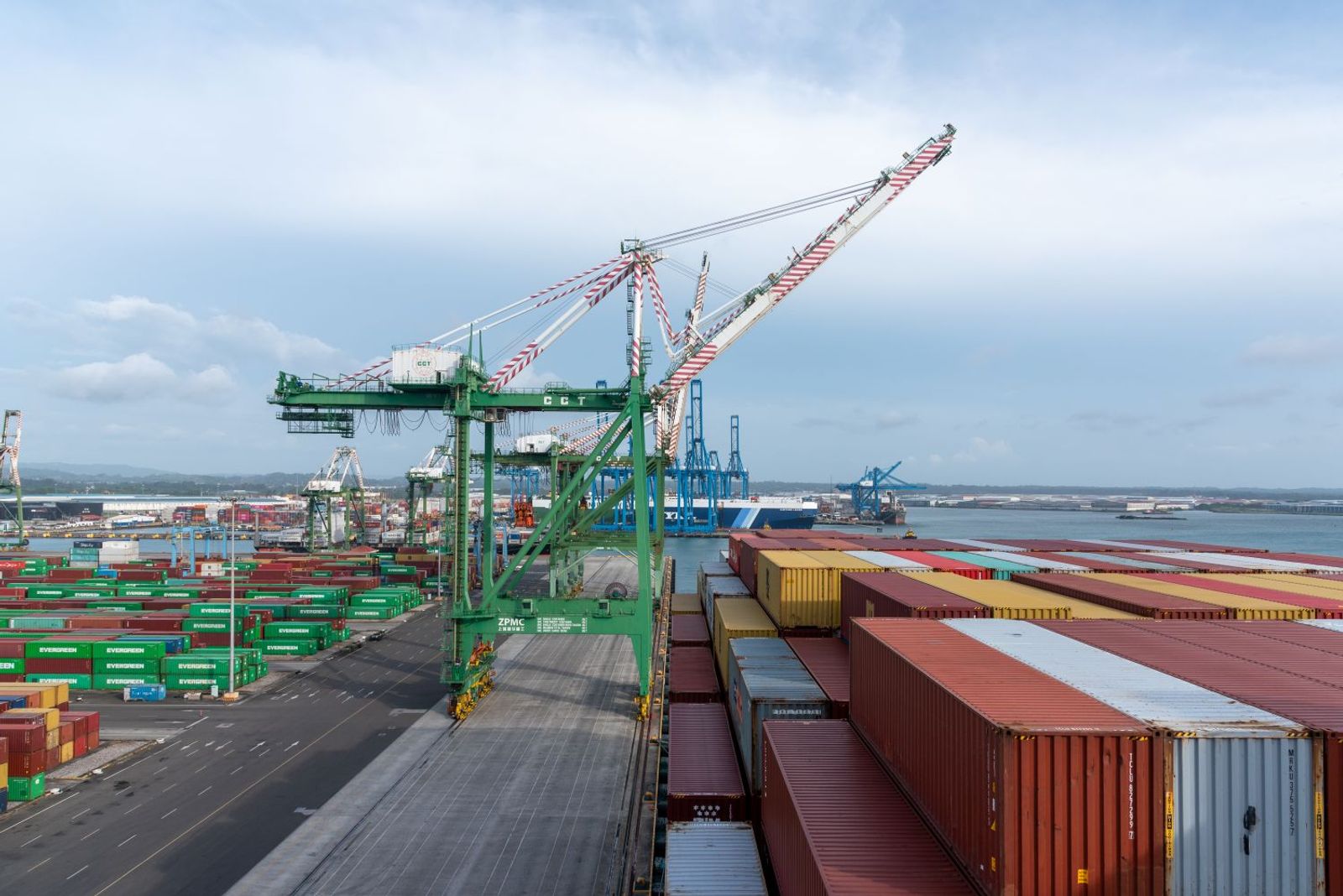
Photo: Journal of Commerce
Court Ruling Spurs Shift in Panama’s Port Management
Panama officially annulled port concession contracts held by CK Hutchison’s subsidiary, Panama Port Company (PPC), formalizing a Supreme Court decision from last month that declared the 20-year concessions for the Balboa and Cristobal terminals unconstitutional.
The decision effectively transfers interim operations of the strategic Panama Canal ports to global shipping giants: A.P. Moller-Maersk will manage the Balboa terminal on the Pacific side, while Mediterranean Shipping Co. (MSC) takes over the Cristobal terminal on the Atlantic side. The government decree ensures continuity at the ports while a new concession process unfolds over the next 18 months.
Operational Transition and Assets
Under the transitional plan, Panama assumed full control of port infrastructure, including cranes, vehicles, IT systems, and other operational equipment. This move aims to prevent any disruption in port activity, which handles millions of containers annually and is a key artery for global maritime trade.
APM Terminals, a Maersk subsidiary, will oversee daily operations at Balboa, while MSC’s Terminal Investment subsidiary runs Cristobal, ensuring smooth logistics flow for ships traversing the canal.
Market and Corporate Reactions
Shares of CK Hutchison dipped 0.9% following the announcement, though the stock has gained over 20% year-to-date. In a statement, the company called the executive decree “unlawful” and confirmed PPC ceased operations at both terminals. CK Hutchison plans to pursue legal action, warning that any operations by Maersk or MSC without its agreement could trigger arbitration or further legal recourse.
Geopolitical Implications
The dispute has become a flashpoint between Washington and Beijing. U.S. authorities have long expressed concern over China’s influence in the Panama Canal, labeling it a critical component of global trade security. Beijing has criticized the annulment and cautioned Panama of potential political and economic consequences if it does not reverse course.
Earlier, CK Hutchison attempted to sell non-Chinese port assets in a $23 billion deal led by BlackRock, but Beijing intervened to stall the transaction, citing concerns over perceived alignment with U.S. interests. Since the ruling, China reportedly instructed state-owned firms to halt discussions on new projects in Panama and advised shipping companies to consider alternate routes.
Strategic Significance of the Ports
Balboa and Cristobal terminals are pivotal for container traffic passing through the Panama Canal, connecting trade between the Atlantic and Pacific Oceans. The interim arrangement with Maersk and MSC ensures uninterrupted operations while Panama navigates legal, commercial, and geopolitical complexities.
Analysts note the ruling may serve as a template for other nations seeking to reassert sovereignty over critical infrastructure linked to foreign operators, particularly in regions where U.S.-China strategic competition is intensifying.
.webp)
Popular articles



Subscribe to unlock premium content
Visa and the Invisible Engine Powering Global Digital Money
Disney’s Streaming Empire Built on Regional Storytelling Power
The Slow Revolution of Steel and Memory Across Eastern Europe
Visa and the Invisible Engine Powering Global Digital Money
Disney’s Streaming Empire Built on Regional Storytelling Power
Visa and the Invisible Engine Powering Global Digital Money