
Palo Alto Networks Stock Jumps as CEO Nikesh Arora Makes $10 Million Bet on Company

Palo Alto Networks Stock Jumps as CEO Nikesh Arora Makes $10 Million Bet on Company
By
David Goldfarb
Last updated:
March 31, 2026
First Published:
April 25, 2026

Insider Buying Sparks Market Optimism
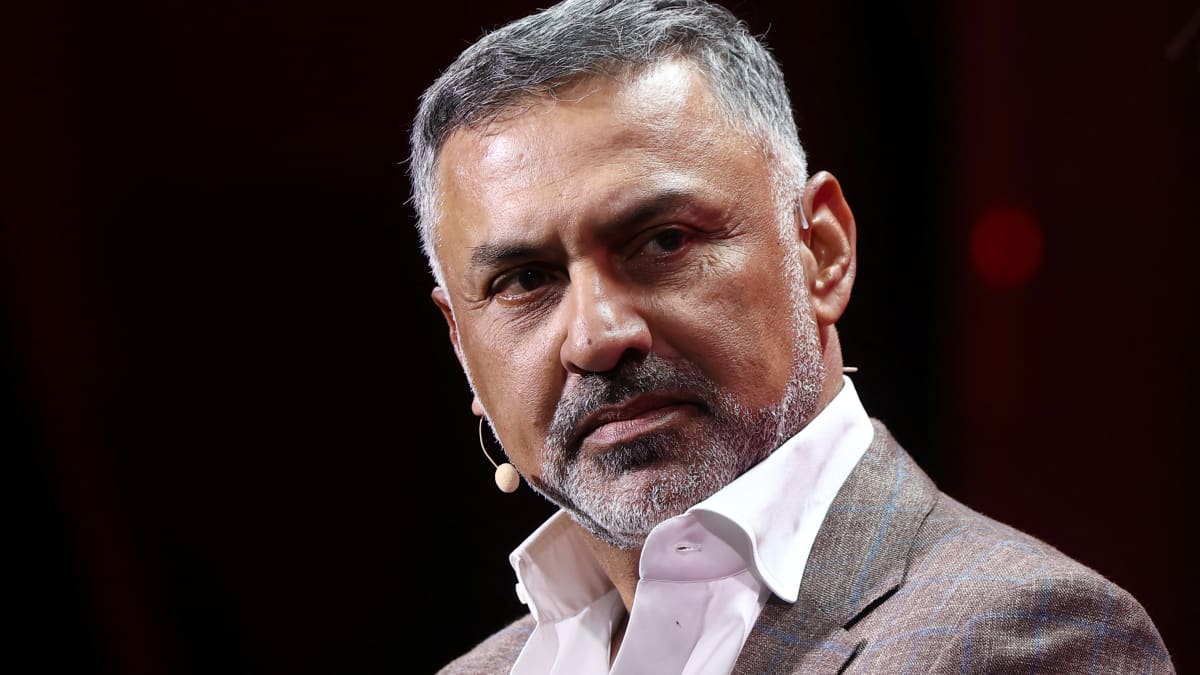
Shares of Palo Alto Networks surged after CEO Nikesh Arora disclosed a significant personal investment in the company—his first stock purchase since 2019.
According to a recent SEC filing, Arora acquired 68,085 shares worth approximately $10 million, a move that immediately caught Wall Street’s attention. The market responded positively, sending the stock up around 5% in a single session and signaling renewed investor confidence in the cybersecurity giant.
This kind of insider buying is often interpreted as a strong vote of confidence, particularly during periods of uncertainty.
Stock Under Pressure Despite Strong Position
The rally comes after a challenging stretch for Palo Alto Networks, with shares down roughly 16% year-to-date. The broader cybersecurity sector has also faced heavy selling pressure as investors reassess the long-term impact of artificial intelligence on traditional software business models.
Concerns are growing that AI could automate large portions of cybersecurity workflows, potentially disrupting revenue streams for established players. This narrative has triggered a broader rotation away from software stocks, even those with strong fundamentals.
AI Disruption Fears Shake the Industry
Recent developments in the AI space have intensified these concerns. Anthropic introduced advanced tools capable of scanning and identifying code vulnerabilities at scale, raising questions about how much of cybersecurity could eventually be automated.
Reports suggesting that next-generation AI models could also be exploited by malicious actors have further heightened anxiety among investors. The possibility of AI both defending and enabling cyberattacks has created a complex and evolving threat landscape.
Arora Calls for Industry Collaboration
In response, Arora has taken a proactive stance, urging closer collaboration between AI developers and cybersecurity firms. In a recent blog post, he emphasized that the industry is at a critical inflection point where coordinated action is essential.
He argued that as cyber threats become more sophisticated—potentially powered by AI—defensive capabilities must evolve just as quickly. This includes integrating AI into security platforms while working alongside leading AI labs to anticipate and neutralize emerging risks.
Strategic Expansion and AI Investments
Over the past year, Palo Alto Networks has aggressively expanded its capabilities to stay ahead of industry shifts. The company completed a major acquisition of CyberArk, strengthening its position in identity security—one of the fastest-growing segments in the market.
In addition, Palo Alto has been investing heavily in AI-driven security solutions and recently acquired observability platform Chronosphere for over $3.3 billion. These moves reflect a broader strategy to integrate automation, analytics, and real-time threat detection into its core offerings.
Sector-Wide Rebound Signals Stabilization
Palo Alto’s gains were mirrored across parts of the cybersecurity sector. Companies like Okta, CrowdStrike, and Netskope also posted modest gains, suggesting that investor sentiment may be stabilizing after weeks of declines.
While uncertainty around AI disruption remains, insider confidence and continued enterprise demand for cybersecurity solutions are helping to restore some balance to the market.
A Strategic Signal in a Transforming Market
Arora’s $10 million investment is more than just a personal financial move—it’s a strategic signal at a time when the cybersecurity industry is undergoing rapid transformation.
As AI reshapes both threats and defenses, companies that can adapt quickly while maintaining customer trust are likely to emerge stronger. For Palo Alto Networks, the combination of leadership confidence, aggressive expansion, and AI integration may prove critical in navigating this next phase.
.webp)
Popular articles



Subscribe to unlock premium content
AI-Curated Luxury Shopping Experiences Transform the Market

Limited-Run Anime Originals Redefining Global Entertainment

Micro-Vertical Farming Becomes Corporate Gold
.png)
AI-Curated Luxury Shopping Experiences Transform the Market
Limited-Run Anime Originals Redefining Global Entertainment
AI-Curated Luxury Shopping Experiences Transform the Market


