Palo Alto Networks Drops After Soft Outlook Despite Strong Quarterly Beat

Palo Alto Networks Drops After Soft Outlook Despite Strong Quarterly Beat
By
Augusta Parker
Last updated:
February 18, 2026
First Published:
April 25, 2026

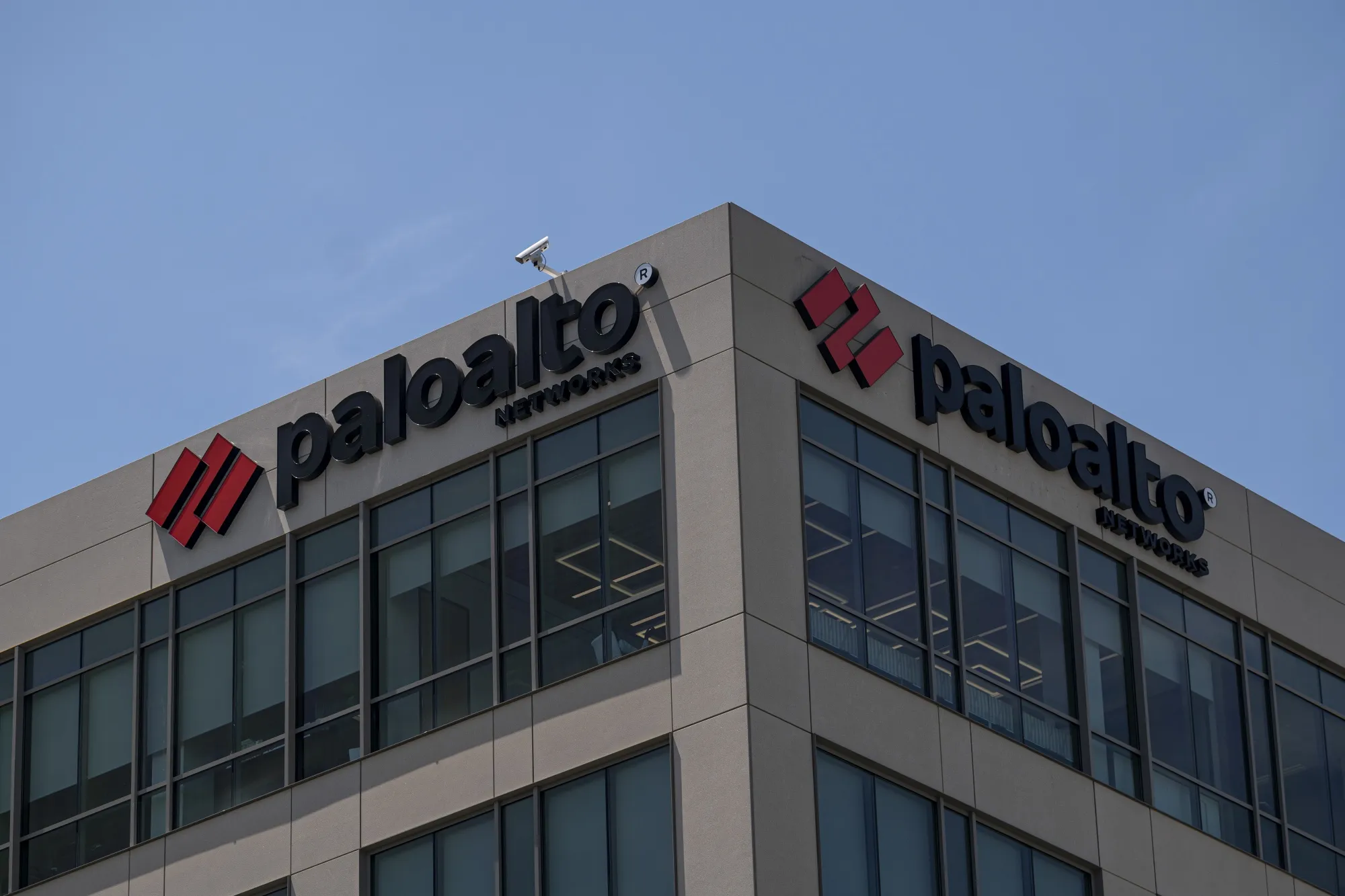
Photo: Bloomberg.com
Market Reaction After Earnings Release
Palo Alto Networks shares declined about 6% after the cybersecurity giant issued a softer-than-expected profit forecast for the upcoming quarter, overshadowing an otherwise solid earnings report. Investors focused on the cautious outlook, sending the stock lower in after-hours trading despite revenue and earnings beating Wall Street projections.
The pullback adds to a challenging start to the year for the company’s stock, which has already fallen roughly 11% year to date amid broader volatility in high-growth technology names.
Quarterly Results Beat Expectations
For its fiscal second quarter, Palo Alto reported adjusted earnings of $1.03 per share, comfortably ahead of expectations of about $0.94. Revenue reached approximately $2.59 billion, slightly above forecasts and representing about 15% growth from the same period a year earlier.
Profitability also improved meaningfully. Net income climbed to around $432 million, or $0.61 per share, compared with $267 million, or $0.38 per share, in the prior year. The results reflect continued demand for integrated cybersecurity platforms as enterprises consolidate vendors and increase spending to address more complex threat environments.
Guidance Disappoints Investors
The primary concern for markets was the company’s outlook for the fiscal third quarter. Palo Alto projected adjusted earnings in the range of $0.78 to $0.80 per share, well below analyst expectations of roughly $0.92.
Revenue guidance, however, remained strong, with the company forecasting between $2.94 billion and $2.95 billion, significantly above consensus estimates. The mixed outlook suggests that while demand remains healthy, higher operating costs and continued investment in growth initiatives could weigh on margins in the near term.
Aggressive Expansion Through Acquisitions
The company is in the midst of an ambitious expansion strategy under CEO Nikesh Arora, aimed at turning Palo Alto into a comprehensive cybersecurity platform spanning network, cloud, identity, and AI-driven protection.
Earlier this month, the company completed its largest acquisition to date, purchasing identity security leader CyberArk for about $25 billion. The deal significantly strengthens Palo Alto’s position in identity protection, a rapidly growing segment as organizations adopt zero-trust security frameworks.
In addition, Palo Alto recently finalized the acquisition of Chronosphere for more than $3 billion, expanding its capabilities in cloud monitoring and performance analytics. The company also announced plans to acquire Israeli startup Koi, which focuses on securing AI agents — a new attack surface emerging as enterprises deploy generative AI tools.
Since Arora took the helm in 2018, Palo Alto has completed more than 20 acquisitions, reflecting a deliberate strategy to build a unified platform rather than a collection of standalone products.
Growth in Recurring Revenue and Contracts
Underlying metrics show continued momentum in the company’s subscription-driven business model. Annual recurring revenue climbed 33% to roughly $6.33 billion, highlighting strong customer retention and expansion.
Remaining performance obligations — a key indicator of future revenue locked in through contracts — reached about $16 billion, exceeding market expectations and signaling a robust pipeline of demand across enterprise and government clients.
AI Driving Platform Consolidation
Management pointed to the growing role of artificial intelligence in reshaping cybersecurity purchasing decisions. Enterprises are increasingly looking to consolidate tools into integrated platforms capable of automated detection and response, a trend Palo Alto refers to as “platformization.”
The company has rolled out AI-powered agents designed to automate threat analysis and incident response workflows, helping customers reduce response times and operational costs. These capabilities are becoming a major differentiator as cyberattacks grow more sophisticated and frequent.
What It Means for Investors
The latest results highlight a familiar dynamic for high-growth software companies: strong demand and revenue momentum paired with investor sensitivity to forward guidance. Palo Alto’s expanding product portfolio and large contract backlog point to solid long-term fundamentals, but near-term margin pressure and integration costs from major acquisitions could continue to influence sentiment.
If the company successfully integrates its recent purchases and sustains high recurring revenue growth, it could strengthen its position as one of the dominant platforms in enterprise cybersecurity. For now, however, markets appear focused on the earnings outlook, making execution over the next few quarters critical to restoring confidence.
.webp)
Popular articles



Subscribe to unlock premium content
Remote Himalayan Villages Transforming Ancient Traditions into Lucrative Wellness Ventures

Gilded Holidays in Fashion

Frozen Frontiers of Luxury

Remote Himalayan Villages Transforming Ancient Traditions into Lucrative Wellness Ventures
Gilded Holidays in Fashion
Remote Himalayan Villages Transforming Ancient Traditions into Lucrative Wellness Ventures