
Pakistan Positions Itself as Mediator in U.S.-Iran Talks as Conflict Risks Ground War Escalation

Pakistan Positions Itself as Mediator in U.S.-Iran Talks as Conflict Risks Ground War Escalation
By
David Goldfarb
Last updated:
March 30, 2026
First Published:
April 25, 2026

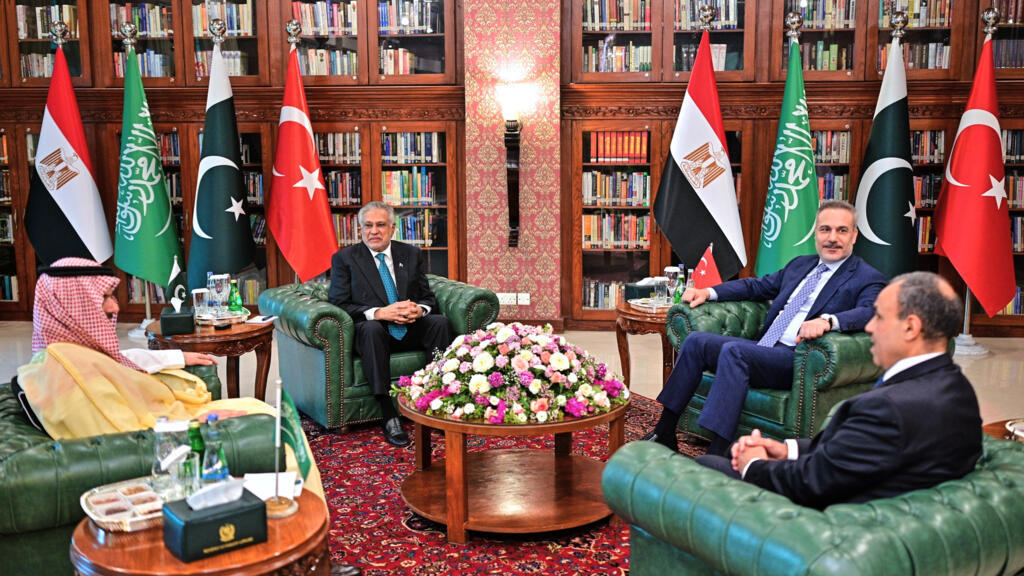
Photo: France 24
Pakistan steps in as potential peace broker
Pakistan is emerging as a key diplomatic player in efforts to de-escalate the intensifying conflict between United States and Iran. Deputy Prime Minister and Foreign Minister Ishaq Dar confirmed that both nations have expressed confidence in Pakistan’s ability to facilitate high-level talks in the coming days.
The announcement follows a series of regional diplomatic engagements involving foreign ministers from Saudi Arabia, Turkey, and Egypt, signaling a coordinated push to bring both sides toward direct negotiations after weeks of escalating violence.
While no formal confirmation has been issued by Washington or Tehran regarding participation, Pakistan has positioned itself as a neutral ground capable of hosting meaningful dialogue aimed at achieving a lasting resolution.
Ground war fears intensify as U.S. builds presence
At the same time, the military situation continues to deteriorate. Donald Trump is reportedly weighing the possibility of deploying U.S. ground troops into Iran, a move that could significantly escalate the conflict.
Recent reports indicate that thousands of American troops have already been deployed across the region, including the arrival of the 31st Marine Expeditionary Unit, comprising approximately 3,500 personnel. Military planners are said to be preparing for a potential multi-week ground operation, although no final decision has been announced.
U.S. lawmakers remain divided on the issue. Some Republican leaders have expressed conditional support for limited operations, particularly if focused on short-term objectives rather than prolonged occupation. However, broader military engagement would likely require congressional approval, especially given the scale of potential involvement.
Iran issues warnings and escalates rhetoric
Iranian officials have responded with strong warnings, signaling readiness to confront any U.S. ground presence. Senior leaders have indicated that American forces entering Iranian territory would face immediate retaliation, raising fears of a wider regional war.
In a further escalation, Iran has threatened to target U.S. and Israeli educational institutions in the region following reported strikes on academic facilities in Tehran. These developments highlight the expanding scope of the conflict, which now includes both military and symbolic targets.
Tehran has also rejected a proposed U.S. framework for negotiations, instead outlining its own conditions, including guarantees against future attacks, reparations, and full control over strategic waterways.
Strategic chokepoints disrupt global energy markets
The conflict is already having a profound impact on global energy markets. Iran’s control over the Strait of Hormuz—a critical passage through which nearly 20 percent of the world’s oil supply flows—has effectively restricted maritime traffic, sending shockwaves through global supply chains.
Although Iran has recently allowed limited passage for certain vessels, including Pakistani-flagged ships, uncertainty remains high. Oil prices have surged in response, with U.S. crude nearing $100 per barrel and Brent crude exceeding $110, marking their highest levels in over three years.
Adding to the pressure, Iran-backed Houthi forces have entered the conflict, launching missile strikes and raising the risk of disruptions in the Bab el-Mandeb Strait. This route accounts for roughly 12 percent of global seaborne oil trade and 8 percent of liquefied natural gas shipments, making it another critical vulnerability.
Industrial disruptions raise supply concerns
Beyond oil, the conflict is impacting key industrial commodities. An Iranian strike targeting an aluminum facility in Bahrain has intensified concerns about global supply shortages. The plant, one of the largest in the world, had already reduced production by nearly 19 percent due to ongoing disruptions.
Aluminum prices have responded accordingly, reaching multi-year highs before stabilizing slightly, though they remain elevated compared to pre-conflict levels. Given aluminum’s essential role in industries ranging from construction to electronics and renewable energy, prolonged disruptions could have far-reaching economic consequences.
Diplomatic efforts face significant hurdles
Despite renewed diplomatic momentum, significant obstacles remain. Iran has shown limited willingness to engage under pressure, while the U.S. continues to balance military strategy with negotiation efforts.
Regional actors, including the United Arab Emirates, have called for any agreement to include strict guarantees preventing future attacks, as well as compensation for damage to civilian infrastructure.
Meanwhile, indirect communication channels between the U.S. and Iran persist, but efforts are now shifting toward establishing direct dialogue—a key objective of the ongoing talks in Pakistan.
Rising human and geopolitical costs
The human toll of the conflict continues to mount across multiple countries. Casualties have been reported in Iran, Israel, Lebanon, Iraq, and Gulf states, with total deaths reaching into the thousands.
The involvement of additional regional actors, including Hezbollah and various militia groups, has further complicated the situation, increasing the likelihood of a prolonged and multi-front conflict.
A critical moment for global stability
As diplomatic efforts and military preparations unfold simultaneously, the coming days could prove निर्णত in shaping the trajectory of the conflict. Pakistan’s role as a potential mediator offers a pathway toward de-escalation, but success will depend on the willingness of both sides to engage in meaningful negotiations.
With global markets, energy supplies, and geopolitical stability hanging in the balance, the stakes have rarely been higher. The intersection of diplomacy and العسكرية strategy will ultimately determine whether the crisis moves toward resolution or deeper escalation.
.webp)
Popular articles



Subscribe to unlock premium content
AI-Curated Luxury Shopping Experiences Transform the Market

Limited-Run Anime Originals Redefining Global Entertainment

Micro-Vertical Farming Becomes Corporate Gold
.png)
AI-Curated Luxury Shopping Experiences Transform the Market
Limited-Run Anime Originals Redefining Global Entertainment
AI-Curated Luxury Shopping Experiences Transform the Market


