Oil Surges Above $110 As Middle East Conflict Escalates And U.S. Pulls Diplomats From Saudi Arabia

Oil Surges Above $110 As Middle East Conflict Escalates And U.S. Pulls Diplomats From Saudi Arabia
By
Alina Sinclair
Last updated:
March 9, 2026
First Published:
April 25, 2026

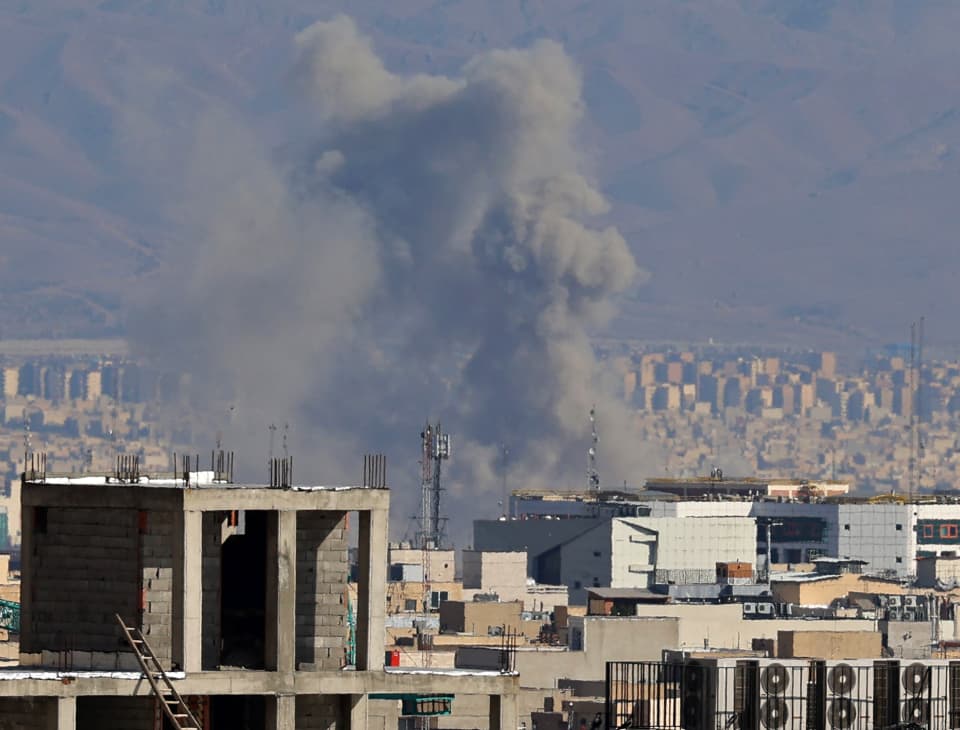
Smoke rises from the site of airstrikes in a central area of the Iranian capital Tehran on March 6, 2026.
Atta Kenare | Afp | Getty Images
U.S. Orders Nonessential Staff To Leave Saudi Arabia
The United States has instructed non-essential diplomatic staff and their families to depart Saudi Arabia as tensions surrounding the expanding Iran conflict intensify across the Middle East. The directive, issued Monday by the U.S. Embassy in Riyadh, reflects growing concerns about missile attacks, drone strikes and potential terrorism threats linked to the escalating regional confrontation.
American officials cited increasing security risks including long-range missile capabilities, armed militia activity and drone operations originating from Iran and allied groups in Yemen. The decision marks the first evacuation order for U.S. government personnel in Saudi Arabia since the current conflict erupted.
Security analysts say the precaution reflects fears that American installations, embassies and military facilities across the Gulf could become targets if the conflict spreads further.
Israel Expands Strikes On Iranian Infrastructure
At the same time, Israel confirmed that its military launched a fresh wave of strikes targeting what it described as strategic infrastructure tied to Iran’s ruling regime. The operations focused primarily on central Iran and reportedly included several industrial and logistical sites linked to military supply chains.
The attacks came one day after Israeli forces struck Iranian oil facilities on Sunday, igniting large fires and sending thick plumes of smoke across parts of Tehran and nearby Karaj. Satellite imagery circulating among regional security analysts suggested that at least two fuel storage complexes and sections of a refinery network were damaged.
Energy analysts noted that these were among the first direct strikes on Iran’s energy infrastructure since the conflict began, raising fears that oil production capacity across the region could face significant disruptions.
Global Oil Prices Jump As Supply Concerns Mount
Financial markets reacted immediately to the escalation. Crude oil prices surged sharply on Monday as traders began pricing in the risk of long-term supply disruptions across the Middle East, which accounts for nearly one-third of global oil production.
U.S. benchmark West Texas Intermediate (WTI) crude jumped nearly 30 percent, rising roughly $27 to trade around $117 per barrel. International benchmark Brent crude climbed more than 25 percent, reaching approximately $118 per barrel during early trading.
The last time oil prices exceeded the $110 mark was in 2022 following Russia’s invasion of Ukraine, which caused one of the largest energy market shocks in recent history.
Several Middle Eastern producers, including the United Arab Emirates, Kuwait and Iraq, signaled temporary production reductions after tanker shipments slowed and storage facilities began filling due to disrupted exports.
Energy traders say the sudden tightening of supply could remove as much as 3 to 4 million barrels per day from global markets if the situation persists.
Strait Of Hormuz Disruptions Shake Global Energy Routes
A major factor behind the price surge is the growing disruption in the Strait of Hormuz, one of the most strategically important oil transit routes in the world. Roughly 20 percent of the world’s daily oil supply, or about 21 million barrels per day, normally passes through the narrow waterway connecting the Persian Gulf to international shipping lanes.
Shipping companies have begun rerouting tankers after Tehran warned that vessels attempting to cross the strait could face attacks. Several insurance providers have also raised war-risk premiums for ships traveling through the area.
U.S. Energy Secretary Chris Wright stated that normal shipping activity would resume once American forces neutralize Iran’s capacity to threaten commercial vessels.
Energy and geopolitics experts warn that even temporary interruptions at the strait can send shockwaves through global markets.
Clayton Seigle, a senior energy analyst at the Center for Strategic and International Studies, said investors had initially hoped the conflict would remain contained. That assumption, he noted, is rapidly fading.
“The market had a short window where investors believed the conflict would stay localized,” Seigle explained. “That window appears to be closing, and traders are now preparing for a much longer period of instability.”
Iran Deploys Drone Swarms Across Gulf Region
Iran has also intensified its use of Shahed-series drones, launching large swarms designed to overwhelm regional air defense systems across Gulf states hosting American military bases.
These drones, often described as “kamikaze drones,” are relatively inexpensive compared with the advanced interceptor missiles used to destroy them. Defense analysts estimate a single Shahed drone costs between $20,000 and $50,000, while intercepting missiles from advanced systems such as the Patriot air defense platform can cost more than $3 million each.
The same drone models have been widely used by Russia in its ongoing war in Ukraine, where they have targeted power plants, infrastructure and urban centers.
Ukraine has developed specialized interceptor drones capable of shooting down incoming Shahed aircraft at significantly lower cost.
Ukrainian President Volodymyr Zelenskyy confirmed that Kyiv has agreed to assist the United States by sending drone experts and interceptor technology to help protect American military bases in Jordan and other regional locations.
The assistance is expected to include technical advisors and counter-drone systems designed to improve protection for both military personnel and nearby civilian areas.
International Community Moves To Contain Conflict
Several countries are exploring ways to support Gulf nations facing rising security threats.
Australia said it is reviewing requests from regional partners seeking defensive military assistance, although Canberra reiterated it does not plan to participate in direct offensive operations against Iran.
China has also stepped into the diplomatic arena, sending a special envoy to the Middle East to push for negotiations aimed at halting hostilities. Chinese Foreign Minister Wang Yi renewed Beijing’s call for an immediate ceasefire, describing the conflict as a crisis that should never have escalated into open warfare.
Diplomats say the coming weeks could prove decisive in determining whether the conflict stabilizes or expands into a broader regional confrontation.
Iran Announces New Supreme Leader
In a major political development inside Iran, officials confirmed that Mojtaba Khamenei, the son of the late Supreme Leader Ayatollah Ali Khamenei, has assumed the country’s highest religious and political authority.
The leadership transition places Mojtaba Khamenei in control of Iran’s powerful institutions, including the Islamic Revolutionary Guard Corps and several influential clerical networks.
Western analysts widely view the appointment as a continuation of Iran’s hardline political direction.
Former CIA Director David Petraeus described the leadership change as troubling, arguing that the new supreme leader represents a continuation of the same ideological approach that defined his father’s rule.
Israel has previously warned that any successor to Iran’s supreme leadership would remain a legitimate military target if the conflict intensifies.
U.S. Considers Additional Military Options
Meanwhile, reports suggest that U.S. officials are examining potential operations to secure Iran’s stockpile of highly enriched uranium. Intelligence agencies are attempting to determine the precise location of the material, which is believed to be close to weapons-grade enrichment levels.
Some defense planners are reportedly evaluating scenarios involving special operations forces that could seize or neutralize the stockpile to prevent further nuclear escalation.
President Donald Trump signaled support for aggressive action, stating that temporary spikes in oil prices would be an acceptable cost if it eliminated Iran’s nuclear threat.
Global Markets React To Growing Energy Crisis
The geopolitical shock has already spread beyond energy markets. Stock markets across Asia fell sharply on Monday as investors rushed to reduce exposure to risk-sensitive assets.
Technology and manufacturing stocks led the decline amid fears that rising fuel costs could disrupt supply chains and increase inflation worldwide.
South Korea is reportedly reviewing the possibility of introducing a temporary oil price cap for the first time in nearly three decades as policymakers attempt to shield domestic consumers from soaring energy costs.
Economists warn that if oil remains above $110 per barrel for an extended period, the surge could slow global economic growth and reignite inflation pressures that central banks have spent years trying to control.
For now, energy markets remain on edge as investors closely monitor developments in the Middle East, aware that further disruptions could push oil prices even higher in the weeks ahead.
.webp)
Popular articles



Subscribe to unlock premium content
The Market for Renting Private Libraries Where Only Rare, Unpublished Manuscripts Exist

Living Underwater in the Heart of the City

Frozen Luxury in Europe

The Market for Renting Private Libraries Where Only Rare, Unpublished Manuscripts Exist
Living Underwater in the Heart of the City
The Market for Renting Private Libraries Where Only Rare, Unpublished Manuscripts Exist