Nvidia’s Multi-Billion-Dollar Bet on Photonics Could Reshape the Future of Artificial Intelligence

Nvidia’s Multi-Billion-Dollar Bet on Photonics Could Reshape the Future of Artificial Intelligence
By
Augusta Parker
Last updated:
May 29, 2026
First Published:
May 29, 2026

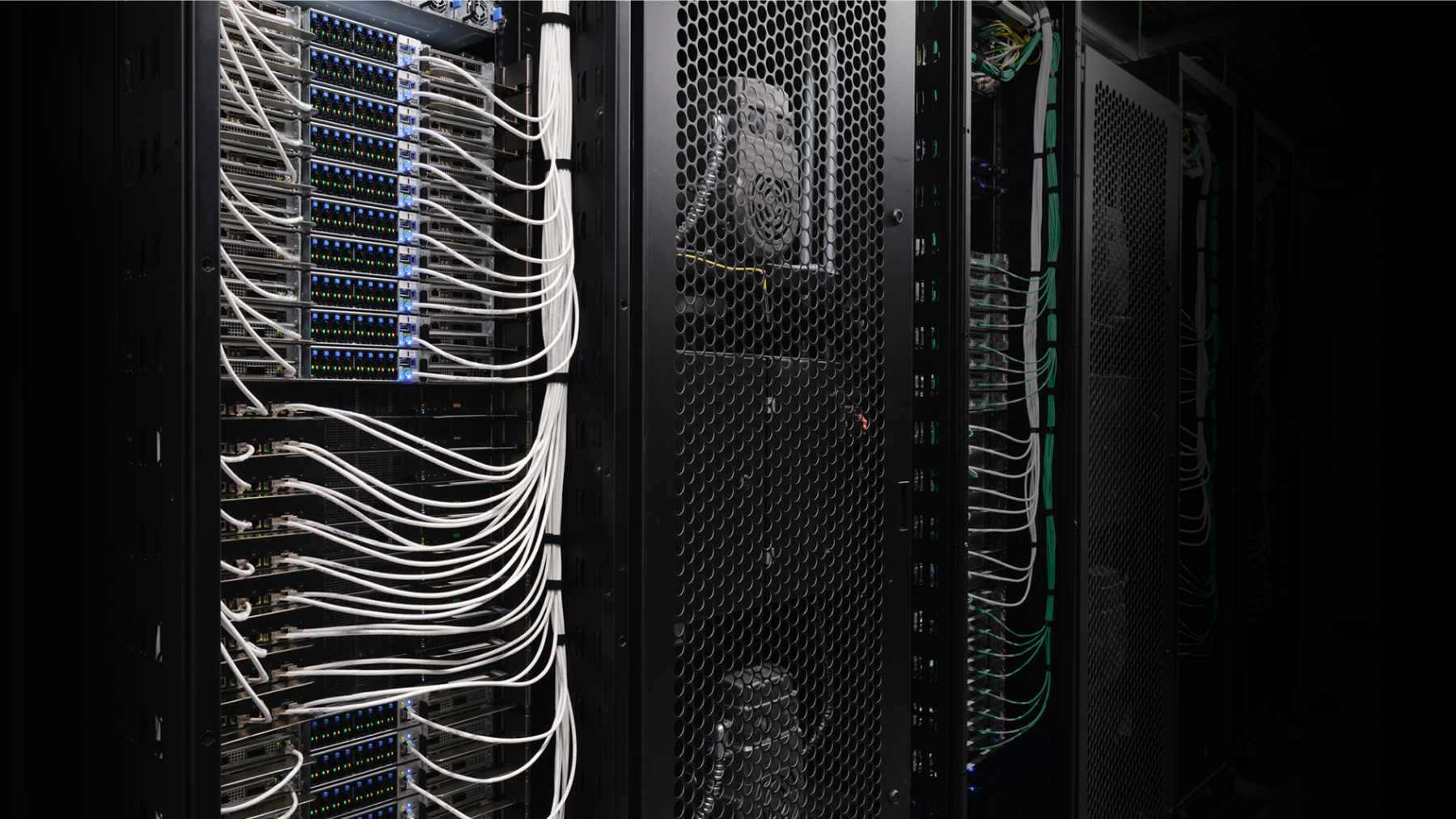
Photo: OkDiario
Artificial intelligence is evolving at a pace that current computing infrastructure may soon struggle to support. As AI models become larger, more complex, and increasingly power-hungry, one critical issue is beginning to dominate conversations across the semiconductor industry: how to move massive amounts of data efficiently without overwhelming energy systems.
To solve that challenge, Nvidia is aggressively investing in photonics technology, a rapidly emerging field that uses light instead of electricity to transfer data between chips, servers, and data centers.
Since March alone, Nvidia has committed at least $6.5 billion toward companies building optical and silicon photonics technologies, signaling that the company sees this sector as essential to the next generation of AI infrastructure.
The investments reflect a growing belief across the technology industry that traditional copper-based electrical connections are becoming a major bottleneck for scaling advanced AI systems.
Why Photonics Is Becoming Critical for AI
Today’s AI systems process enormous amounts of information across thousands — and increasingly millions — of interconnected graphics processing units, or GPUs. Those GPUs constantly exchange data with memory systems, networking equipment, and cloud infrastructure.
Currently, much of that data transfer relies on electricity moving through copper cables and electrical interconnects. While that method has long been reliable and cost-effective, it consumes vast amounts of power and generates heat at scale.
Photonics offers an alternative.
Instead of electrical signals, photonics uses light to transmit information through optical connections. Because light can move data faster and more efficiently while consuming significantly less energy, the technology is viewed as one of the most promising solutions for future AI infrastructure.
Industry experts believe this transition could dramatically reduce power consumption in hyperscale AI data centers, which are already pushing global electricity demand to new highs.
Analysts estimate that AI-focused data centers could consume more than 1,000 terawatt-hours of electricity annually by the end of the decade if current infrastructure trends continue. That has intensified pressure on chipmakers and cloud providers to find more energy-efficient networking technologies.
Nvidia Expands Investments Across the Photonics Supply Chain
Nvidia’s investment strategy shows that the company is not simply experimenting with photonics — it is attempting to secure the entire ecosystem needed to support future AI expansion.
The company announced major investments in several optical networking and photonics firms, including Lumentum, Coherent, and Marvell Technology.
Nvidia also committed $500 million to Corning to help develop advanced optical connectivity systems capable of supporting next-generation AI clusters.
In addition, the company participated in optics startup Ayar Labs’s $500 million Series E funding round, joining several other major technology players backing the sector.
These investments are designed to help Nvidia secure future supply capacity while accelerating the development of high-bandwidth optical interconnects required for AI factories and hyperscale computing facilities.
According to industry analysts, Nvidia is effectively preparing for a future where optical communication becomes deeply integrated into nearly every layer of AI infrastructure.
Jensen Huang Says Current Capacity Is Not Enough
Jensen Huang has openly acknowledged that the world’s current photonics manufacturing capacity is far below what future AI systems will require.
Speaking at Nvidia’s GTC conference earlier this year, Huang said the company’s growing demand for silicon photonics technology is already forcing it to work closely with suppliers to expand production capabilities.
He emphasized that Nvidia’s future networking roadmap, including GPU-to-GPU communication and AI factory infrastructure, will rely heavily on optical technologies to maintain performance and efficiency as AI workloads continue to scale exponentially.
The company has already introduced optical networking solutions as part of its AI infrastructure stack. Nvidia says these technologies will eventually allow AI data centers to connect millions of GPUs across different facilities while reducing energy consumption and operational costs.
That capability could become increasingly important as major AI developers race to build larger and more sophisticated models requiring immense computational resources.
AI Infrastructure Demands Are Exploding
The rise of generative AI has triggered unprecedented demand for computing power over the last two years.
Training advanced large language models now requires massive GPU clusters operating simultaneously across multiple data centers. Some frontier AI systems already use tens of thousands of GPUs during training, and industry leaders expect those numbers to rise dramatically in coming years.
This rapid scaling creates enormous networking pressure.
Traditional electrical interconnects struggle to keep up with the bandwidth demands required by modern AI workloads. As models grow larger, data must move faster between chips while maintaining low latency and manageable power usage.
Brian Colello, senior equity analyst at Morningstar, said Nvidia’s future rack-scale AI systems will require far more optical connectivity as model complexity and user demand continue accelerating.
In practical terms, photonics could help AI systems process larger datasets more efficiently while also lowering operating costs for cloud providers and enterprise AI operators.
Investors Rush Into Optical Networking Companies
Nvidia’s aggressive push into photonics has also fueled investor enthusiasm across the sector.
Shares of Lumentum have surged more than 130% this year, while Coherent has nearly doubled. Marvell’s stock has climbed more than 120%, and Corning has also posted major gains as investors increasingly view optical networking as one of the next major growth areas in AI infrastructure.
The broader market is beginning to treat photonics as a critical enabling technology rather than a niche semiconductor segment.
Several other major technology firms are also increasing their exposure to the sector.
Advanced Micro Devices participated alongside Nvidia in Ayar Labs’ funding round and has also expanded its photonics footprint through acquisitions and strategic investments in startups including Enosemi, Teramount, and Celestial AI.
Meanwhile, venture capital divisions tied to Alphabet and Microsoft backed photonics startup nEye in an $80 million Series C funding round earlier this year.
The growing list of investors highlights how seriously the technology sector is taking optical computing and connectivity.
Manufacturing Challenges Still Remain
Despite the excitement surrounding photonics, large-scale deployment remains technically difficult.
Experts say manufacturing complex optical systems at commercial scale is one of the industry’s biggest hurdles.
Unlike traditional electrical packaging, photonics requires extremely precise alignment between silicon chips and optical components. Even minor production errors can reduce performance or render systems unusable.
Nick Patience, AI lead at the Futurum Group, noted that manufacturing yields for advanced optical assemblies remain a significant challenge because many components cannot be easily repaired once packaging issues occur.
That means scaling production reliably and cost-effectively will likely take several more years.
Industry analysts expect broader adoption of photonics across AI infrastructure to accelerate closer to 2028, once manufacturing processes improve and supply chains mature.
The Race to Build AI’s Next Foundation
Nvidia’s investments make it increasingly clear that the future of AI will not depend solely on faster chips. The infrastructure connecting those chips may become just as important.
As AI models grow more demanding and energy-intensive, the industry’s ability to move data efficiently could determine how quickly the next wave of artificial intelligence develops.
Photonics is emerging as one of the most important technologies in solving that problem.
For Nvidia, the strategy is about more than keeping pace with competitors. It is about ensuring that future AI growth does not hit a physical and economic wall created by outdated infrastructure.
The company’s multi-billion-dollar push into optical networking suggests that the next major revolution in AI may not only be about computing power — but about how information itself travels through the machines powering the future.
.webp)
Popular articles



Subscribe to unlock premium content
Beyoncé’s Wellness Retreats Redefine Luxury Lifestyle

Skiing Above the Skyline

ED by Ellen Redefines Celebrity Media

Beyoncé’s Wellness Retreats Redefine Luxury Lifestyle
Skiing Above the Skyline
Beyoncé’s Wellness Retreats Redefine Luxury Lifestyle