Nvidia’s Jensen Huang Skips Senate Hearing as Debate Over AI Leadership and China Exports Intensifies

Nvidia’s Jensen Huang Skips Senate Hearing as Debate Over AI Leadership and China Exports Intensifies
By
Rachel Steinberg
Last updated:
June 9, 2026
First Published:
June 9, 2026

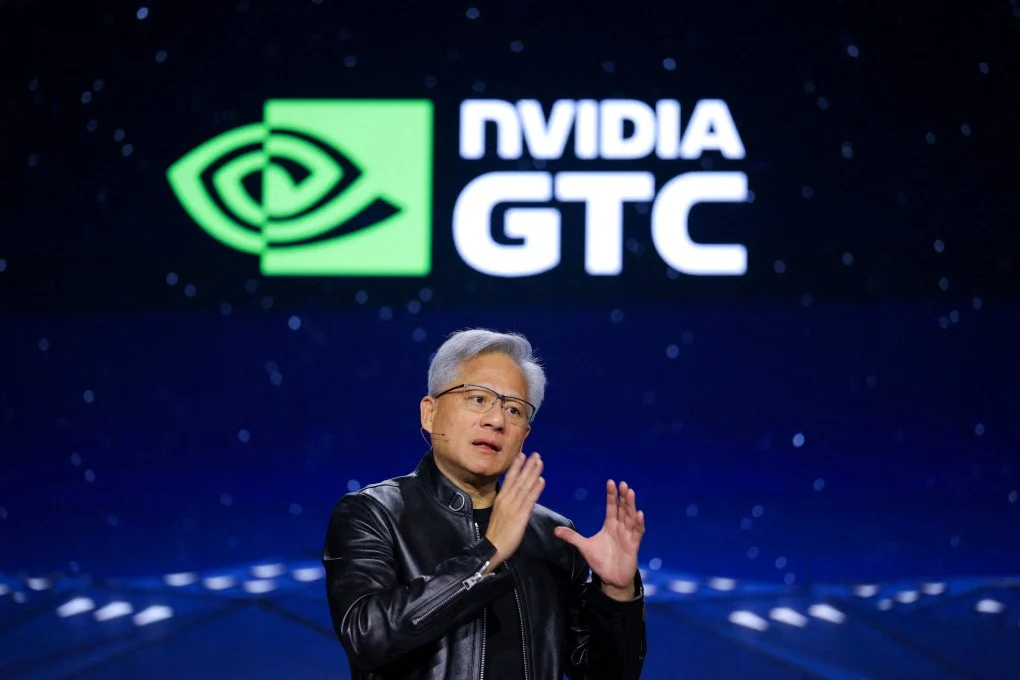
Photo: South China Morning Post
Nvidia CEO Jensen Huang has declined an invitation to testify before the U.S. Senate Banking Committee, placing one of the most influential figures in artificial intelligence at the center of an increasingly heated debate over national security, technology exports, and America's future leadership in AI.
The decision comes as Washington ramps up scrutiny of advanced semiconductor exports to China and examines the growing influence of companies driving the global AI revolution. Nvidia, now one of the world's most valuable corporations and the dominant supplier of AI processors, has become a focal point in discussions surrounding technological competition between the United States and China.
Lawmakers, regulators, investors, and national security experts are increasingly focused on whether American technology firms should continue selling advanced products abroad or face tighter restrictions designed to preserve U.S. technological advantages.
A High-Profile Absence From a Critical AI Hearing
The Senate Banking Committee's hearing, titled "AI and the American Dream: Promoting Innovation, Affordability, and American Dominance," was expected to explore how artificial intelligence is reshaping the economy and how policymakers should approach emerging risks.
Given Nvidia's central role in powering modern AI systems, many observers viewed Huang's testimony as potentially one of the most important moments of the hearing.
Nvidia's graphics processing units (GPUs) are widely used by leading AI companies including OpenAI, Anthropic, Google, Meta, Amazon, Microsoft, and numerous startups worldwide. The company's chips serve as the backbone of large language models, AI supercomputers, autonomous systems, robotics platforms, and advanced cloud infrastructure.
As demand for AI computing power continues to surge, Nvidia has become arguably the most strategically important company in the global technology sector.
However, Huang informed lawmakers that he would be unable to attend the hearing, although he expressed support for the committee's interest in artificial intelligence and U.S. competitiveness.
Why Nvidia Is Under Increasing Political Pressure
The controversy highlights the difficult position Nvidia now occupies.
On one side, the company is viewed as a cornerstone of American technological leadership. On the other, its global business relationships, particularly in China, have drawn growing scrutiny from policymakers concerned about national security.
The United States has spent several years tightening restrictions on the export of advanced semiconductor technology to China. Washington argues that cutting-edge AI chips could potentially be used to strengthen military capabilities, surveillance systems, and strategic technologies that may challenge American interests.
Because Nvidia manufactures many of the world's most advanced AI processors, the company has found itself directly affected by evolving export regulations.
Successive rounds of export controls have already limited Nvidia's ability to sell certain high-performance chips into the Chinese market, forcing the company to develop modified products that comply with U.S. regulations.
The issue has become increasingly important as artificial intelligence emerges as one of the defining technologies of the 21st century.
Elizabeth Warren Calls for Public Accountability
Senator Elizabeth Warren, who invited Huang to testify, argued that the American public deserves direct answers regarding Nvidia's role in the global AI ecosystem and its position on export policies.
Her concerns center on whether advanced AI technologies developed by American companies could indirectly support strategic competitors if access to cutting-edge chips remains too broad.
The senator has repeatedly raised questions about the balance between economic opportunity and national security, particularly as AI becomes increasingly integrated into defense systems, intelligence operations, cybersecurity, and advanced industrial applications.
Warren also pointed to Huang's participation in international business and diplomatic engagements as evidence that he should be available to address congressional questions in a public setting.
The disagreement reflects a broader debate unfolding across Washington regarding how aggressively the United States should restrict access to advanced technologies.
Huang Defends America's AI Leadership
Although he declined the hearing invitation, Huang used his response to emphasize Nvidia's long-standing contribution to American innovation.
The Nvidia chief highlighted the company's history of supporting researchers, startups, universities, and technology companies developing artificial intelligence technologies in the United States.
For more than a decade, Nvidia's hardware has served as a foundation for breakthroughs in machine learning, scientific computing, autonomous vehicles, healthcare research, robotics, and generative AI.
Today, Nvidia's processors power a substantial portion of the world's AI training and inference workloads, making the company one of the most influential technology suppliers globally.
Huang has consistently argued that maintaining American leadership requires continued innovation and global competitiveness rather than excessive restrictions that could weaken U.S. companies.
The China Question Remains Unresolved
At the center of the debate is Nvidia's relationship with China.
China remains one of the world's largest technology markets and a major consumer of advanced semiconductors. Before export restrictions intensified, Chinese customers represented a significant portion of Nvidia's data center and AI-related revenue.
The company has repeatedly argued that allowing American firms to compete internationally helps strengthen U.S. technological leadership by generating revenue that can be reinvested into research and development.
Huang has publicly advocated for policies that enable American companies to remain competitive in foreign markets while complying with national security requirements.
Supporters of this approach argue that restricting sales too aggressively could encourage Chinese firms to accelerate domestic semiconductor development, potentially reducing long-term American influence over global technology standards.
Critics counter that access to advanced AI hardware could help accelerate China's strategic capabilities in sensitive areas.
The disagreement illustrates the increasingly complex intersection between business interests, technological innovation, and geopolitical competition.
Nvidia's Extraordinary Rise Makes Every Decision Matter
The attention surrounding Huang's decision reflects Nvidia's remarkable transformation over the past several years.
Once primarily known for gaming graphics cards, the company has become the dominant force behind the global AI infrastructure boom.
Nvidia's market value has soared into the trillions of dollars as demand for AI computing resources exploded across industries. The company has reported record-breaking revenue growth, driven largely by demand for its high-performance AI accelerators.
Major cloud providers, AI startups, government agencies, research institutions, and enterprise customers continue investing billions of dollars in Nvidia-powered infrastructure.
As a result, decisions made by Nvidia now carry implications that extend far beyond the semiconductor industry.
Its products influence the pace of AI development, the competitiveness of national economies, and the strategic capabilities of governments around the world.
AI Chips Have Become a Strategic Asset
The growing focus on Nvidia also reflects a broader shift in how policymakers view semiconductor technology.
Advanced chips are no longer considered merely commercial products. Increasingly, they are viewed as strategic assets comparable to energy resources, telecommunications infrastructure, or critical defense technologies.
Artificial intelligence systems require enormous computational power, and access to advanced processors has become a key determinant of technological capability.
Countries around the world are investing heavily in AI infrastructure, creating intense competition for advanced semiconductors and increasing the geopolitical importance of companies like Nvidia.
This environment has elevated export control policies from niche regulatory matters into major issues of national strategy.
Nvidia Offers Alternative Engagement
While declining to appear before the Senate committee, Huang extended an invitation for lawmakers to visit Nvidia's headquarters in Santa Clara, California.
The proposal suggests the company remains willing to engage with policymakers, even if discussions occur outside the formal hearing process.
Nvidia has increasingly worked to position itself as a partner in advancing American AI leadership, emphasizing investments in research, workforce development, innovation ecosystems, and domestic technology infrastructure.
The company has also expanded collaborations with universities, startups, and government agencies seeking to accelerate AI adoption.
Whether those efforts will satisfy congressional concerns remains uncertain.
The Bigger Battle Over AI and National Security
The dispute between lawmakers and Nvidia is part of a much larger conversation about the future of artificial intelligence.
Governments worldwide are grappling with questions about how to regulate AI, protect national interests, encourage innovation, and maintain competitiveness in a rapidly evolving technological landscape.
The stakes are enormous. Artificial intelligence is expected to transform industries ranging from healthcare and finance to manufacturing, defense, transportation, and scientific research.
Many experts believe AI could contribute trillions of dollars to global economic output over the coming decades.
As the leading supplier of AI infrastructure, Nvidia sits at the center of that transformation.
The company's growing influence means its decisions, partnerships, and market strategies will continue attracting attention from investors, policymakers, regulators, and competitors alike.
For now, Huang's absence from the Senate hearing may postpone some public discussions, but it is unlikely to reduce scrutiny of Nvidia's role in shaping the future of artificial intelligence and America's technological position in an increasingly competitive world.
.webp)
Popular articles



Subscribe to unlock premium content
Boutique Creative Studios Turning Local Art Movements into Ad Campaigns

Inside London’s Private Wealth Advisory Firms Catering to Millennial Investors

How Boutique Safari Camps in Kenya Are Creating Premium Eco Experiences

Boutique Creative Studios Turning Local Art Movements into Ad Campaigns
Inside London’s Private Wealth Advisory Firms Catering to Millennial Investors
Boutique Creative Studios Turning Local Art Movements into Ad Campaigns