Nvidia Moves to Resume China Sales as Jensen Huang Confirms New Orders and Production Restart

Nvidia Moves to Resume China Sales as Jensen Huang Confirms New Orders and Production Restart
By
Rachel Steinberg
Last updated:
March 18, 2026
First Published:
March 18, 2026

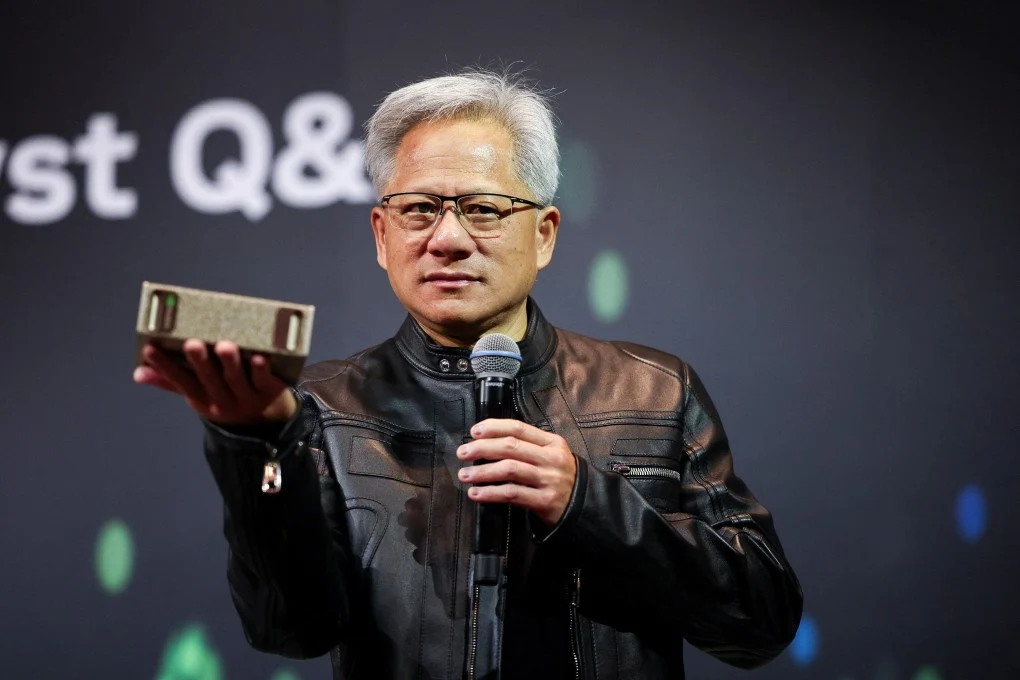
Photo: South China Morning Post
Nvidia is preparing to re-enter the Chinese market after a prolonged period of regulatory uncertainty, with CEO Jensen Huang confirming that the company has begun receiving new orders and is restarting manufacturing for advanced AI chips.
Speaking at the company’s annual GTC conference in San Jose, Huang revealed that Nvidia is now actively ramping up production of its H200 processors for customers in China. The announcement marks a significant shift after months of stalled sales due to export restrictions and compliance requirements from both Washington and Beijing.
Manufacturing Ramps Up After Months of Delays
Huang stated that Nvidia has already secured purchase orders and is moving quickly to reactivate its supply chain. This includes restarting production lines and coordinating with manufacturing partners to meet renewed demand.
The update represents a notable turnaround from just weeks ago, when the company had yet to generate meaningful revenue from China due to ongoing regulatory bottlenecks. Now, with clearer approvals in place, Nvidia appears ready to resume shipments—albeit under strict conditions.
Export Restrictions Reshape Strategy
Nvidia’s China business has been heavily impacted by export controls introduced by the administration of Donald Trump, which required special licenses for shipping advanced chips to China and several other countries.
At one point, China accounted for roughly 20% or more of Nvidia’s data center revenue, making it a crucial growth market. However, the restrictions forced the company to halt sales and take a substantial $5.5 billion charge tied to unsold inventory and disrupted operations.
To adapt, Nvidia developed a lower-performance chip, the H20, specifically designed to meet export compliance standards. But even that product faced uncertainty after initial sales were paused before policy adjustments later allowed limited shipments of more advanced processors like the H200.
Conditional Access to the Chinese Market
Under revised terms, Nvidia is now permitted to sell certain high-performance chips to China, including the H200, but with significant limitations. These include shipment caps, mandatory third-party testing, and a requirement that a portion—reportedly around 25%—of related revenues be shared with the U.S. government.
Despite these constraints, Huang indicated that the company has now received the necessary clearances from both U.S. and Chinese authorities, allowing it to move forward with fulfilling orders.
Still, the regulatory environment remains complex, with ongoing scrutiny around national security concerns and technology transfer risks.
Strong Growth Despite China Absence
Even without meaningful contributions from China, Nvidia has continued to deliver exceptional financial performance. In its most recent quarter, the company reported revenue growth of 73% year-on-year—marking its 11th consecutive quarter of growth exceeding 55%.
This surge has been driven primarily by demand for AI infrastructure, cloud computing, and high-performance data center chips across North America, Europe, and other regions.
Looking ahead, Nvidia has projected approximately 77% revenue growth for the current quarter. Notably, the company’s guidance does not assume any significant data center revenue from China, underscoring how limited its expectations remain despite the recent progress.
Strategic Importance of China Reentry
Re-establishing a foothold in China could provide a meaningful upside for Nvidia, given the country’s massive demand for AI chips and computing infrastructure. Chinese tech firms continue to invest heavily in artificial intelligence, cloud services, and advanced computing capabilities—all areas where Nvidia holds a dominant position.
However, the path forward is unlikely to be straightforward. Ongoing geopolitical tensions, evolving export policies, and competitive pressures from domestic Chinese chipmakers could all influence the pace and scale of Nvidia’s recovery in the region.
Outlook Remains Cautiously Optimistic
Nvidia’s decision to restart manufacturing for China-bound chips signals renewed momentum, but also highlights the delicate balance between opportunity and regulation in the global semiconductor industry.
While the company is moving quickly to capitalize on fresh orders, its long-term success in China will depend on navigating a tightly controlled trade environment and maintaining compliance with increasingly complex international rules.
For now, the restart of production and confirmation of new demand mark an important step forward—one that could gradually reopen a key revenue stream for one of the world’s most valuable chipmakers.
.webp)
Popular articles



Subscribe to unlock premium content
Rooftop Mushrooms Redefining Urban Gourmet

Threads of Luxury from India

Neighborhood Flavor Revolution in Lagos

Rooftop Mushrooms Redefining Urban Gourmet
Threads of Luxury from India
Rooftop Mushrooms Redefining Urban Gourmet