Novo Nordisk Heads Into 2026 Under Pressure as the U.S. Becomes a Decisive Battleground

Novo Nordisk Heads Into 2026 Under Pressure as the U.S. Becomes a Decisive Battleground
By
Rachel Steinberg
Last updated:
January 2, 2026
First Published:
January 2, 2026

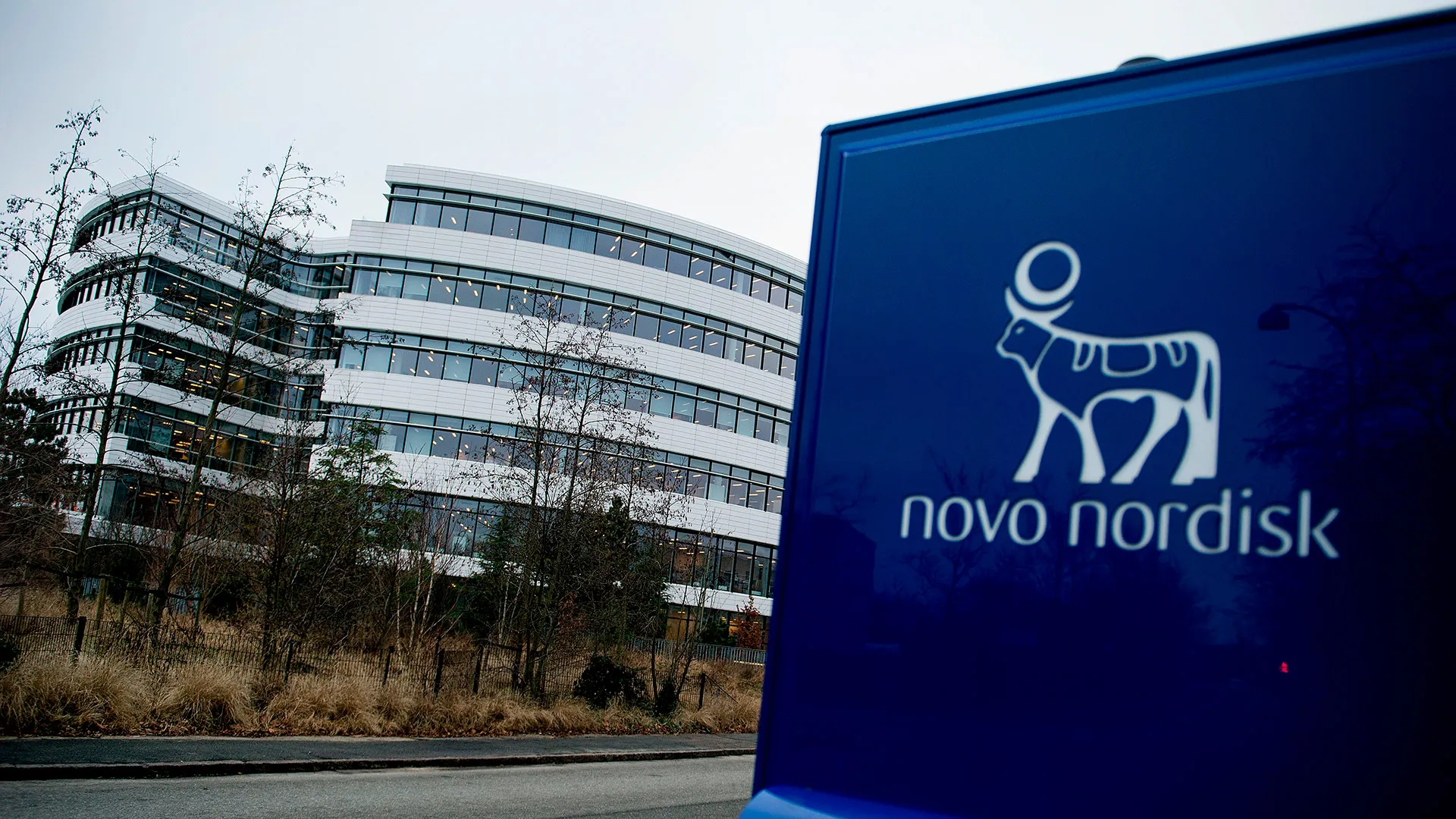
Photo: Britannica
A Market Darling Turned Turnaround Story
Novo Nordisk enters 2026 facing one of the most consequential periods in its modern history. Once viewed as the undisputed leader of the global weight-loss boom, the Danish pharmaceutical giant is now navigating a transition year defined by falling prices, patent expirations, leadership upheaval, and an increasingly unforgiving U.S. market.
After a bruising 2025 that saw heightened volatility and a sharply declining share price, investors are no longer willing to give Novo the benefit of the doubt. The company’s evolution from market favorite to underperformer has fundamentally changed expectations, particularly around execution in the United States, which now represents the clearest test of whether Novo can restore confidence.
As one analyst put it, 2026 is no longer about promises. It is a “show me” year.
A Historically Bad Year for the Stock
Novo Nordisk just recorded the worst annual performance since its shares began trading on the Copenhagen exchange more than 30 years ago. The sell-off was not driven by a single event, but by a convergence of challenges.
Repeated guidance cuts rattled credibility. Eli Lilly surged ahead in the obesity race, reshaping investor perceptions of competitive leadership. Management instability raised concerns about internal execution. At the same time, low-cost compounded versions of semaglutide flooded the U.S. market, undermining pricing power during a period when demand should have been a tailwind.
The result was a sharp reset in valuation and sentiment, leaving Novo under pressure to demonstrate that its core franchise remains durable.
A Late-Year Boost Changes the Mood, but Not the Stakes
Just days before the calendar turned, Novo announced a critical regulatory win: U.S. approval of its oral version of Wegovy, making it the first GLP-1 pill approved specifically for weight loss. The news sent shares up nearly 10% in a single session, offering a rare moment of relief after months of negative headlines.
The approval matters not just symbolically, but strategically. Oral therapies expand the addressable market, lower logistical barriers, and align closely with consumer preferences. Still, investors recognize that this win buys Novo time—it does not guarantee victory.
The themes highlighted by this approval—innovation, competition, pricing, and execution—will define Novo’s path through 2026.
From Injections to Pills, and a Narrow Window of Advantage
Novo’s early move into oral weight-loss treatment gives it a temporary edge. Wegovy in pill form demonstrated average weight loss of 16.6% over 64 weeks in trials, comparable to its injectable counterpart and stronger than many expected for a non-injectable therapy.
By comparison, Eli Lilly’s oral candidate orforglipron delivered average weight loss of 12.4% over 72 weeks in clinical studies. However, Lilly is widely expected to secure FDA approval by mid-2026, narrowing Novo’s window of differentiation.
Beyond efficacy, pills offer practical advantages. They eliminate the need for cold storage, simplify distribution, and are easier to scale globally. These factors could help Novo regain some of the market share it lost over the past year, provided it can execute quickly and price competitively.
Competing Narratives in a Results-Driven Market
The competitive divide between Novo and Eli Lilly extends beyond clinical data into how each company tells its story.
Lilly has aggressively positioned Zepbound as the most powerful weight-loss injection available, leaning heavily into headline weight-loss percentages. That messaging has resonated with U.S. prescribers and patients, allowing Lilly to capture significant share and overtake Wegovy in momentum.
Novo has taken a broader approach, emphasizing obesity as a chronic disease and highlighting semaglutide’s benefits across cardiovascular, kidney, liver, and metabolic conditions. While clinically meaningful, that narrative has struggled to gain traction in a U.S. market largely driven by outcomes that are easy to compare and market.
Recognizing this, Novo has begun to recalibrate. The company has filed for FDA approval of a higher 7.2 mg dose of injectable Wegovy, which delivered average weight loss of 20.7% in trials—roughly in line with Lilly’s Zepbound. If approved, it could help shift the conversation back toward parity on efficacy.
The U.S. Consumer Takes Center Stage
Unlike many blockbuster therapies, weight-loss drugs are heavily consumer-driven. Insurance coverage remains inconsistent, pushing patients toward out-of-pocket payment models and direct-to-consumer channels.
That reality makes the U.S. market uniquely critical and uniquely difficult. Novo’s performance here will likely determine whether 2026 marks stabilization or further erosion.
Political pressure is adding complexity. President Donald Trump’s second term has brought renewed scrutiny of drug pricing, including threats of steep tariffs tied to domestic manufacturing and aggressive rhetoric around lowering costs for American patients.
Novo has already felt that pressure. In late 2025, the company reached an agreement with the U.S. government to reduce prices on its leading GLP-1 drugs for Medicare and Medicaid beneficiaries. It also agreed to participate in a new direct-to-consumer initiative, offering discounted access through a federally backed platform set to launch in early 2026.
While these moves improve competitiveness against compounders, they also compress margins and shift the market further toward cash-pay models.
Pricing Pressure and a Crowded Field
The direct-to-patient channel is growing rapidly, but competition is intensifying. Compounders remain a meaningful threat, particularly for price-sensitive consumers. Meanwhile, Eli Lilly has already gained traction with its own direct platform, and oral GLP-1 drugs are expected to accelerate this trend.
Beyond Lilly, the competitive landscape is widening. Pfizer, Amgen, AstraZeneca, Roche, and others are advancing late-stage obesity candidates, some targeting multiple appetite and metabolic pathways. Over time, the market is likely to fragment, reducing the dominance any single player can exert.
Novo’s challenge will be to defend its franchise while the pie grows and margins tighten.
Leadership Turmoil and Structural Headwinds
Operational execution remains under scrutiny. In 2025, Novo replaced its CEO of eight years, citing market challenges and sustained share price weakness. Months later, all independent board members stepped down following disagreements with the controlling shareholder over the pace and scope of change, particularly in the U.S.
These disruptions have unsettled investors at a time when clarity and consistency are critical.
At the same time, structural headwinds are building. Lower pricing under government agreements, cash-pay discounting, and potential “Most Favored Nation” pricing policies all threaten revenue growth. Patent expirations in Brazil, Canada, and China add further pressure to the top line.
Analysts increasingly expect these forces to weigh on sales growth through 2026, even as volumes rise.
What 2026 Needs to Deliver
Looking ahead, investors will focus on a few decisive factors. Progress on the Wegovy pill and higher-dose injections must translate into real market share gains. Execution in the U.S. must improve measurably. And Novo’s next-generation pipeline, including the dual-acting CagriSema therapy, must show clearer differentiation as competition intensifies.
Just as important, the company must project strategic coherence. A year marked by abandoned deals, revived negotiations, and shifting priorities has raised questions about internal alignment.
The approval of the Wegovy pill was a necessary win. Whether it becomes the foundation for a broader recovery will depend on how effectively Novo navigates a crowded market, a price-sensitive consumer base, and an unforgiving political environment.
For Novo Nordisk, 2026 is not about reclaiming past glory. It is about proving it can still compete—and win—when the rules are changing.
.webp)
Popular articles



Subscribe to unlock premium content
Iceland’s Geothermal Revolution

Bali’s Digital Detox Revolution

Step Into the Future of Art

Iceland’s Geothermal Revolution
Bali’s Digital Detox Revolution
Iceland’s Geothermal Revolution