Musk Ties xAI to SpaceX in High-Stakes Bet to Fund AI Ambitions as Orbital Data Centers Remain Distant

Musk Ties xAI to SpaceX in High-Stakes Bet to Fund AI Ambitions as Orbital Data Centers Remain Distant
By
Leah Rosenfeld
Last updated:
February 3, 2026
First Published:
February 3, 2026

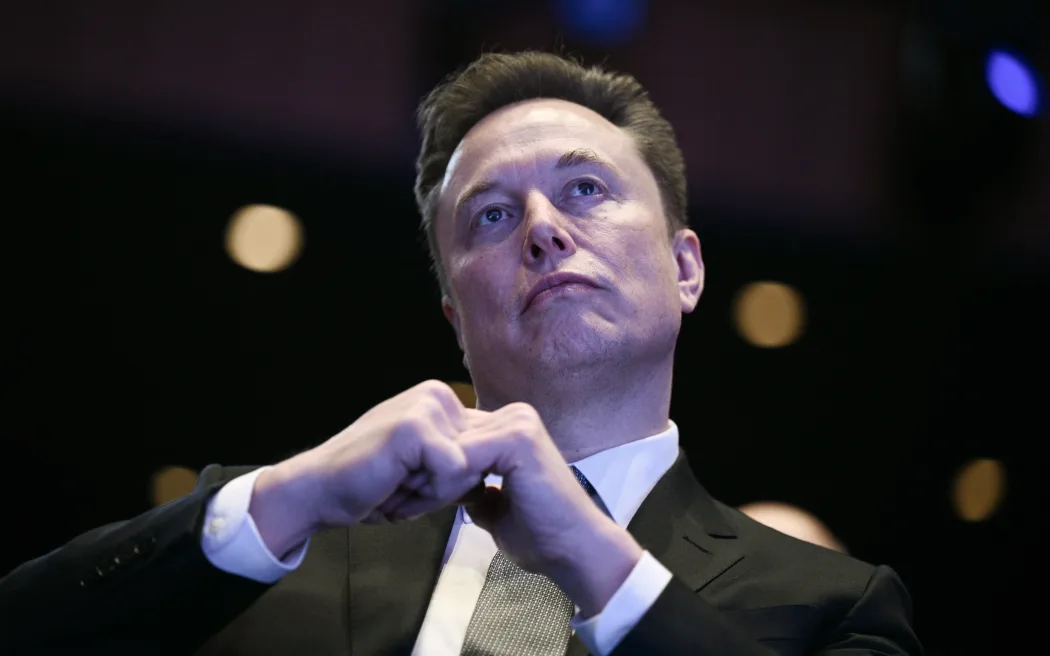
Big Vision, Immediate Reality: xAI Needs Capital More Than Orbit
Elon Musk says the future of artificial intelligence computing may eventually move into space. But for now, his AI startup xAI faces a far more grounded challenge: securing enough money to survive and compete in one of the most capital-intensive races in tech history.
Musk recently announced the merger of xAI with SpaceX, framing the move as a way to accelerate the development of so-called “orbital data centers.” He suggested that within two to three years, space could become the cheapest place to generate AI compute.
Yet industry analysts say that vision remains firmly in the realm of long-term ambition. In the near term, the merger appears far more focused on financing xAI’s massive infrastructure needs as it battles entrenched rivals like Google, OpenAI, and Anthropic in the generative AI arms race.
The reality is simple: building AI models at scale requires tens of billions of dollars, and xAI is burning cash at an extraordinary pace.
SpaceX IPO Could Unlock Tens of Billions for AI Expansion
SpaceX may now represent Musk’s most powerful funding engine.
The rocket and satellite company is reportedly preparing for a public offering that could value it as high as $1.5 trillion, potentially making it one of the largest IPOs in history. The company is said to be targeting up to $50 billion in fresh capital, money that could significantly strengthen xAI’s balance sheet once the two businesses are combined.
This comes at a critical moment for xAI. The company has disclosed to investors that it burned approximately $9.5 billion in cash during the first nine months of 2025 alone, underscoring how expensive it is to train frontier AI models and build data center capacity.
Earlier this year, xAI raised $20 billion at a valuation near $230 billion. By comparison, OpenAI was valued at roughly $500 billion last October and is reportedly seeking a new round that could lift that figure toward $750 billion. Anthropic recently signed a term sheet implying a valuation of about $350 billion.
In today’s overheated AI funding environment, capital remains available. But analysts warn that sentiment can shift quickly.
As telecom and satellite industry analyst Tim Farrar puts it, investors are currently pouring tens of billions into AI companies, but that enthusiasm may not last indefinitely. Folding xAI into SpaceX allows Musk to tap into that momentum while it’s still strong.
Starlink’s Scale Strengthens the Financial Case
A major pillar of SpaceX’s valuation is Starlink, its satellite broadband business.
Starlink now operates roughly 9,000 satellites in orbit and serves an estimated 9 million customers worldwide, generating recurring revenue that helps stabilize SpaceX’s cash flow. The Federal Communications Commission has also approved plans for an additional 7,500 satellites, further expanding the network’s reach.
However, SpaceX can only launch a limited number of rockets each year, meaning it cannot rapidly redeploy surplus capital back into its core satellite operations at scale. Integrating xAI gives Musk another outlet for investment while simultaneously shoring up his AI venture’s finances.
Regulation and Politics Tilt in Musk’s Favor
Musk is also benefiting from a dramatically more favorable regulatory environment.
With President Donald Trump back in the White House and Republicans controlling both chambers of Congress, oversight of large tech deals and AI expansion has eased considerably. The Federal Trade Commission is now led by Trump appointee Andrew Ferguson, replacing Lina Khan, who had aggressively challenged major tech mergers.
On the AI front, Musk’s longtime associate David Sacks serves as the White House crypto and AI czar, advocating for minimal regulatory constraints on AI labs. In December, Trump signed an executive order establishing a single federal AI framework, limiting the ability of individual states like California and New York to impose their own rules.
Meanwhile, Musk ally Jared Isaacman now leads NASA and has publicly supported expanding government contracts with SpaceX. At the FCC, Chairman Brendan Carr has been a vocal supporter of Starlink’s growth.
Public filings in Nevada indicate that the SpaceX–xAI transaction was finalized on Feb. 2, with Space Exploration Technologies Corp. listed as the managing member of X.AI Holdings, suggesting the merger moved forward without significant regulatory friction.
Still, political timelines matter. While Trump has three years remaining in his term, unified Republican control could be shorter-lived, with midterm elections less than a year away and presidential approval ratings under pressure.
A Familiar Playbook of Interconnected Deals
The xAI–SpaceX merger fits a broader pattern in Musk’s empire: tightly interwoven companies supporting one another financially and operationally.
In 2016, Tesla acquired SolarCity for $2.6 billion, rescuing the solar company from a looming liquidity crisis. During Musk’s leveraged buyout of Twitter in 2022, he sold billions in Tesla shares and pulled staff from SpaceX, Tesla, and The Boring Company to help execute the takeover.
More recently, Tesla sold $430 million worth of Megapack battery systems to xAI in 2025, representing about 3.4% of Tesla’s energy division revenue. These batteries now help power xAI’s expanding data infrastructure in Memphis, Tennessee.
Tesla also invested $2 billion in xAI during its latest funding round, while SpaceX reportedly added another $2 billion. Tesla has supplied parts to SpaceX, and SpaceX helped develop specialized alloys for Tesla’s Cybertruck.
This dense web of transactions reflects what some analysts call the “Muskonomy,” a system built on mutual reinforcement across Musk-led companies.
Confidence Is the Cornerstone
For now, Musk’s loyal investors appear comfortable backing this interconnected strategy. Many see value in keeping the entire portfolio strong, even if it means blurred lines between businesses.
According to Farrar, the model ultimately rests on confidence in Musk himself. If any major part of his empire were to falter, it could ripple across everything else.
That reality explains the urgency behind merging xAI with SpaceX. While orbital data centers remain a futuristic concept, the financial logic is immediate: xAI needs capital today, and SpaceX is Musk’s most powerful tool to secure it.
For Musk, the race is on not just to build smarter AI, but to ensure he has the resources to stay in the game.

Popular articles


Subscribe to unlock premium content
Defying Gravity in Style

Lunar Dreams Become Reality

Frozen Fantasies Come Alive

Defying Gravity in Style
Lunar Dreams Become Reality
Defying Gravity in Style