Meta Slashes VR Teams and Shuts Studios as Zuckerberg Redirects Billions Toward AI

Meta Slashes VR Teams and Shuts Studios as Zuckerberg Redirects Billions Toward AI
By
Junia Wells
Last updated:
January 14, 2026
First Published:
January 14, 2026

Getty Images
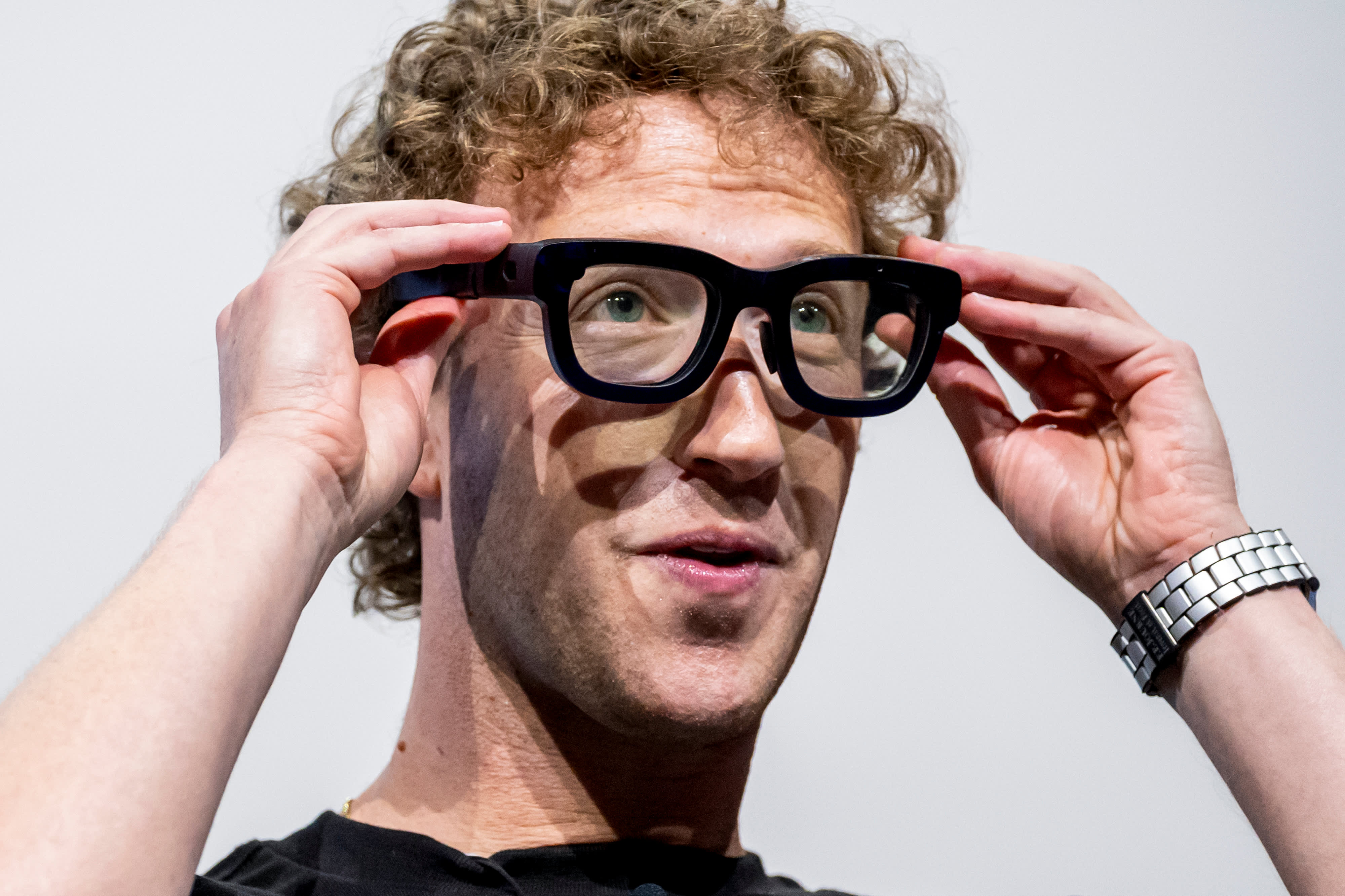
Just over four years after Facebook rebranded itself as Meta to signal an all-in bet on the metaverse, the company is now sharply scaling back its virtual reality ambitions. Layoffs across its Reality Labs division and the closure of several VR game studios mark a decisive shift in priorities as Chief Executive Mark Zuckerberg doubles down on artificial intelligence.
Meta this week began cutting jobs tied to metaverse and VR projects, a move that will affect more than 1,000 employees, or roughly 10 percent of the Reality Labs workforce. The reductions primarily hit teams working on Quest VR headsets and Horizon Worlds, Meta’s virtual social platform. The company is also winding down or shuttering multiple internal studios that were building first-party VR content.
Reality Labs retrenchment gathers pace
According to people familiar with the matter, studios being closed include Armature Studio, Twisted Pixel, and Sanzaru, along with a technical support unit known as Oculus Studios Central Technology. Job cuts are also affecting other teams such as Ouro Interactive, which Meta launched in 2023 to develop original experiences for Horizon Worlds.
Supernatural, the VR fitness app Meta acquired for about $400 million in 2023, has been placed into maintenance mode. The app will continue operating but with a minimal staff and no meaningful new content pipeline, signaling reduced expectations for growth.
Meta’s chief technology officer, Andrew Bosworth, is expected to address Reality Labs employees in an all-hands meeting as the division navigates the latest round of changes.
A strategic pivot toward artificial intelligence
The retrenchment reflects Meta’s broader reallocation of capital and talent toward AI, an area Zuckerberg has increasingly positioned as the company’s core long-term growth engine. In recent months, Meta has spent heavily to secure top AI talent, including a $14.3 billion deal in June to bring Scale AI founder Alexandr Wang into the company to lead AI strategy, along with a cohort of engineers and researchers.
The leadership reshuffle underscores the shift. In October, Vishal Shah, who had led Meta’s metaverse efforts for four years, was appointed vice president of AI products. That same month, Meta raised its forecast for 2025 capital expenditures to between $70 billion and $72 billion and warned that spending growth would accelerate further in 2026, largely driven by AI infrastructure and compute needs.
Meta previously signaled this change in direction in December, saying it would redirect resources within Reality Labs away from VR initiatives and toward AI-powered glasses and other wearable devices. A company spokesperson said the savings from the current cuts would be reinvested to support wearables growth this year.
Wearables show more promise than VR
While VR has struggled to achieve mass adoption, Meta has seen stronger momentum in AI-enabled wearables, particularly through its partnership with EssilorLuxottica. The Ray-Ban Meta smart glasses have gained traction, benefiting from a familiar form factor and practical features such as hands-free photo capture and AI-assisted functions.
In September, the companies unveiled Meta Ray-Ban Display glasses, priced at $799 and featuring a small built-in display for messages and photo previews. Meta recently delayed the global rollout of the product, citing limited inventory amid what it described as unprecedented demand in the U.S.
Luxottica’s chief financial officer has said the company expects to reach its originally planned annual production capacity of 10 million units earlier than anticipated, pointing to stronger-than-expected consumer interest.
Horizon Worlds shifts toward mobile and younger users
Despite the cuts, Meta is not abandoning VR entirely. Instead, it is reshaping Horizon Worlds to resemble more accessible, mobile-first platforms. The company is actively courting developers who build games for Roblox to create simplified, mobile-friendly experiences for Horizon Worlds.
The contrast in scale is stark. Roblox reports more than 150 million daily active users, while Horizon Worlds has never surpassed a few hundred thousand monthly active users since its launch. Meta now sees mobile as a critical gateway to broaden Horizon’s reach, particularly among younger audiences.
Bosworth last year directed teams to prioritize turning Horizon Worlds into a successful smartphone app, following early mobile testing that began in 2023. Employees were reassigned internally in 2025 to support this effort, and studios like Ouro are now focused on building mobile content rather than immersive VR-only experiences.
Analysts say the move is pragmatic. Weak headset adoption and the rapid growth of mobile gaming have made a mobile-centric strategy difficult to ignore.
A costly metaverse experiment
Meta’s retreat comes after years of heavy spending. Since late 2020, Reality Labs has accumulated more than $70 billion in losses. In its most recent earnings report, the division posted a $4.4 billion quarterly loss on just $470 million in revenue, underscoring the financial drag of the metaverse bet.
The company’s push into VR began more than a decade ago with Facebook’s $2 billion acquisition of Oculus in 2014. Despite early optimism, Horizon Worlds has struggled with low engagement and developer frustration. Meta has historically shared limited usage data, making it difficult for creators to assess what works and tailor content effectively.
In response, Meta has begun encouraging developers to build simpler, kid-friendly experiences inspired by Roblox and Minecraft. Last year, executives openly highlighted younger demographics as a key target audience.
To jump-start content creation, Meta launched a $50 million Creator Fund earlier this year aimed at incentivizing developers to build in-game experiences for Horizon Worlds, with a strong emphasis on mobile access. The company is also working to make Horizon Worlds more easily accessible through Facebook and Instagram.
Market pressure adds urgency
Meta’s strategic shift is also unfolding against a competitive backdrop. The company is racing to keep pace with rivals such as OpenAI and Google, whose AI models and consumer-facing tools are gaining rapid adoption. Meta is expected to release its next major AI model, internally codenamed Avocado, in the first quarter.
Investors have been watching closely. Meta’s stock underperformed Alphabet and the broader Nasdaq last year, and shares have remained under pressure in early 2026, down more than 4 percent since the start of the year.
Taken together, the layoffs and studio closures highlight a clear recalibration. Meta is no longer betting its future on immersive virtual worlds. Instead, the company is consolidating around artificial intelligence and practical, AI-powered devices, marking the most significant strategic pivot since the metaverse rebrand itself.
.webp)
Popular articles



Subscribe to unlock premium content
Iceland’s Geothermal Revolution

Bali’s Digital Detox Revolution

Step Into the Future of Art
Iceland’s Geothermal Revolution
Bali’s Digital Detox Revolution
Iceland’s Geothermal Revolution