Legal battle erupts over removal of Pride flag at Stonewall monument

Legal battle erupts over removal of Pride flag at Stonewall monument
By
Leah Rosenfeld
Last updated:
February 18, 2026
First Published:
February 18, 2026

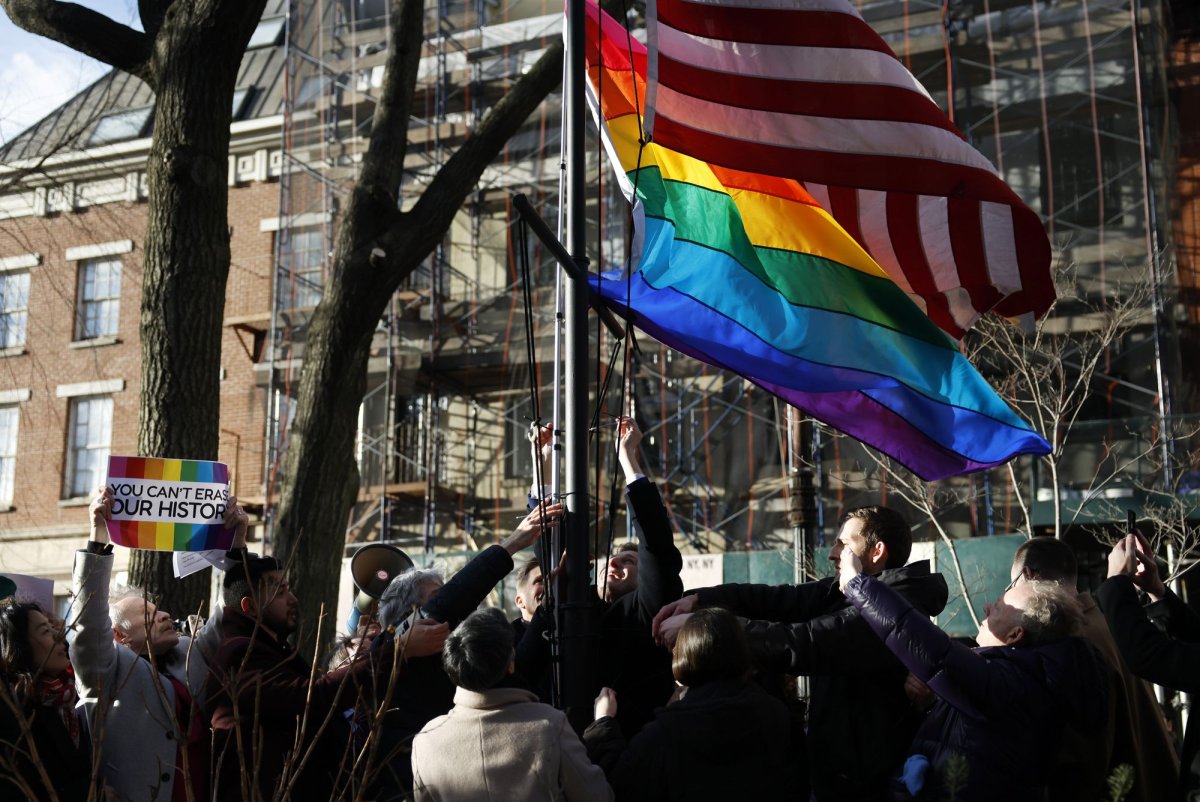
Photo: UPI
Lawsuit challenges federal decision
A coalition of LGBTQ advocacy organizations and a Greenwich Village community association has filed a federal lawsuit against the Trump administration following the sudden removal of the Pride flag from the Stonewall National Monument on February 9.
The plaintiffs argue the move violated administrative law by reversing a long-standing practice without public explanation or procedural review. According to the filing in federal court in Manhattan, the decision represents what attorneys described as an “arbitrary and capricious” action that ignored both precedent and the monument’s historical context.
At the center of the dispute is the federal government’s interpretation of flag policies. Officials cited rules limiting displays in national parks to specific government flags, but the lawsuit contends those same rules allow historically relevant flags — a category advocates say clearly includes the Pride flag at Stonewall.
Why Stonewall holds national significance
The monument sits directly across from the Stonewall Inn, widely recognized as the birthplace of the modern LGBTQ rights movement. The June 1969 uprising, sparked by a police raid, led to days of protests and is often cited by historians as a turning point in U.S. civil rights history.
Since a dedicated flagpole was installed in 2022, the Pride flag had become a permanent visual marker of that legacy, drawing hundreds of thousands of visitors annually. Tourism groups estimate that the surrounding neighborhood sees more than 3 million visitors a year, with Stonewall itself serving as one of the most visited LGBTQ heritage sites globally.
The lawsuit argues that removing the flag diminishes the monument’s interpretive mission, which is administered by the National Park Service under the U.S. Department of the Interior.
Broader legal and historical context
The case comes amid heightened scrutiny of how federal agencies present historical narratives. Just one day before the Stonewall lawsuit was filed, a federal judge ordered the restoration of a removed historical exhibit at Independence National Historical Park, which included information about enslaved people who lived with George Washington in the 1790s.
Legal analysts say the timing underscores a growing wave of litigation over public history and representation, with courts increasingly asked to determine how agencies balance policy compliance with educational context.
Political reaction intensifies
Local and national leaders quickly weighed in. Zohran Mamdani condemned the removal, calling it an attempt to erase a defining chapter of the city’s identity. Meanwhile, Senate Minority Leader Chuck Schumer announced plans to introduce legislation that would formally recognize the Pride flag as an authorized symbol at the monument.
Advocates note that the debate extends beyond a single flag. They argue the outcome could set a precedent affecting how federal sites interpret cultural and social history across the country.
Federal response and ongoing debate
An Interior Department spokesperson defended the administration’s position, framing the controversy as politically motivated and suggesting local leaders should prioritize urban issues such as infrastructure and public safety.
Despite the rhetoric, legal experts say the case will likely hinge on administrative procedure — specifically whether the government followed proper rule-making standards and provided a reasoned justification for reversing an established practice.
What happens next
The court process could take months, with potential appeals stretching the timeline further. If the plaintiffs succeed, the ruling may clarify the extent of agency discretion over symbolic displays at national monuments, potentially influencing policies at more than 400 National Park Service sites nationwide.
For now, the dispute has reignited a broader conversation about how the United States preserves — and presents — the stories that shape its civil rights legacy.

Popular articles


Subscribe to unlock premium content
Colombia’s Coffee Revolution

Capsule Hotels Reinvented for the Elite

Golden Adventures in New Zealand

Colombia’s Coffee Revolution
Capsule Hotels Reinvented for the Elite
Colombia’s Coffee Revolution