Japan Weighs Snap Election as Ruling Party Moves to Dissolve Parliament

Japan Weighs Snap Election as Ruling Party Moves to Dissolve Parliament
By
Leah Rosenfeld
Last updated:
January 12, 2026
First Published:
January 12, 2026

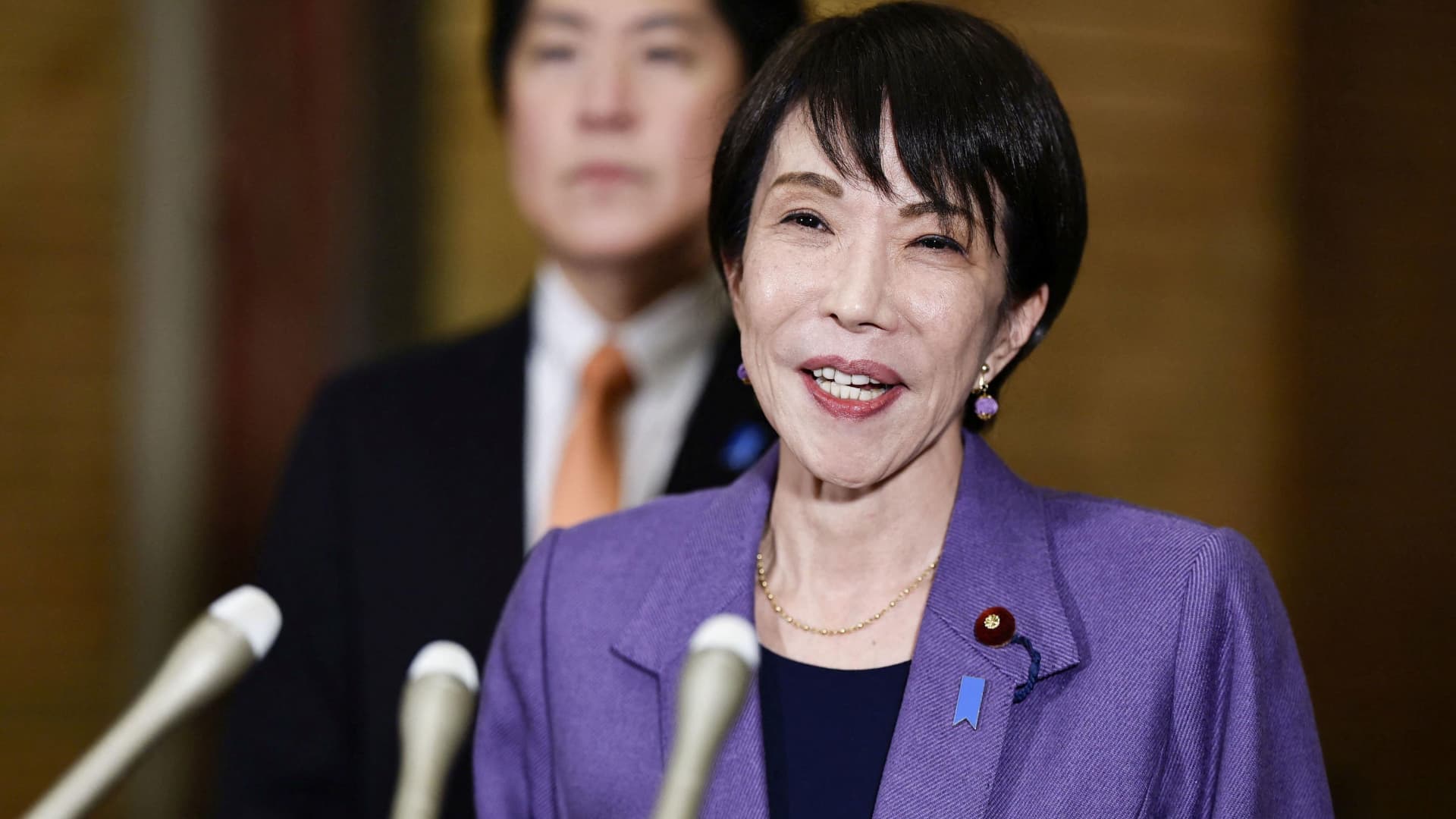
Japan’s Prime Minister Sanae Takaichi speaks to the media after a telephone call with U.S. President Donald Trump, at her residence in Tokyo, Japan, Jan. 2, 2026.
Kyodo | Via Reuters
Snap Election Preparations Take Shape
Japan’s ruling Liberal Democratic Party is preparing to dissolve the Lower House later this month, paving the way for a possible snap general election in February, according to public broadcaster NHK. The move would mark one of the earliest election calls in recent Japanese political history, coming only about four months after Prime Minister Sanae Takaichi took office.
NHK reported that the Ministry of Internal Affairs and Communications has already instructed prefectural election boards to begin preparations, a signal that the government is seriously considering an early return to the polls.
Capitalizing on Political Momentum
Japanese media say the LDP is aiming to capitalize on Takaichi’s exceptionally high public approval to stabilize and strengthen the ruling coalition. A recent Nikkei survey placed her approval rating at around 75 percent, a level rarely seen in modern Japanese politics and sustained above 70 percent for three consecutive months.
Support for the prime minister has been buoyed by her assertive foreign policy stance and a perception of decisive leadership, even as Japan navigates a challenging regional and economic environment. Analysts note that early elections are often used by ruling parties to lock in political advantage before public sentiment shifts.
A New Coalition Test
If held, the February election would be the first national vote contested by the LDP alongside its new junior coalition partner, the Japan Innovation Party. Together, the LDP and JIP currently hold 230 seats in the 465-seat Lower House, with support from three independents giving them a narrow majority.
However, the coalition remains in a weaker position in the Upper House, where it controls just 119 of the 250 seats. A stronger mandate from voters could help the government push legislation more smoothly and reduce dependence on ad hoc support.
JIP leader Hirofumi Yoshimura has confirmed discussions with Takaichi, suggesting that the prime minister’s thinking on election timing has entered what he described as a “new stage,” without elaborating further.
Opposition Senses an Opening
The prospect of a snap election has energized opposition parties. Yoshihiko Noda, leader of the Constitutional Democratic Party of Japan, said in an NHK interview that his party aims to force a change of government and is open to closer coordination with Komeito.
The CDP currently holds 148 seats in the Lower House, while Komeito controls 24. Komeito exited its long-standing coalition with the LDP in late 2025 amid allegations of illegal political financing, ending a partnership that had defined Japanese politics since 1999.
An opposition alliance could complicate the ruling bloc’s calculations, particularly if voter turnout is high or economic concerns dominate the campaign.
Economic Pressures Loom Over the Vote
Despite strong approval ratings, Takaichi faces mounting economic challenges that could shape voter sentiment. The yen has weakened sharply, recently hitting around 158 per dollar, its lowest level in a year. Inflation has remained above the Bank of Japan’s target for 44 consecutive months, eroding household purchasing power.
Economic growth has also disappointed. Revised GDP data for the third quarter showed the economy contracted by 0.6 percent quarter on quarter, equivalent to an annualized decline of 2.3 percent, worse than initial estimates.
These pressures raise the stakes of a snap election. While early polling suggests the ruling party holds an advantage, prolonged currency weakness, stubborn inflation, and slowing growth could quickly become focal points of public debate.
A High-Risk, High-Reward Strategy
Calling an early election could allow the LDP to secure a stronger mandate while public support for the prime minister remains high. At the same time, it exposes the government to economic realities that may resonate more strongly with voters as the campaign unfolds.
If the election goes ahead in February, it will not only test Takaichi’s political capital but also signal how Japanese voters balance leadership popularity against economic anxiety at a pivotal moment for the country.
.webp)
Popular articles



Subscribe to unlock premium content
Iceland’s Geothermal Revolution

Bali’s Digital Detox Revolution

Step Into the Future of Art

Iceland’s Geothermal Revolution
Bali’s Digital Detox Revolution
Iceland’s Geothermal Revolution