Japan Confronts a Deepening Monetary Crossroads as Bond Yields Climb to Multi-Decade Highs

Japan Confronts a Deepening Monetary Crossroads as Bond Yields Climb to Multi-Decade Highs
By
Junia Wells
Last updated:
December 4, 2025
First Published:
December 4, 2025

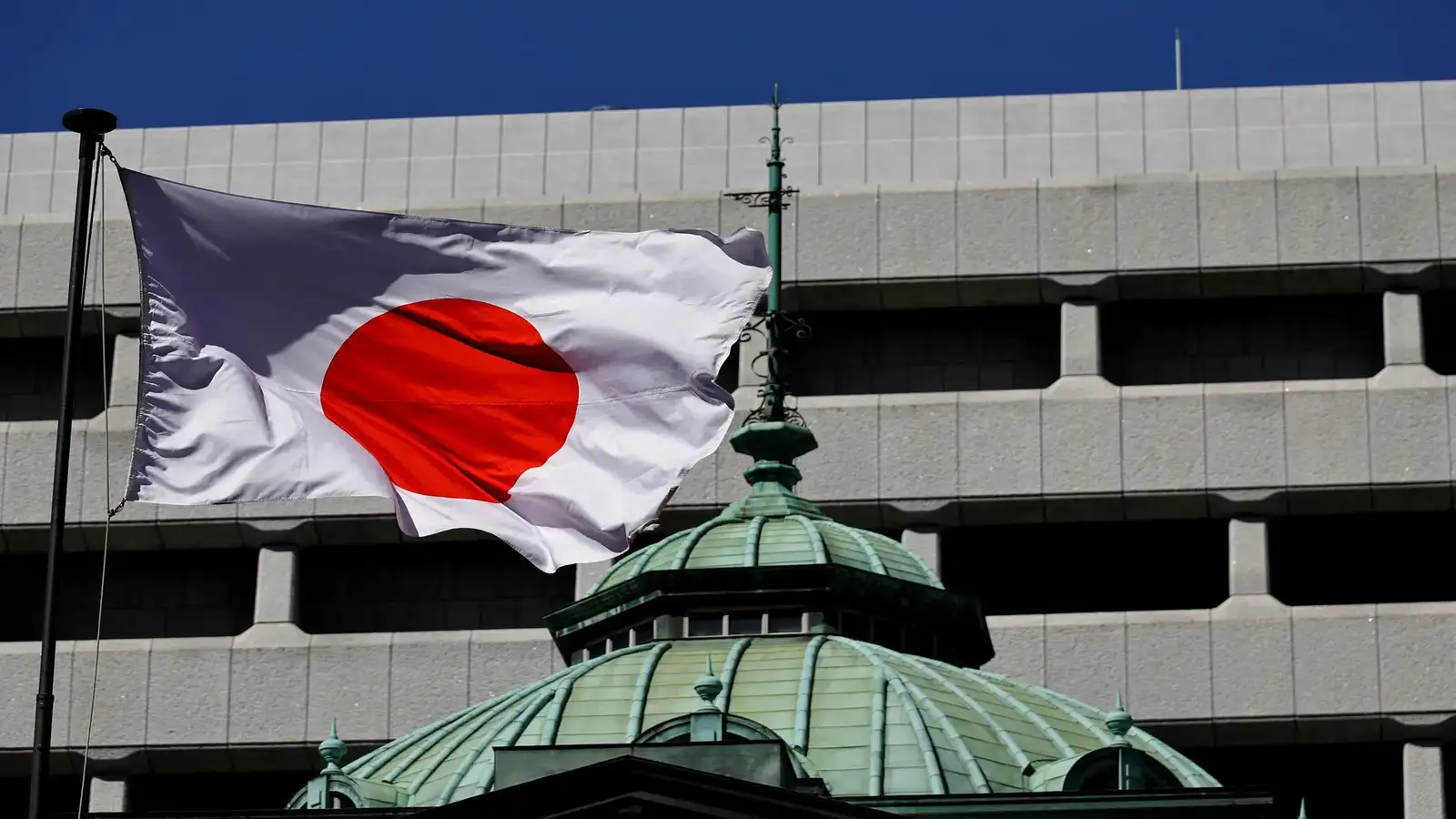
Photo: The Economic Times
Japan’s Worsening Policy Tightrope
Japan’s financial landscape is undergoing its most turbulent shift in nearly two decades. Government bond yields have surged relentlessly, forcing the Bank of Japan (BOJ) into a difficult position as it tries to steer the country’s monetary path after years of ultra-loose policy.
The challenge is stark. If the BOJ keeps raising interest rates, yields could continue climbing, tightening financial conditions and slowing growth even further. But if policymakers hold rates steady or cut them, inflation — already above the bank’s 2 percent target for 43 consecutive months — could accelerate and worsen the cost of living pressures Japanese households are already facing.
Government bond yields, once tightly controlled by the BOJ’s now-abandoned yield curve control framework, are now rising at a pace not seen since before the global financial crisis.
Yields Surge to Multi-Decade Records
Japanese government bonds have been on a rapid upward trajectory. On Thursday, the benchmark 10-year JGB yield hit 1.917 percent, its highest level since 2007. Longer-dated yields have climbed even more sharply, with the 20-year yield reaching 2.936 percent — a level last witnessed in 1999 — and the 30-year touching a record 3.436 percent.
These steep increases come after Japan scrapped its long-standing yield curve control policy in March 2024, which previously capped the 10-year yield near 1 percent. The shift marked the country’s formal exit from the world’s final negative interest rate regime.
Now, with inflation elevated and the BOJ considering gradual rate increases, investors are demanding higher returns to hold Japan’s massive pile of government debt.
Mounting Fiscal Pressure
Rising yields have immediate consequences for Japan’s public finances. The country carries the world’s heaviest debt load among advanced economies, with the IMF estimating its debt-to-GDP ratio at nearly 230 percent. As borrowing costs increase, servicing this debt becomes more expensive, increasing pressure on an already strained fiscal position.
This comes at a time when the government is rolling out its largest stimulus package since the pandemic. Prime Minister Sanae Takaichi’s new supplementary budget requires an additional 11.7 trillion yen in debt issuance, which is 1.7 times higher than the level issued under former Prime Minister Shigeru Ishiba in 2024.
Analysts warn that this scale of new borrowing highlights Japan’s deepening struggle to stimulate growth without undermining long-term fiscal stability.
The Yen, Inflation and BOJ’s Limited Options
If the BOJ attempts to reintroduce quantitative easing or yield curve control to contain yields, the yen could weaken sharply. A softer yen raises import costs, worsening inflation driven by energy, commodities and essential goods.
Experts note that Japan is already grappling with imported inflation pressures, making any significant yen depreciation deeply problematic. The BOJ is effectively boxed in: raise rates and risk an economic slowdown, or ease policy and risk reigniting inflation tied to currency weakness.
Global Repercussions and the Carry Trade Risk
The international financial community is watching closely. Japan plays a critical role in global funding markets through the yen carry trade, where investors borrow cheaply in yen and invest in higher-yielding assets elsewhere.
In August 2024, a sudden unwind of these leveraged trades — triggered by a BOJ rate hike and weak U.S. economic data — led to a global market sell-off. Japan’s Nikkei index fell 12.4 percent in a single day, its worst performance since the 1987 crash.
Now that Japanese yields have risen sharply, the interest rate gap between Japan and the U.S. has narrowed. This raises the possibility of another wave of carry trade unwinding and repatriation of capital back to Japan.
However, analysts say the conditions are not identical to 2024.
Why Another Meltdown Is Less Likely
Several structural factors provide greater stability today. Domestic institutional investors — including pension funds, life insurers and NISA-driven retail flows — continue to anchor significant foreign bond holdings, reducing the likelihood of large-scale capital flight back to Japan.
Data from HSBC shows that from January to October 2025, Japanese investors purchased 11.7 trillion yen in foreign bonds, far surpassing the 4.2 trillion yen acquired in all of 2024. Trust banks and asset managers, supported by inflows into Japan’s tax-advantaged investment program, have been key buyers.
Furthermore, expectations of additional U.S. Federal Reserve rate cuts are lowering hedging costs, making foreign bond investments more attractive for Japanese institutions.
Investors and strategists agree that the most probable scenario is not a systemic shock but periodic volatility as markets adjust to Japan’s shifting monetary landscape.
What Comes Next for Japan
Japan’s policy environment is entering a decisive phase. The BOJ must navigate a complex mix of stubborn inflation, slowing growth, rising bond yields and a fragile currency — all while the government continues to expand fiscal stimulus to support consumers and businesses.
How policymakers manage this balancing act will determine not only Japan’s economic trajectory but also the behavior of global markets tied to yen funding.
The coming months will be crucial as investors evaluate whether Japan can stabilize both its monetary path and its long-term fiscal outlook amid the sharpest rise in bond yields in almost two decades.

Popular articles


Subscribe to unlock premium content
London’s Gourmet Playgrounds

From Bean to Buzz in Thailand

The Secret Life of Pop-Up Luxury Restaurants in Paris

London’s Gourmet Playgrounds
From Bean to Buzz in Thailand
London’s Gourmet Playgrounds