Jamie Dimon Sees Iran Conflict as Short-Term Risk With Long-Term Peace Potential

Jamie Dimon Sees Iran Conflict as Short-Term Risk With Long-Term Peace Potential
By
Alina Sinclair
Last updated:
March 26, 2026
First Published:
March 26, 2026

Getty Images
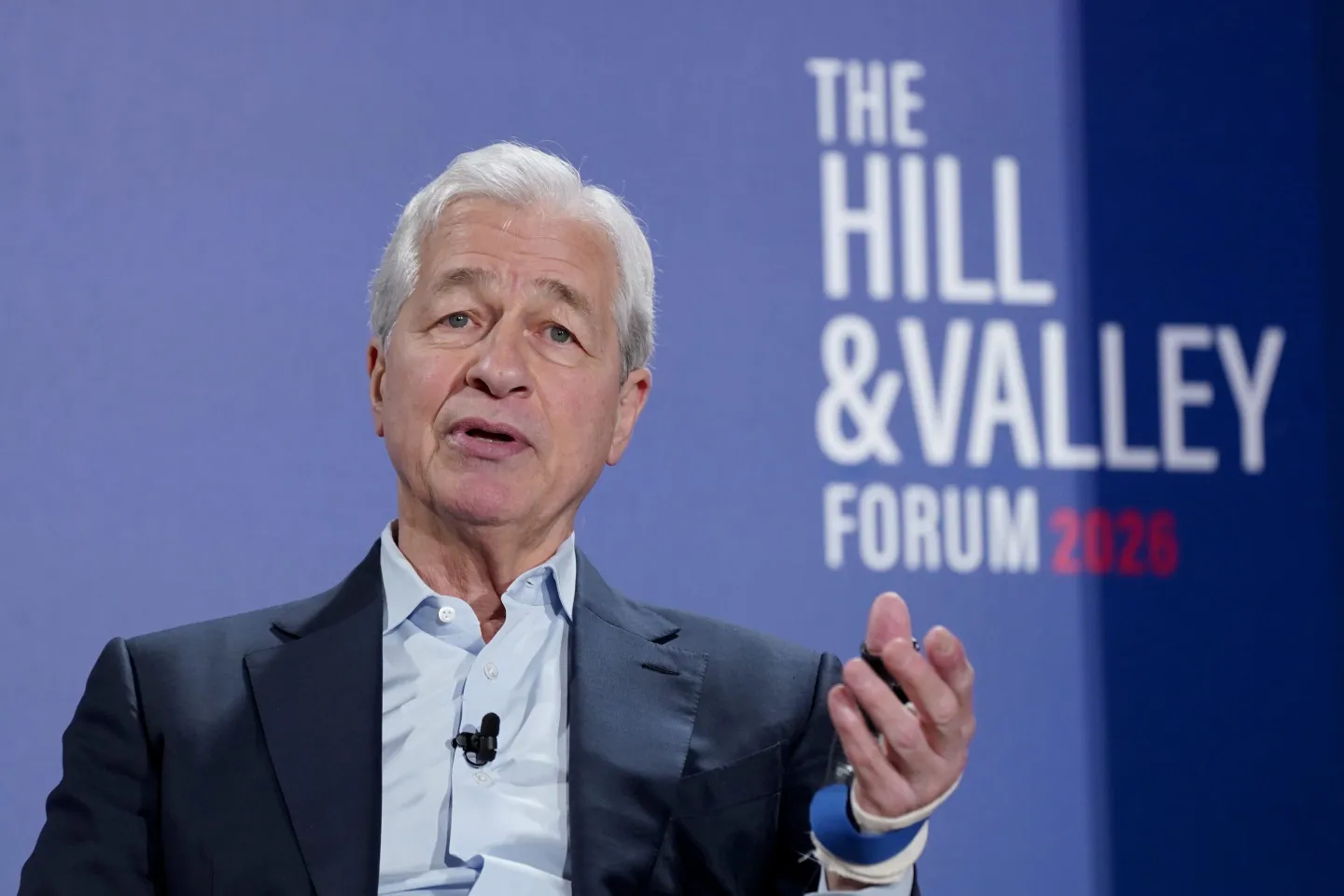
JPMorgan Chase CEO Jamie Dimon offered a nuanced perspective on the ongoing Iran conflict, describing it as a short-term risk but one that could ultimately improve prospects for lasting peace in the Middle East. Speaking at a Washington, D.C., conference with Palantir executive Mike Gallagher, Dimon emphasized that the region’s political and economic dynamics have shifted significantly compared with two decades ago.
“The Iran war makes it a better chance in the long run — it’s probably riskier in the short run because we don’t know the outcome,” Dimon said. He highlighted that key regional powers, including Saudi Arabia, the United Arab Emirates, Qatar, the U.S., and Israel, now share a unified interest in achieving permanent stability. “The attitude is not what it was 20 years ago. They all want it,” he added.
Dimon tied his assessment to economic factors, noting that foreign direct investment into Gulf nations will stall without regional stability. “They can’t have neighbors lobbing ballistic missiles into their data centers,” he said, stressing that investors require predictable conditions to maintain confidence in energy, infrastructure, and technology sectors.
The conflict intensified last month after U.S. and Israeli strikes in Iran, including the killing of the nation’s supreme leader, caused oil prices to surge and global markets to react. While some optimism arose after President Donald Trump claimed progress toward a “complete and total resolution,” Iran denied formal negotiations were taking place.
Beyond the Middle East, Dimon addressed U.S. economic and geopolitical vulnerabilities, including critical supply chain dependencies on China and the need for robust national security industries. He argued that winning conflicts in Ukraine and Iran would strengthen America’s global leverage and preparedness for potential confrontations with China.
Dimon also touched on broader corporate and technological trends, including artificial intelligence, stablecoins, and JPMorgan’s $1.5 trillion strategic initiatives to bolster global competitiveness and resilience. He concluded that achieving long-term regional stability in the Middle East is not only a geopolitical goal but a critical factor for sustaining investment flows and economic growth.
.webp)
Popular articles



Subscribe to unlock premium content
Soaring Above Luxury

A Taste of Italy Redefined

Designing the World, One Market at a Time

Soaring Above Luxury
A Taste of Italy Redefined
Soaring Above Luxury