Inside China’s Tech Capital Where Industrial Robots and Fortune-Telling AI Are Growing Side by Side

Inside China’s Tech Capital Where Industrial Robots and Fortune-Telling AI Are Growing Side by Side
By
Rachel Steinberg
Last updated:
January 6, 2026
First Published:
January 6, 2026

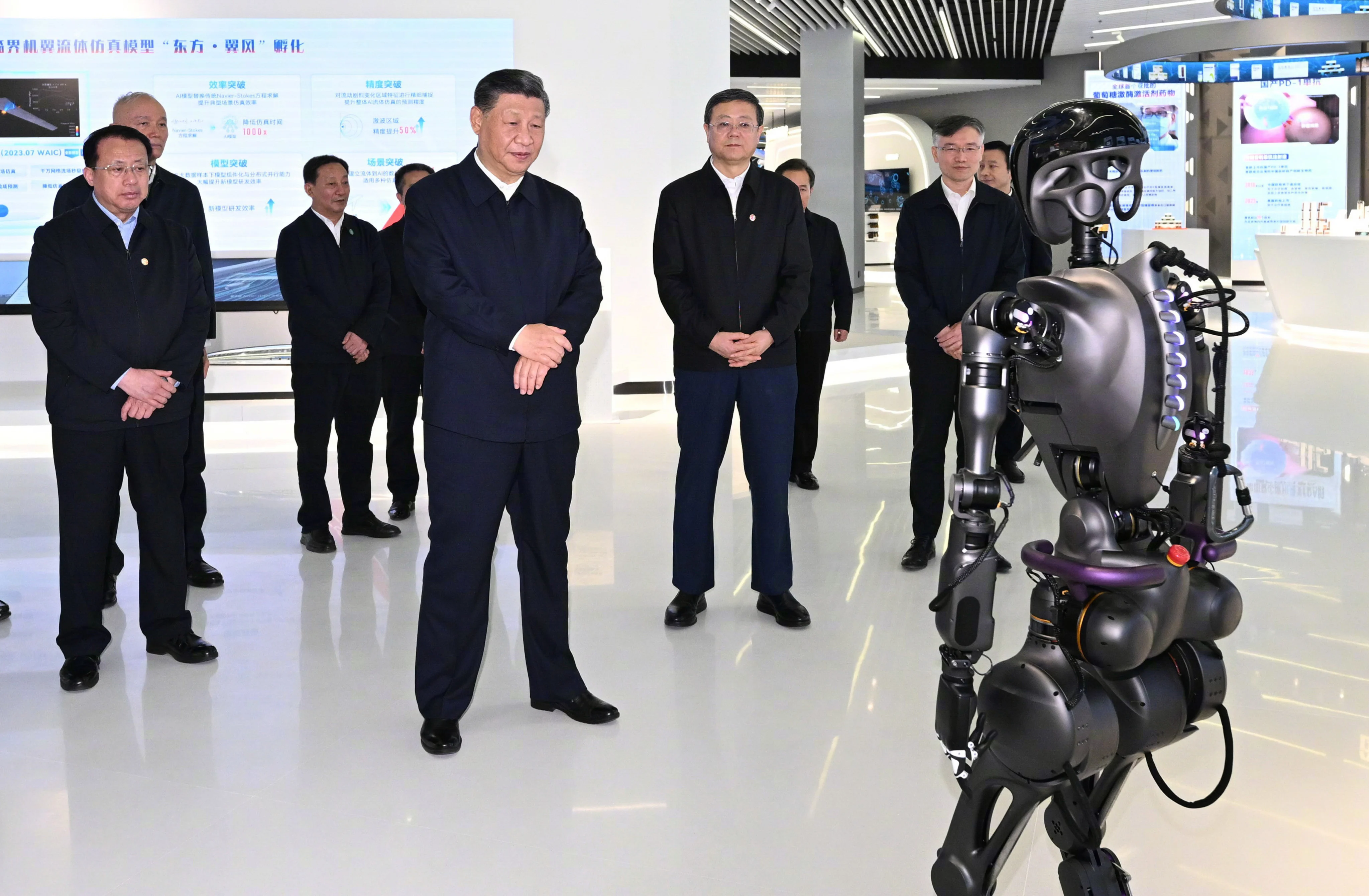
Photo: South China Morning Post
Hangzhou’s Expanding Role in China’s AI Strategy
Often referred to as China’s version of Silicon Valley, Hangzhou has become one of the country’s most important hubs for artificial intelligence innovation. The city is home to a fast-growing mix of advanced robotics firms, enterprise AI developers, and a surprisingly large number of consumer-facing applications, including AI-powered astrology and fortune-telling services. Together, they reflect the breadth of China’s current AI push, where serious industrial ambition coexists with mass-market experimentation.
This diversity is not accidental. As Beijing prioritizes artificial intelligence as a strategic industry, cities like Hangzhou are encouraged to support both frontier research and commercially viable products that can scale quickly and generate revenue.
From Physical AI to Everyday Apps
A defining feature of Hangzhou’s AI scene is its strong focus on physical AI, including robots designed for factories, warehouses, healthcare facilities, and urban services. Startups are building humanoid robots, automated inspection machines, and smart logistics systems aimed at boosting productivity in manufacturing and addressing labor shortages.
At the same time, many small teams are developing AI applications for everyday consumers. Fortune-telling and astrology apps powered by large language models have gained popularity by combining traditional cultural themes with modern AI interfaces. These apps often reach millions of users within months, generating cash flow that helps founders reinvest in more technically ambitious projects.
Why Chinese Startups Move Faster
Chinese AI founders benefit from several structural advantages. Open-source AI models are widely available and heavily customized, allowing startups to deploy advanced capabilities without the massive upfront costs faced by peers elsewhere. Energy and cloud computing costs are generally lower than in the U.S. or Europe, making large-scale model training and deployment more economical.
As a result, startups in Hangzhou can test ideas rapidly, pivot quickly, and bring products to market in weeks rather than years. This speed has become a competitive necessity in a domestic market where thousands of AI companies are fighting for talent, funding, and customers.
Intense Competition at Home
The sheer density of AI startups in China has created a brutally competitive environment. Many founders say domestic competition is often more challenging than international expansion. Similar products can emerge almost simultaneously, forcing companies to differentiate on execution, price, and distribution rather than technology alone.
This pressure has pushed entrepreneurs to think globally from an early stage. Increasingly, Hangzhou-based startups are building products with multilingual interfaces, overseas cloud infrastructure, and compliance frameworks designed for foreign markets, particularly Southeast Asia, the Middle East, and parts of Europe.
A Pragmatic Approach to Innovation
Unlike the research-first culture often associated with Silicon Valley, Hangzhou’s AI ecosystem is intensely pragmatic. Founders focus on applications that solve immediate problems or generate revenue quickly, whether that means automating factory floors or offering AI-driven lifestyle services. This commercial focus helps sustain startups through funding cycles and reduces reliance on long-term venture capital support.
Government-backed incubators and industrial parks further reinforce this approach by connecting startups with manufacturers, logistics firms, and local governments willing to pilot new technologies at scale.
Global Ambitions Taking Shape
As China’s AI capabilities mature, Hangzhou is emerging as a launchpad for companies with global ambitions. Founders increasingly see overseas markets not as an option, but as a necessity for long-term growth. Rising domestic competition, combined with growing confidence in Chinese AI engineering, is accelerating this outward push.
The coexistence of industrial robots and fortune-telling AI may seem unusual, but in Hangzhou it reflects a broader reality: China’s AI boom is not driven by a single vision of innovation, but by relentless experimentation across every possible use case.
.webp)
Popular articles



Subscribe to unlock premium content
Iceland’s Geothermal Revolution
Bali’s Digital Detox Revolution

Step Into the Future of Art
Iceland’s Geothermal Revolution
Bali’s Digital Detox Revolution
Iceland’s Geothermal Revolution