India’s Quiet Strength in U.S. Trade Talks: Who Really Holds the Upper Hand?

India’s Quiet Strength in U.S. Trade Talks: Who Really Holds the Upper Hand?
By
Leah Rosenfeld
Last updated:
April 10, 2025
First Published:
April 11, 2025

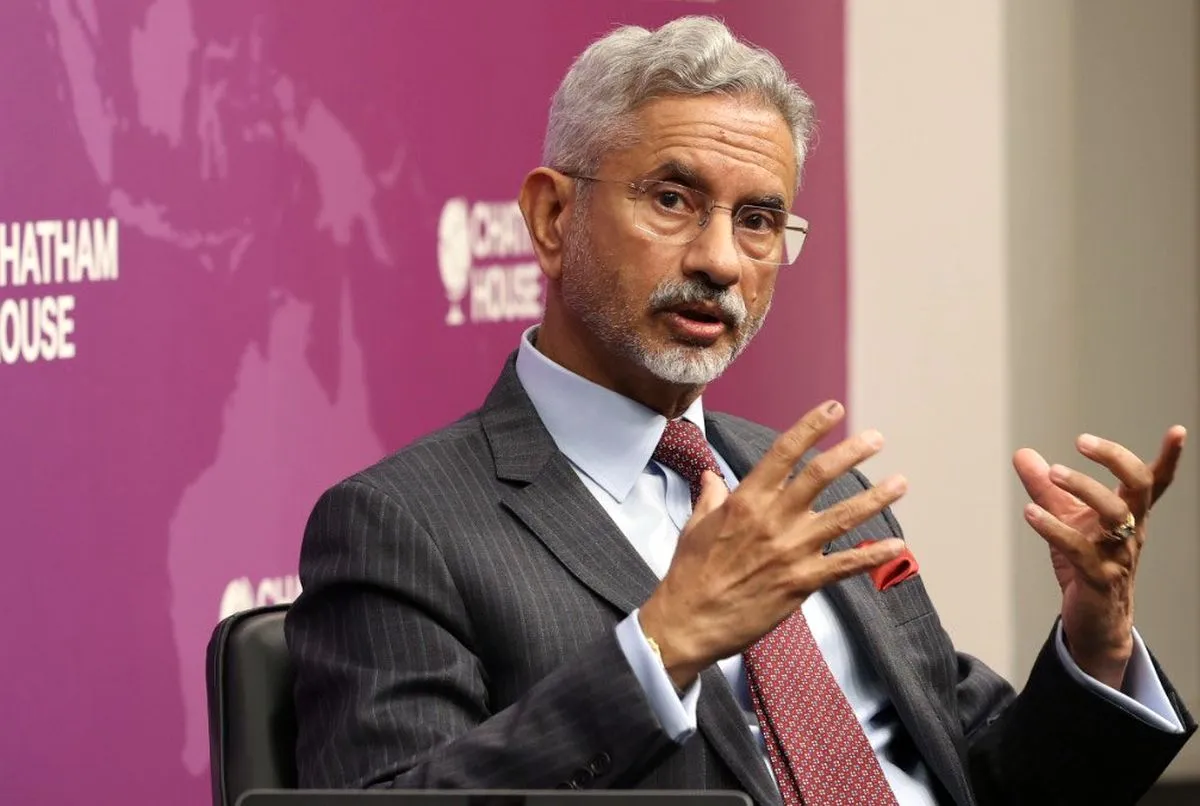
IMAGE: External Affairs Minister S Jaishankar speaks at the Chatham House think tank in London. Photograph: @DrSJaishankar/X
A Trade War Brews—but India Isn’t Cornered
The U.S. recently scaled back its proposed universal tariff rate from 26% to 10% on most imports—including from India. While that’s a temporary sigh of relief for many nations, the bigger story lies in what’s yet to come.
India may soon find itself back at the negotiation table with Washington. But unlike some export-heavy Asian economies, India’s position is less desperate—and potentially more powerful.
India vs. Tariffs: Not All Exports Are Created Equal
The U.S. may be flexing its trade muscle with global tariff hikes, but India isn’t equally exposed. That’s because India’s economic engine is driven more by domestic consumption and service exports, not merchandise exports alone.
According to World Bank data:
- In 2023, India’s total exports (goods + services) made up just 20.3% of its GDP.
- In contrast, Vietnam’s exports stood at a staggering 87%, and Thailand’s at 65% of GDP.
Key Breakdown of India’s Export Profile:
- Goods exports account for just 56.1% of India’s total exports.
- The U.S. accounts for only 18% of India’s merchandise export volume (2023–24), as per India’s Ministry of Commerce & Industry.
- Services exports, especially in IT and consulting, remain untouched by tariff threats.
This insulation gives India bargaining power that export-dependent economies like Vietnam or Malaysia lack.
IT and Services: India’s Secret Trade Weapon
India’s heavyweight IT sector—including titans like Tata Consultancy Services (TCS) and Infosys—is unlikely to feel the direct pinch of tariffs. These companies generate billions in revenue from American clients, yet their exports fall under services—not goods—and are not directly taxed under the current trade war strategies.
Industry Snapshot (FY2023):
- TCS revenue: $27.9 billion (over 50% from North America)
- Infosys revenue: $18.5 billion (approx. 61% from North America)
This U.S. dependency could become a risk only if a full-blown American recession triggers widespread corporate budget cuts. But tariffs alone? Not a major concern here.
James Sullivan of JPMorgan noted:
“Indian trade with the U.S. is structurally different because it’s not just about goods—it’s about services where the U.S. actually runs a trade surplus.”
Negotiating Power: Where India Stands Strong
India isn’t rushing to strike a free trade agreement (FTA) out of fear. Unlike China or Vietnam, it doesn’t need to concede heavily to keep the export machine running.
Experts weigh in:
- Abhiram Eleswarapu, BNP Paribas:
“India’s relatively low export dependence gives it flexibility. Most sectors derive less than 10% of their revenue from U.S. exports—except for IT and pharma.”
- Gaurav Narain, India Capital Growth Fund:
“India won't bend on key sectors like agriculture. It may offset trade imbalances by increasing imports in strategic sectors like defense and energy, but not at the cost of core domestic industries.”
He adds that India could even reduce tariffs in areas like pharmaceuticals and automobiles, where it already has a strong cost advantage and mature manufacturing.
Why India Isn’t Just a ‘China Alternative’
Companies seeking to diversify away from China are increasingly considering India—but not just as a fallback. India offers long-term value through its massive domestic market, competitive labor force, and improving infrastructure.
- Apple’s India manufacturing push is a prime example. But experts warn that supply chains can’t move overnight.
- India’s digital public infrastructure (DPI), like UPI and Aadhaar, makes it more than just a manufacturing destination—it’s also a tech-forward ecosystem.
“India isn’t just a reroute from China—it’s a structural opportunity,” said Narain.
Investor Outlook: Markets React, but Resilience Remains
Despite solid fundamentals, Indian equities have seen turbulence amid global trade uncertainty and valuation concerns.
- NIFTY 50 P/E ratio remains high (around 23.8x, as of March 2025), deterring some institutional investors.
- Foreign portfolio investments (FPI) slowed in Q1 2025 but are expected to rebound if clarity improves.
Expert Picks Amid Uncertainty:
Macquarie’s Aditya Suresh recommends sticking to domestic demand-driven stocks, like:
- Bharti Airtel (telecom)
- GAIL (gas infrastructure)
- UltraTech Cement (construction materials)
“Earnings need a reset, but the worst seems behind us. Focus on local revenue earners,” says Suresh.
The Bottom Line: India Holds More Cards Than You Think
While the U.S. sharpens its trade policy knives, India sits at the table with a layered and diversified economy, growing digital strength, and a massive domestic market. Its reliance on services exports and lower exposure to the U.S. in merchandise trade makes it one of the least vulnerable among emerging markets.
India may not need to bow down in trade talks—it can negotiate on its terms.

Popular articles


Subscribe to unlock premium content
The Rise of Ultra-Luxury Wilderness Retreats in Siberia for High-Net-Worth Investors

Remote Himalayan Villages Transforming Ancient Traditions into Lucrative Wellness Ventures

The New Frontier of Investment in African Artisan Mining Communities

The Rise of Ultra-Luxury Wilderness Retreats in Siberia for High-Net-Worth Investors
Remote Himalayan Villages Transforming Ancient Traditions into Lucrative Wellness Ventures
The Rise of Ultra-Luxury Wilderness Retreats in Siberia for High-Net-Worth Investors