India’s Fast-Food Giants Join Forces in a $934 Million Merger to Reshape the QSR Landscape

India’s Fast-Food Giants Join Forces in a $934 Million Merger to Reshape the QSR Landscape
By
Junia Wells
Last updated:
January 2, 2026
First Published:
January 2, 2026

A Defining Deal for India’s Quick-Service Restaurant Sector
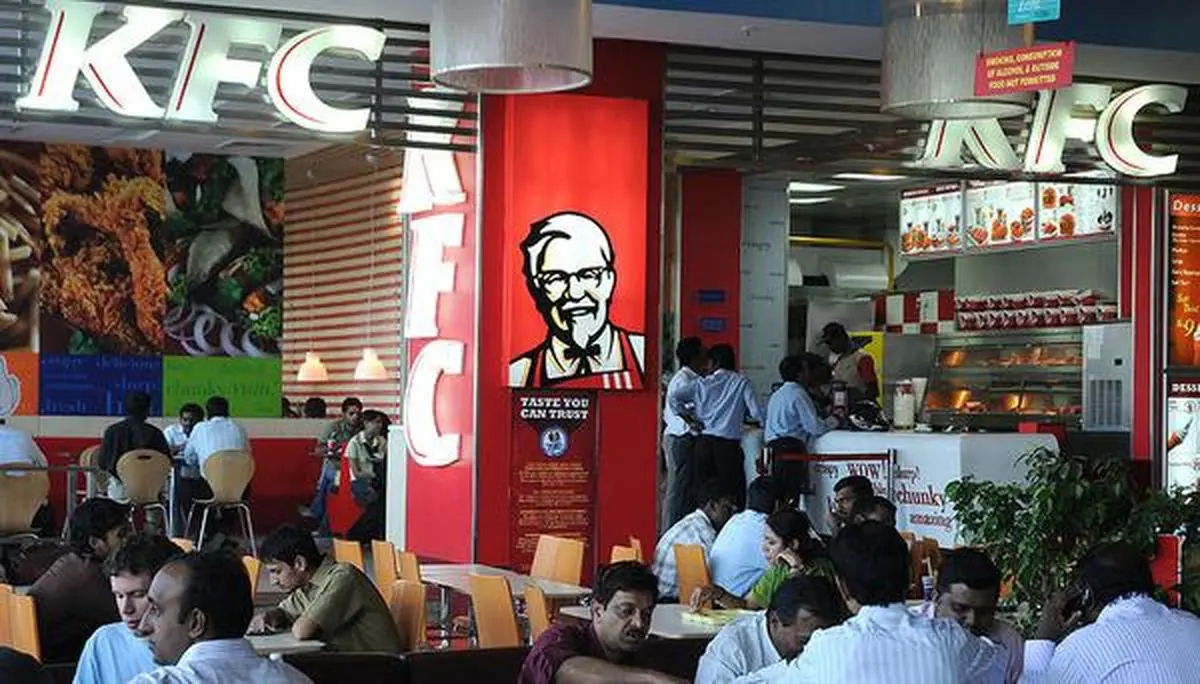
India’s fast-food industry is set for a major consolidation as Sapphire Foods India and Devyani International, the country’s leading operators of KFC and Pizza Hut outlets, agreed to merge in a transaction valued at approximately $934 million. The deal will create one of the largest quick-service restaurant franchise platforms in India, a market that remains structurally attractive but increasingly challenging in the short term.
The merger brings together two long-time partners of Yum Brands, uniting their networks at a time when operators are under pressure from rising input costs, softer consumer demand, and intense competition from rival global chains.
Deal Structure and Expected Synergies
Under the terms of the agreement, Devyani International will issue 177 shares for every 100 shares held in Sapphire Foods. Management estimates annual cost and operational synergies of roughly 2.1 billion to 2.25 billion rupees, equivalent to about $23 million to $25 million, beginning in the second full year after the merger is completed.
These savings are expected to come from supply chain efficiencies, better procurement terms, shared back-end infrastructure, and more disciplined capital allocation across store expansions and refurbishments. Analysts view scale as critical in a business where margins are thin and profitability hinges on volume and cost control.
Building a National and Regional Powerhouse
Together, Sapphire and Devyani operate more than 3,000 restaurants across India and select international markets. Their combined portfolio includes KFC and Pizza Hut dine-in formats, delivery-focused outlets, and newer store concepts aimed at smaller cities and suburban locations.
The enlarged entity will compete head-to-head with other major franchise operators, including the local partners of McDonald’s and Domino’s Pizza. As consumer spending slows and promotional intensity rises, size and bargaining power are becoming decisive advantages in the Indian fast-food market.
Financial Pressure Driving Consolidation
Both companies have been operating at a net loss, underscoring the urgency behind the deal. In the quarter ended September, Sapphire reported a 10% year-on-year increase in consolidated costs to 7.68 billion rupees, while Devyani’s expenses climbed 14.4% to 14.08 billion rupees.
Devyani posted a net loss of 219 million rupees for the quarter, reversing a marginal profit a year earlier. Sapphire’s consolidated net loss widened to 127.7 million rupees from 30.4 million rupees in the prior year period. These figures reflect higher food prices, labor inflation, rental costs, and weaker same-store sales growth as consumers cut back on discretionary spending.
Industry experts note that consolidation offers a clearer path to profitability. By pooling operations, the combined company can rationalize overlapping functions and invest more selectively in high-return locations.
Strategic Rationale and Market Outlook
India remains one of the fastest-growing quick-service restaurant markets globally, driven by urbanization, a young population, and rising adoption of food delivery. However, near-term growth has moderated as inflation and economic uncertainty weigh on household budgets.
The Sapphire–Devyani merger is designed to position the combined company for the next phase of growth by stabilizing margins now and building a stronger foundation for expansion when consumer demand rebounds. If management delivers even a portion of the projected synergies, the merged entity could transition from loss-making to sustainably profitable over the medium term.
What This Means for Investors and the Industry
For investors, the deal signals a shift from aggressive expansion toward disciplined scaling and operational efficiency. For the broader industry, it highlights how consolidation may become a recurring theme as franchise operators seek resilience in a more competitive and cost-sensitive environment.
As India’s fast-food market matures, size, efficiency, and execution are likely to separate long-term winners from struggling operators. This merger is a clear bet that bigger, leaner platforms will be better positioned to survive and grow in the years ahead.
.webp)
Popular articles



Subscribe to unlock premium content
Iceland’s Geothermal Revolution

Bali’s Digital Detox Revolution

Step Into the Future of Art

Iceland’s Geothermal Revolution
Bali’s Digital Detox Revolution
Iceland’s Geothermal Revolution