How Hyphen Is Automating the Lunch Rush With AI-Powered Makelines

How Hyphen Is Automating the Lunch Rush With AI-Powered Makelines
By
David Goldfarb
Last updated:
December 31, 2025
First Published:
December 31, 2025

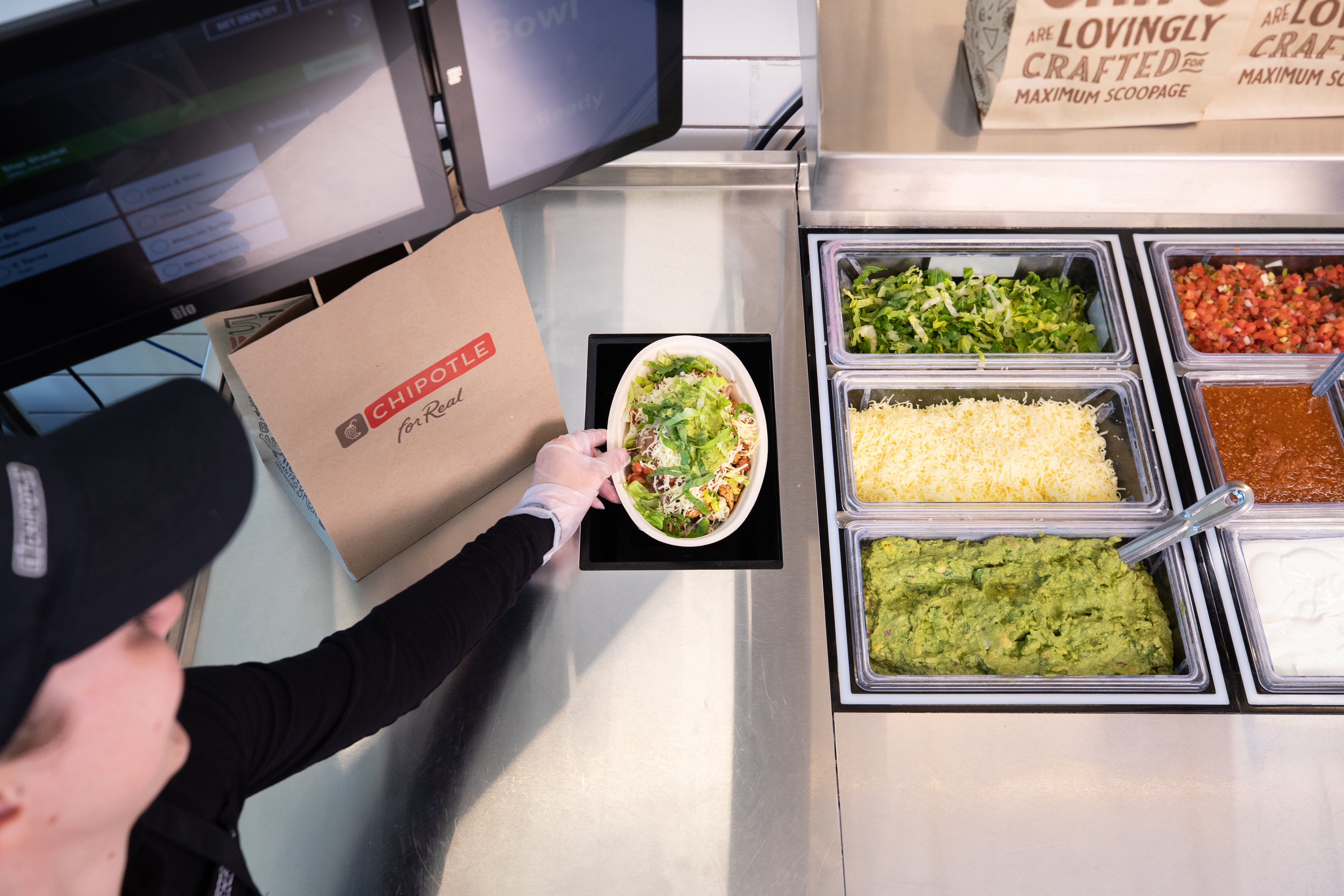
A finished burrito bowl assembled by Chipotle and Hyphen’s automation technology.
Source: Chipotle Mexican Grill
Automation Enters the Fast-Casual Kitchen
As restaurant operators grapple with rising labor costs, inconsistent staffing, and increasingly demanding customers, a growing number are turning to automation to stay competitive. One of the most closely watched players in this shift is Hyphen, a San Jose–based robotics startup developing AI-driven automated makelines designed for high-volume, highly customized meals.
Hyphen’s technology is now drawing serious backing from major restaurant brands, including Chipotle and Cava, two companies that typically compete head-to-head in the fast-casual category but are aligned in their interest in kitchen efficiency.
Why Restaurants Are Betting on Hyphen
Hyphen’s core value proposition centers on two persistent restaurant challenges: speed and service quality. Its automated makelines use robotic arms and AI-controlled dispensing systems to assemble bowls and salads beneath a long counter, out of view of customers, while human workers focus on hospitality and final touches.
According to co-founder and CEO Stephen Klein, the system can prepare a bowl every 10 to 15 seconds at peak capacity, allowing restaurants to handle lunch and dinner rushes with significantly less congestion.
At full utilization, Hyphen’s systems often exceed current demand levels, giving operators headroom during peak periods while maintaining consistent portioning and order accuracy.
Major Investments From Chipotle and Cava
That efficiency has translated into meaningful financial support. In August 2025, Hyphen closed a $25 million Series B funding round. Cava participated with an investment of up to $10 million, while Chipotle has committed a total of $25 million through its Cultivate Next venture fund by the third quarter of 2025.
The capital is being used to scale manufacturing and expand deployments across the United States. Hyphen has partnered with Re:Build Manufacturing, based in Kalamazoo, Michigan, to ramp up production capacity and shorten lead times for restaurant partners.
Chipotle’s pilot makeline is currently back in San Jose undergoing modifications following an in-restaurant test. Cava plans to pilot Hyphen’s technology in a second makeline dedicated to digital and takeout orders, positioned in the back of the kitchen to relieve pressure on front-line staff.
The Economics of an Automated Makeline
Hyphen’s makelines typically cost between $50,000 and $100,000 per unit, depending on configuration. According to Klein, many restaurant partners are seeing a return on investment in under 12 months, driven by labor savings, improved throughput, and reduced food waste.
The systems operate roughly 95% of the time. When maintenance is required, staff can immediately step in and complete orders manually, similar to how an escalator becomes stairs during a stoppage.
Food cost control is another major selling point. The makelines measure ingredients down to the gram, ensuring consistent portions and minimizing overuse. Even small reductions in protein or topping waste can translate into meaningful margin improvements across hundreds of locations.
From Robotic Food Truck to Scalable Platform
Hyphen’s origins trace back to a fully robotic food truck built by Klein and co-founder Daniel Fukuba, which launched in Los Angeles just months before the pandemic. When COVID disrupted the food service landscape, the founders pivoted away from direct-to-consumer concepts and focused instead on licensing their technology to established restaurant brands.
The shift proved timely. As restaurants reopened, operators faced tighter labor markets and higher customer expectations, creating a strong appetite for automation that could integrate into existing kitchens rather than replace them entirely.
A Tough Industry Looks to Technology
The broader restaurant sector has had a difficult year. Shares of Cava and Chipotle are down roughly 50% and 40% year-to-date, respectively, while Sweetgreen has fallen close to 80%. Many brands have seen pullbacks from younger consumers and increased pressure on margins.
Sweetgreen recently sold its robotics unit, Spyce, to mealtime platform Wonder for $186.4 million, though it continues to use the automated Infinite Kitchen technology developed by Spyce. The move underscores a wider recalibration in how restaurant companies approach automation, favoring partnerships over in-house development.
What Comes Next for Hyphen
Hyphen is now in discussions with major food service operators beyond traditional restaurants, including college campuses, corporate office parks, and institutional dining providers. The company also plans to expand its software offerings, using data generated from food preparation to improve prep scheduling, inventory planning, and back-of-house operations.
Fast food chains are not an immediate target. Klein says Hyphen is focused on concepts with high customization and high order volume, where automation delivers the greatest operational benefit.
For fast-casual brands navigating an unforgiving operating environment, Hyphen’s approach offers a glimpse of how AI and robotics may quietly reshape the lunch line—one bowl at a time.
.webp)
Popular articles



Subscribe to unlock premium content
Iceland’s Geothermal Revolution
Bali’s Digital Detox Revolution

Step Into the Future of Art
Iceland’s Geothermal Revolution
Bali’s Digital Detox Revolution
Iceland’s Geothermal Revolution