Hong Kong Voter Turnout Slumps as Public Anger Over Deadly High-Rise Fire Intensifies

Hong Kong Voter Turnout Slumps as Public Anger Over Deadly High-Rise Fire Intensifies
By
Rachel Steinberg
Last updated:
December 8, 2025
First Published:
December 8, 2025

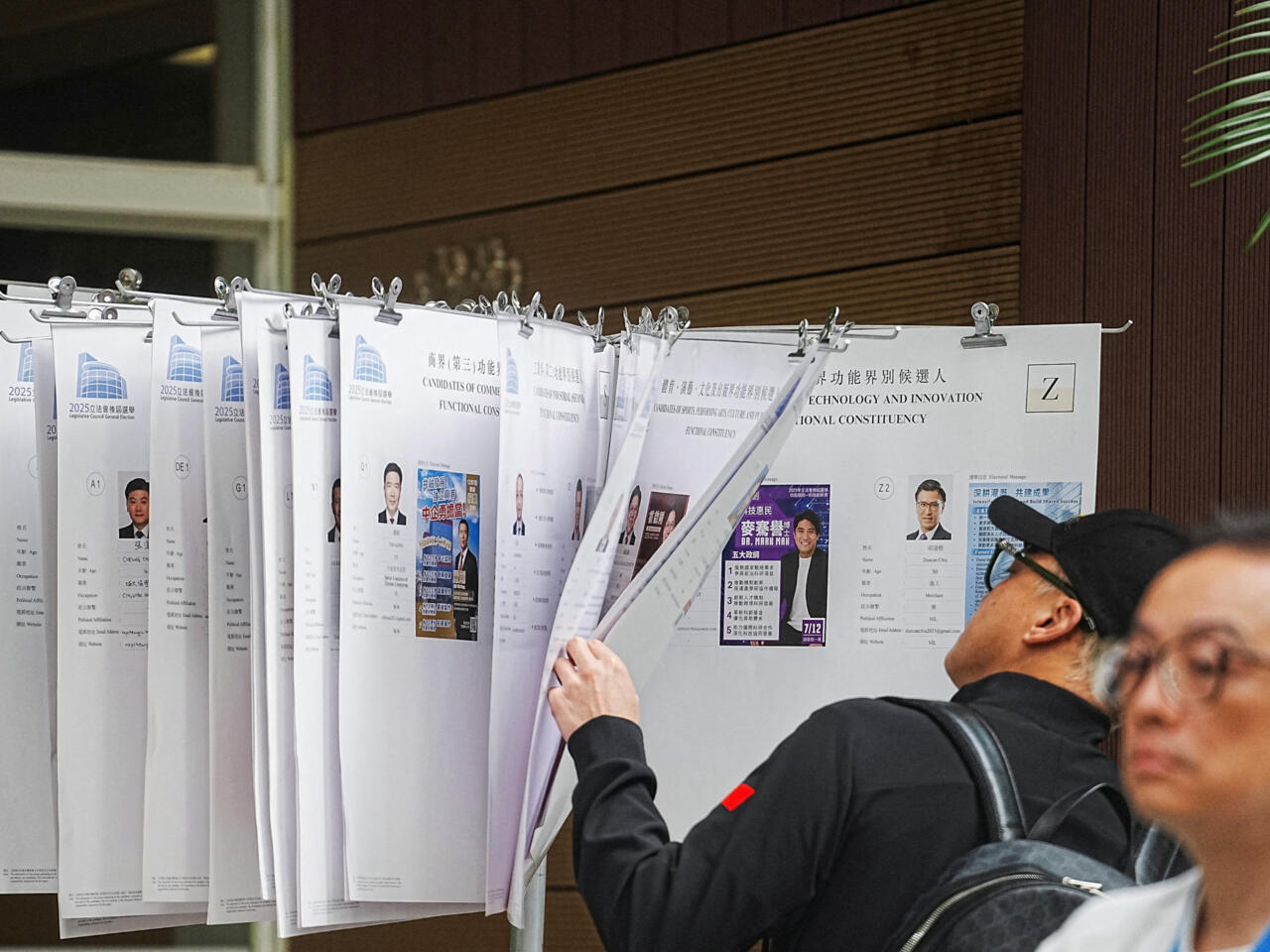
Photo: France 24
Hong Kong’s latest Legislative Council election delivered one of the lowest voter turnouts in the city’s modern political history, unfolding under the shadow of a catastrophic fire that claimed at least 159 lives and ignited widespread frustration toward the government. Despite extended voting hours, additional polling stations, and a citywide push by authorities to increase participation, only 31.9 percent of registered voters cast ballots. While marginally higher than the 30.2 percent logged in the 2021 race, the overall number of voters was slightly lower.
The election was tightly controlled under Beijing’s revamped electoral framework, which requires all candidates to undergo a stringent “patriots-only” vetting process. Out of the legislature’s 90 seats, only 20 are filled through direct public voting, with the remaining seats assigned through committees dominated by pro-Beijing groups, business networks, and professional sectors.
Impact of the Deadly Fire
The deadly November 26 blaze in Tai Po deeply shaped public sentiment. The fire consumed seven residential towers in Wang Fuk Court and took almost 48 hours to put out. Authorities confirmed that substandard renovation materials played a key role in accelerating the inferno.
Election Commission chairman David Lok acknowledged that the fire significantly disrupted the social climate and made administering the vote “exceptionally challenging.” Security was visibly tightened near the northern districts, with large police deployments and restricted zones around the affected area.
Public anger remains high. Some residents have openly questioned building oversight, government accountability, and long-standing concerns about housing safety. Hong Kong’s Chief Executive John Lee pledged to work with the legislature to introduce institutional reforms in the construction and regulatory sectors, but residents continue to demand more transparency and independent review.
Government Measures and Public Response
Authorities have initiated criminal and corruption probes into the causes of the fire and the conduct of contractors, signaling a broader effort to ease public dissatisfaction. In parallel, the city intensified enforcement against election-related dissent.
Hong Kong’s anti-corruption agency reported the arrests of four men allegedly encouraging voters to boycott or spoil their ballots. Another arrest warrant was issued for an individual linked to social media posts urging non-participation. Public incitement of voting boycotts became a criminal offense after sweeping electoral reforms reduced the presence of pro-democracy voices. Historically, these groups accounted for about 60 percent of voter support, but many have since opted out of elections altogether.
As midnight approached, authorities cleared flowers and tributes from a memorial near the burned towers, a move interpreted by many as an attempt to curb visible displays of grief and dissent. Beijing’s national security office also cautioned local and foreign journalists against “false narratives,” signaling heightened sensitivity over how the tragedy is portrayed.
Broader Political Tension
The fire and the election have become a critical test of Beijing’s governance model in Hong Kong. Since the introduction of the national security law in 2020, the political landscape has been reshaped, leaving limited room for opposition voices and public demonstrations.
For many residents, the vote felt disconnected from their daily realities. A local man in his late seventies, living near the devastated buildings, said he chose not to vote because he felt abandoned by those in power. His sentiment reflects a wider disengagement from political participation, particularly among older residents directly affected by the tragedy.
Voter registration has also declined for four consecutive years. The current registry stands at 4.13 million, down from the peak of 4.47 million recorded in 2021, reflecting a broader erosion of confidence in the electoral system.
Hong Kong’s near-record-low voter turnout underscores a deepening disconnect between the public and a political system now firmly molded by Beijing’s directives. As investigations continue and the city confronts the aftermath of the deadliest fire in nearly eight decades, authorities face mounting pressure to restore public trust, address long-standing safety failures, and navigate a political environment increasingly shaped by public frustration and diminished participation.

Popular articles


Subscribe to unlock premium content
London’s Gourmet Playgrounds

From Bean to Buzz in Thailand

The Secret Life of Pop-Up Luxury Restaurants in Paris
London’s Gourmet Playgrounds
From Bean to Buzz in Thailand
London’s Gourmet Playgrounds