Google Delivers Its Strongest Wall Street Performance in Over a Decade as AI Momentum Accelerates

Google Delivers Its Strongest Wall Street Performance in Over a Decade as AI Momentum Accelerates
By
David Goldfarb
Last updated:
January 1, 2026
First Published:
January 1, 2026

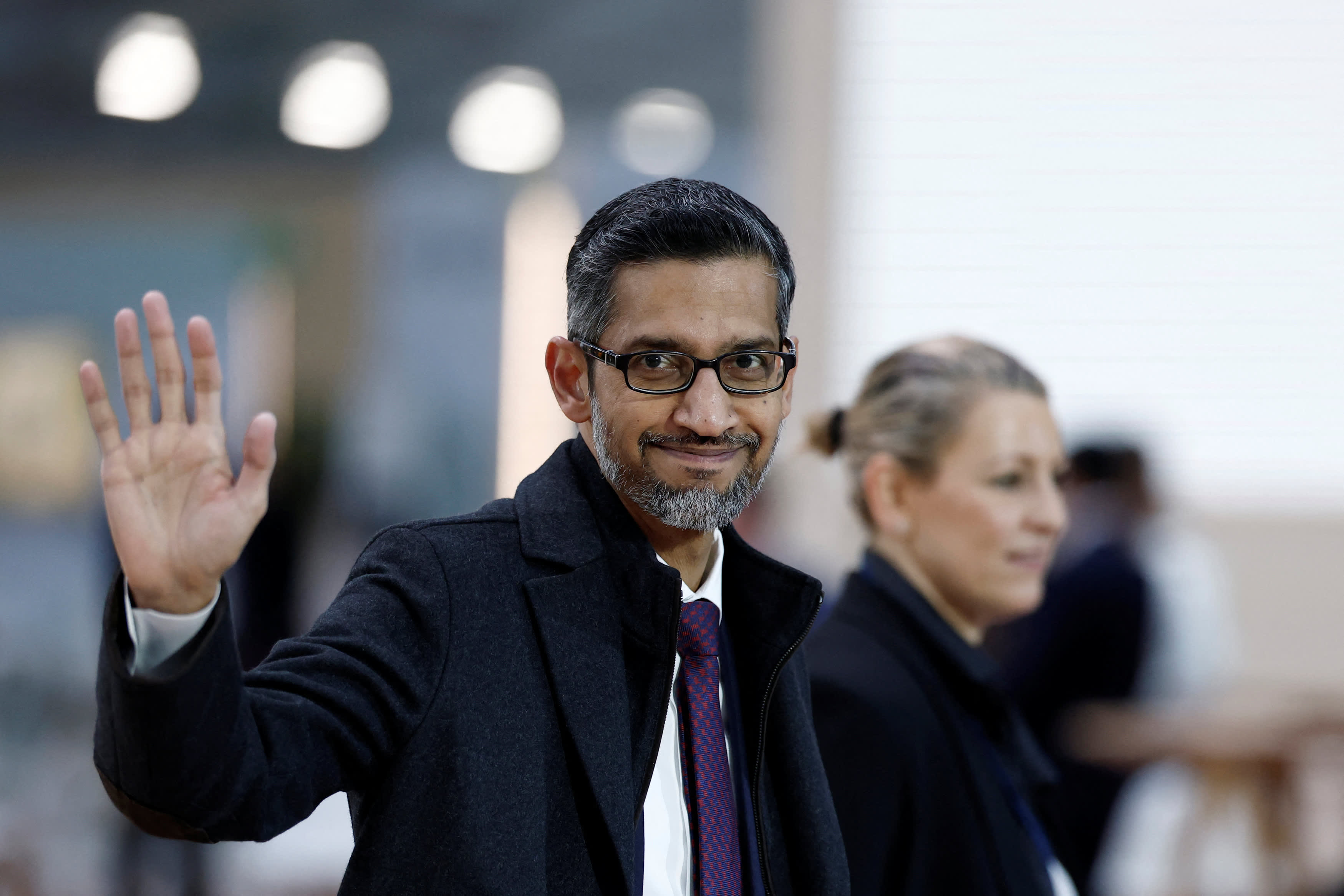
Photo: CNBC
A Breakout Year After Early Turbulence
Alphabet closed 2025 with its most impressive stock market performance since the aftermath of the global financial crisis, underscoring a dramatic shift in investor sentiment. Shares of the Google parent company surged 65% over the year, marking the steepest annual gain since 2009, when the stock doubled as markets rebounded from crisis lows.
The rally was far from smooth. Alphabet shares fell 18% in the first quarter, their worst quarterly decline since mid-2022, as investors questioned whether Google could defend its core businesses in an AI-first internet. Trade tensions, including renewed tariff threats from U.S. President Donald Trump, added to the pressure and pushed the stock to its 2025 low in April.
From that point, the narrative flipped. Alphabet shares rebounded more than 100% from their spring lows, ending the year not only in positive territory but as the top performer among the eight U.S. technology companies valued at more than $1 trillion.
Outperforming the Megacap Pack
Alphabet’s gains eclipsed those of its largest peers. While Broadcom rose 49% and Nvidia advanced 39%, no other trillion-dollar tech company matched Google’s pace in 2025. The outperformance reflected renewed confidence that Alphabet can translate its scale, data advantage, and engineering depth into durable growth in the age of generative AI.
By year-end, Alphabet had slightly exceeded its strong 2021 performance and firmly re-established itself as a market leader rather than a perceived incumbent under threat.
Winning Over AI Skeptics
Much of the year’s volatility stemmed from doubts about Google’s ability to compete with fast-moving AI challengers. OpenAI’s ChatGPT and Sora platforms captured consumer attention and raised concerns that conversational interfaces could weaken traditional search and digital advertising, the foundation of Alphabet’s revenue engine.
The company responded with decisive moves. In April, Google elevated long-time executive Josh Woodward to lead the Gemini app, signaling a renewed focus on product velocity and user experience. Momentum accelerated in August with the launch of Nano Banana, an image-generation feature that quickly went viral as users blended photos into personalized digital figurines.
Within weeks, Gemini crossed a major milestone, surpassing 5 billion images generated and overtaking ChatGPT as the top-ranked app in Apple’s App Store. By late 2025, Gemini had become the clearest proof point that Google could compete not just on infrastructure, but on consumer-facing AI products.
Talent, Capital, and Strategic Bets
Google reinforced its AI ambitions over the summer by securing key talent from AI coding startup Windsurf. After Windsurf’s acquisition talks with OpenAI collapsed, Alphabet stepped in with a $2.4 billion agreement covering licensing and compensation to bring in CEO Varun Mohan and other senior engineers.
The move strengthened Google’s already deep AI bench and signaled a willingness to spend aggressively to secure strategic capabilities. Alphabet later raised its 2025 capital expenditure outlook to as much as $93 billion, up from $85 billion previously, with analysts forecasting spending could exceed $114 billion in 2026 as AI infrastructure demand continues to surge.
Legal Clarity Removes a Major Overhang
Investor confidence also improved following a key antitrust ruling. Although Google was found last year to hold an illegal monopoly in online search, U.S. District Judge Amit Mehta rejected the most severe remedies sought by the Justice Department.
The decision allowed Google to retain Chrome and continue paying partners such as Apple billions of dollars annually to remain the default search engine on iPhones. While Google must share certain data with competitors, the ruling removed the risk of a forced breakup and provided much-needed regulatory clarity.
Gemini’s Growing Share and the Search Payoff
The launch of Gemini 3 late in the year further strengthened Alphabet’s AI narrative. Rolled out roughly eight months after Gemini 2.5, the new model narrowed the gap with ChatGPT in usage and visibility.
Traffic data shows a clear shift. ChatGPT’s share of global generative AI traffic fell to about 68% from 87% a year earlier, while Gemini climbed to roughly 18%, up from just 5%. While Google still trails in absolute usage, the pace of change has impressed investors.
Analysts emphasize that the real prize is not chatbot dominance alone, but how AI improves Google’s core search business. AI Overviews, which embed AI-generated summaries directly into search results, are increasing engagement and relevance. According to analysts at Citizens, improved models are acting as a tailwind for user interaction and monetization.
They believe these enhancements could drive an acceleration in search revenue in the fourth quarter of 2025, a key inflection point for the stock.
Cloud, Waymo, and the 2026 Outlook
Beyond search and AI apps, Alphabet continues to benefit from strength in cloud computing, where Google Cloud is narrowing the gap with Amazon Web Services and Microsoft Azure. CEO Sundar Pichai noted that through the third quarter of 2025, Google Cloud signed more than $1 billion-plus deals than in the previous two years combined.
Waymo, Alphabet’s autonomous driving unit, remains another long-term catalyst as robotaxi deployments expand and regulatory frameworks mature.
Looking ahead, expectations are elevated. Analysts forecast fourth-quarter revenue growth of 15%, pushing quarterly sales above $111 billion. Growth in 2026 is projected to remain in the low-teens, a notable feat for a company of Alphabet’s scale.
High Expectations, But Conviction Remains
With the stock closing the year around $313, optimism is already priced in. Still, many on Wall Street remain bullish. Pivotal Research recently raised its price target to $400, roughly 28% above recent levels, arguing that any shakeout in the AI sector would ultimately favor dominant platforms with scale and capital.
While risks remain, including heavy spending and broader AI market volatility, Alphabet’s 2025 performance has decisively reshaped the narrative. What began as a year of skepticism ended with Google reasserting itself as one of the most formidable forces in global technology and capital markets.

Popular articles


Subscribe to unlock premium content
Chilling Luxury in the Arctic

Where Winter Becomes a $100 Million Playground

Hollywood’s Forgotten Treasures Become the Ultimate Status Symbol

Chilling Luxury in the Arctic
Where Winter Becomes a $100 Million Playground
Chilling Luxury in the Arctic