Gold Slumps Further as Strong Dollar and Rising Yields Trigger Deep Market Correction

Gold Slumps Further as Strong Dollar and Rising Yields Trigger Deep Market Correction
By
David Goldfarb
Last updated:
March 24, 2026
First Published:
April 25, 2026

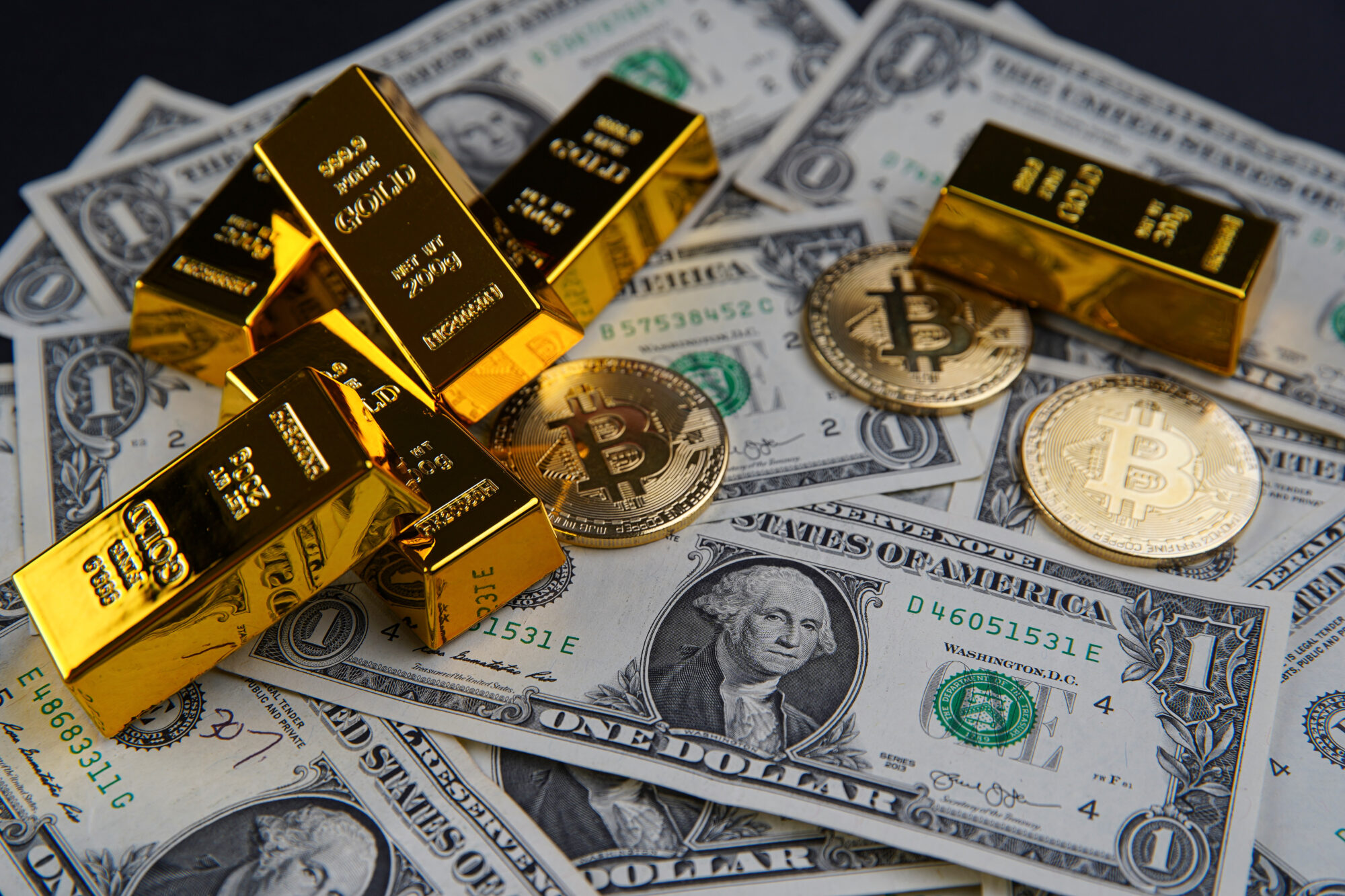
Gold Extends Losses and Confirms Bear Market Trend
Gold prices continued their downward trajectory on Tuesday, sliding deeper into bear market territory as a combination of macroeconomic pressure and investor repositioning weighed heavily on the metal. After an explosive rally earlier this year, the sharp reversal highlights how quickly sentiment can shift in global commodity markets.
Spot gold briefly dropped by 2% during the session before recovering slightly to trade around $4,335.97 per ounce, still down roughly 1% on the day. Meanwhile, gold futures for April delivery hovered near $4,358.80 per ounce, also reflecting sustained selling pressure.
The broader precious metals complex followed suit. Silver prices fell more aggressively, with spot silver declining over 3% to $66.93 per ounce, while futures slipped to $67.54, down approximately 2.6%.
A Sharp Reversal from Record Highs
The scale of the recent decline underscores how significant the correction has been. Gold has now fallen more than 22% from its late-January peak of $5,594.82 per ounce, officially placing it in bear market territory.
Even more striking is the speed of the downturn. The metal lost nearly 10% in just one week, marking its steepest weekly decline since 2011. This rapid sell-off follows a prolonged rally that saw gold surge over 60% in the past year, driven by geopolitical tensions, inflation fears, and central bank demand.
Such steep corrections are not uncommon after extended rallies, particularly when positioning becomes crowded and investors begin locking in profits.
Stronger Dollar Reduces Gold’s Appeal
A key driver behind the sell-off has been the strengthening of the U.S. dollar. The dollar index, which tracks the greenback against a basket of major currencies, rose by approximately 0.5% on Tuesday and is up around 3% since the onset of recent geopolitical tensions.
A stronger dollar typically exerts downward pressure on gold prices because it makes dollar-denominated assets more expensive for international buyers. As a result, global demand for gold tends to weaken when the currency strengthens.
This inverse relationship between the dollar and gold has become particularly pronounced in recent weeks, amplifying the metal’s losses.
Rising Treasury Yields Add Further Pressure
Another major factor weighing on gold is the rise in U.S. Treasury yields. The yield on 10-year government bonds climbed to around 4.38%, reflecting persistent inflation concerns and reduced expectations for aggressive interest rate cuts.
Higher yields diminish the attractiveness of gold, which does not generate any income. As returns on bonds and other fixed-income assets increase, investors often rotate out of non-yielding assets like gold in search of better returns.
This shift in capital allocation has been a central theme in the current sell-off, particularly among institutional investors and hedge funds.
Investor Behavior and Position Unwinding
Market dynamics also suggest that the decline is being driven in part by technical and positioning factors rather than purely fundamental changes. During periods of heightened volatility, investors often liquidate profitable positions to raise cash, meet margin requirements, or reduce overall risk exposure.
This pattern was evident at the onset of recent geopolitical tensions, including the conflict involving Iran, where gold initially surged on safe-haven demand before reversing sharply as broader market stress intensified.
The unwinding of leveraged positions has accelerated the downward move, creating a feedback loop where falling prices trigger further selling.
From Safe Haven to Profit-Taking Asset
Gold’s rally earlier this year was fueled by a combination of structural and psychological factors. Investors were increasingly concerned about rising fiscal deficits, geopolitical fragmentation, and long-term currency stability. Central banks also played a role by diversifying reserves and increasing gold holdings.
However, after such a strong run, the metal became vulnerable to profit-taking. When markets turn volatile, assets that have performed exceptionally well often face the most selling pressure as investors look to lock in gains.
This shift in sentiment has transformed gold from a defensive safe-haven asset into a source of liquidity for investors navigating turbulent markets.
What This Means for the Market
The current correction does not necessarily signal the end of gold’s long-term bullish narrative, but it does highlight the sensitivity of the metal to macroeconomic conditions. Factors such as interest rates, currency strength, and investor positioning can quickly override traditional safe-haven demand.
In the near term, gold is likely to remain under pressure as long as the dollar stays strong and bond yields remain elevated. However, any shift in Federal Reserve policy, renewed geopolitical escalation, or weakening economic data could once again revive demand for the metal.
For now, the market is undergoing a reset phase, with gold adjusting to a new environment defined by tighter financial conditions and evolving investor expectations.
.webp)
Popular articles



Subscribe to unlock premium content
Frozen Riches on Kamchatka

The Hidden Wealth of Conflict-Free Spices

From Remote Runways to Billion-Dollar Gateways

Frozen Riches on Kamchatka
The Hidden Wealth of Conflict-Free Spices
Frozen Riches on Kamchatka
.png)