Gold Blasts Through $5,000 as Investors Flock to Safety Amid Global Volatility

Gold Blasts Through $5,000 as Investors Flock to Safety Amid Global Volatility
By
Augusta Parker
Last updated:
January 26, 2026
First Published:
April 25, 2026

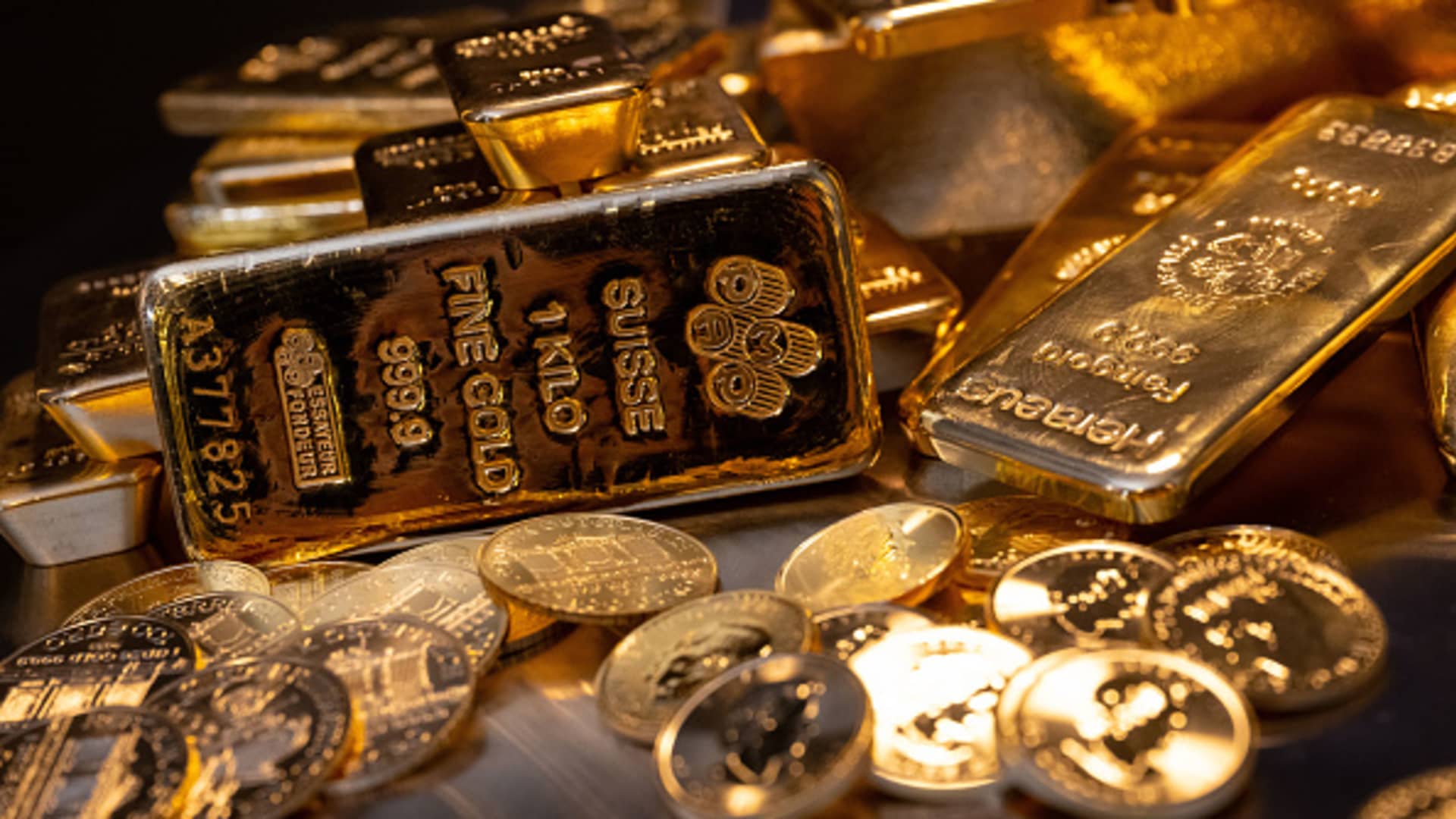
Photo: CNBC
Gold climbed above $5,000 per ounce for the first time ever, extending an extraordinary run in prices as investors increasingly treat bullion as a reliable haven amid rising geopolitical tensions, economic uncertainty, and shifting monetary strategies. On Monday, spot gold surpassed $5,090 an ounce, while U.S. gold futures traded above $5,050, marking record levels and underscoring how far the precious metal has moved from pre-pandemic norms.
This surge follows an astonishing 64% gain in 2025, the steepest annual rise since the late 1970s, with markets driven by escalating global risks and a weakening U.S. dollar that has made gold more attractive to foreign buyers and institutional investors alike.
Record Highs Driven by Intensifying Global Risks
Several factors are converging to push gold to new heights. Geopolitical flashpoints — including tensions in the Middle East, strain within NATO over Arctic strategies, and trade disputes involving major economies — have heightened market anxiety and boosted gold’s appeal as a safe haven.
In parallel, political and policy uncertainty, particularly around fiscal strategies and tariffs in the United States, has further driven investors toward hard assets. Headlines referencing potential tariffs at 100 percent on key trading partners have contributed to a flight from riskier financial assets into the perceived security of gold.
Central Bank Demand and Institutional Accumulation
Gold’s rally is not purely speculative; structural buying by central banks is a powerful underpinning of the market’s ascent. Central banks have been voracious net buyers for more than a decade, and recent years have seen annual purchases far above historical norms. From 2022 through 2024, global official gold reserves expanded by roughly 1,000 tonnes each year, vastly exceeding the annual average of about 473 tonnes seen in the decade before.
Emerging market central banks have led this trend, with institutions like the People’s Bank of China and the National Bank of Poland significantly increasing holdings. China’s gold reserve expansion and Poland’s aggressive accumulation strategy are examples of how sovereign buyers are diversifying away from traditional reserve assets.
Analysts now expect that strong central bank demand will continue into 2026, sustaining upward pressure on prices even if near-term volatility arises. In fact, some forecasts now range as high as $6,000 an ounce or more by year-end 2026, supported by robust institutional interest and ongoing macro uncertainty.
Broader Investment and ETF Activity
Beyond official buyers, investment flows into gold exchange-traded products have surged. Western ETF holdings have swelled by hundreds of tonnes over the past year, reflecting not just hedge demand from large funds but also increased participation from high-net-worth investors and private portfolios seeking diversification.
Retail engagement has also risen, with physical gold purchases — from bullion bars to coins — gaining traction in markets like India and Europe. Even industrial metals such as silver have felt the ripple effects, with silver prices climbing past $106 per ounce, as investors reevaluate commodities exposure amid uncertain economic growth.
What This Means for Investors
Gold’s ascent beyond the $5,000 mark highlights its growing role as a cornerstone of risk-management strategies. For many institutional and retail investors, the metal’s performance reinforces its long-standing reputation as a hedge against inflation, currency depreciation, and systemic shocks.
Historical data shows that during periods of sustained uncertainty — whether geopolitical or economic — gold’s relative stability has often provided ballast when more traditional asset classes, such as equities and government bonds, experience volatility.
Some market strategists caution that short-term price swings remain possible, particularly as monetary policy expectations shift or as liquidity conditions change. However, the structural forces at work — including central bank reserve diversification and broadening demand from global investors — suggest that gold’s higher price plateau may persist well beyond a single news-driven spike.
In a financial landscape marked by rapid geopolitical change and evolving fiscal policies, gold’s record breakout reflects more than a temporary trend: it signals a deeper reassessment of risk, value, and portfolio strategy in an era of uncertainty.
.webp)
Popular articles



Subscribe to unlock premium content
The Billionaire’s Symphony

Flying Above the Rest

Travel Like the Stars

The Billionaire’s Symphony
Flying Above the Rest
The Billionaire’s Symphony