Global Oil Prices Soar Past $110 As Middle East Conflict Disrupts Supply

Global Oil Prices Soar Past $110 As Middle East Conflict Disrupts Supply
By
Augusta Parker
Last updated:
March 9, 2026
First Published:
April 25, 2026

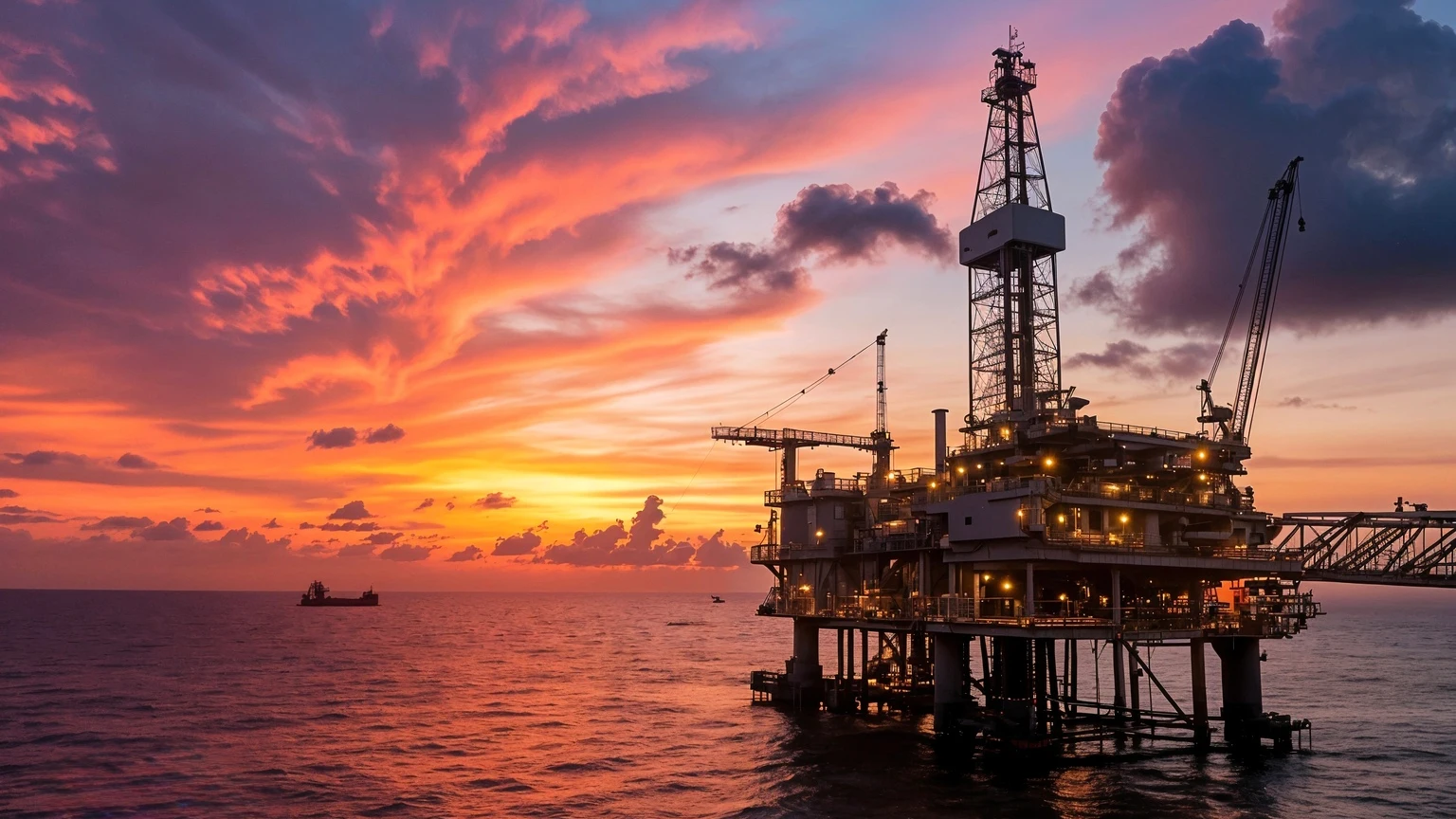
Photo: Seeking Alpha
Oil Markets Surge As Supply Routes Face Disruption
Global oil markets experienced a dramatic surge after crude prices climbed above $110 per barrel, driven by escalating tensions in the Middle East and severe disruptions to one of the world’s most critical energy shipping routes.
U.S. benchmark West Texas Intermediate (WTI) rose sharply by about 26.5 percent, increasing roughly $24 to reach $114.90 per barrel in early trading. International benchmark Brent crude also jumped more than 23 percent, climbing approximately $21.56 to trade near $114.25 per barrel.
The rally capped an extraordinary week in energy markets. WTI crude surged nearly 35 percent during the previous week, marking the largest weekly gain recorded since futures trading began in 1983.
Oil last traded above the $100 per barrel level in 2022, following Russia’s invasion of Ukraine, which caused a major global energy shock. Analysts say the latest surge reflects fears that the current Middle East conflict could disrupt global oil supply for an extended period.
Trump Calls Higher Oil Prices A Necessary Cost
Shortly after oil prices spiked at the start of Sunday evening trading, U.S. President Donald Trump addressed the situation on social media.
In a post on Truth Social, Trump acknowledged the sharp rise in oil prices but described it as a necessary consequence of efforts to eliminate Iran’s nuclear capabilities.
According to the president, a temporary increase in energy costs is a relatively small trade-off compared with the strategic objective of neutralizing Iran’s nuclear program.
Trump also emphasized that the conflict had already weakened Tehran’s ability to project military power across the region.
His remarks came as global markets reacted nervously to the rapidly evolving situation, with investors closely monitoring the stability of oil supply routes in the Persian Gulf.
Gulf Producers Slash Output As Storage Fills Up
Several major oil-producing countries in the Middle East have begun reducing production levels as export routes remain severely restricted.
Kuwait, the fifth-largest producer within the Organization of the Petroleum Exporting Countries (OPEC), announced precautionary reductions in both oil production and refinery operations.
Officials at the Kuwait Petroleum Corporation, the country’s state energy company, said the move was necessary due to mounting threats to tanker traffic in the Strait of Hormuz. The company did not disclose the exact size of the output cuts but indicated they could continue until maritime security improves.
Meanwhile, oil production in Iraq, the second-largest OPEC producer, has dropped dramatically.
Industry sources report that output from Iraq’s three largest southern oil fields has fallen nearly 70 percent, dropping from roughly 4.3 million barrels per day to about 1.3 million barrels per day. These fields represent the backbone of Iraq’s export capacity, meaning the decline has significant implications for global supply.
The United Arab Emirates, the third-largest producer within OPEC, also confirmed adjustments to offshore production levels.
The Abu Dhabi National Oil Company (ADNOC) said it is carefully managing production to cope with storage limitations while continuing normal operations at its onshore facilities.
Strait Of Hormuz Closure Sends Shockwaves Through Energy Markets
At the center of the disruption is the Strait of Hormuz, one of the most strategically important oil transit routes in the world.
The narrow waterway connects the Persian Gulf with global shipping lanes and handles roughly 20 percent of the world’s daily oil consumption, equal to approximately 20 to 21 million barrels per day.
However, escalating threats from Iran against oil tankers attempting to pass through the strait have forced shipping companies to suspend or reroute voyages.
Many tanker operators are refusing to enter the area due to fears of missile strikes, drone attacks or naval mines.
As a result, millions of barrels of crude oil are currently stranded in Gulf storage facilities, leaving producers with limited options other than reducing output.
Energy traders say even short-term disruptions in the Strait of Hormuz can cause significant price spikes due to the sheer volume of oil that normally flows through the corridor.
Leadership Change In Iran Adds Political Uncertainty
The geopolitical situation has become even more complex following reports that Mojtaba Khamenei, the son of former Supreme Leader Ayatollah Ali Khamenei, has been named Iran’s new supreme leader.
The leadership transition occurred after the death of the elder Khamenei during the early stages of the conflict between Iran and the joint U.S. and Israeli military operation.
Mojtaba Khamenei is widely viewed as a hardline figure within Iran’s political and religious establishment and has longstanding ties with the Islamic Revolutionary Guard Corps, one of the most powerful institutions in the country.
Analysts say the leadership shift could further complicate diplomatic efforts to reduce tensions and restore stability to global energy markets.
U.S. Officials Expect Shipping To Resume Soon
Despite the ongoing disruptions, U.S. officials believe tanker traffic through the Strait of Hormuz could resume within weeks.
Energy Secretary Chris Wright stated in a television interview that restoring safe passage through the waterway is a key priority for American forces operating in the region.
According to Wright, military operations are focused on eliminating Iran’s ability to threaten commercial vessels and ensuring that shipping lanes can reopen safely.
He indicated that while current tanker traffic remains far below normal levels, conditions could improve relatively quickly once the immediate security threats are addressed.
Officials estimate that under normal conditions more than 3,000 commercial vessels pass through the strait every month, including hundreds of oil tankers carrying crude to major importers such as China, India, Japan and European countries.
Global Economic Impact Could Be Significant
Economists warn that sustained oil prices above $110 per barrel could have major implications for the global economy.
Higher crude prices typically translate into increased costs for gasoline, transportation and manufacturing, which can feed into broader inflation across many sectors.
For airlines, shipping companies and heavy industries, fuel is one of the largest operational expenses. A prolonged price surge could therefore put pressure on corporate profits and consumer prices alike.
Energy analysts say the direction of oil markets will depend heavily on how quickly shipping routes reopen and whether additional producers step in to offset supply disruptions.
For now, the global energy market remains highly volatile, with traders closely watching developments in the Middle East and the future stability of one of the world’s most critical oil corridors.
.webp)
Popular articles



Subscribe to unlock premium content
Remote Himalayan Villages Transforming Ancient Traditions into Lucrative Wellness Ventures

Gilded Holidays in Fashion

Frozen Frontiers of Luxury

Remote Himalayan Villages Transforming Ancient Traditions into Lucrative Wellness Ventures
Gilded Holidays in Fashion
Remote Himalayan Villages Transforming Ancient Traditions into Lucrative Wellness Ventures