From OpenAI Allies to AI Adversaries: How Elon Musk and Sam Altman’s Partnership Turned Into a High-Stakes Battle

From OpenAI Allies to AI Adversaries: How Elon Musk and Sam Altman’s Partnership Turned Into a High-Stakes Battle
By
Leah Rosenfeld
Last updated:
May 18, 2026
First Published:
May 18, 2026

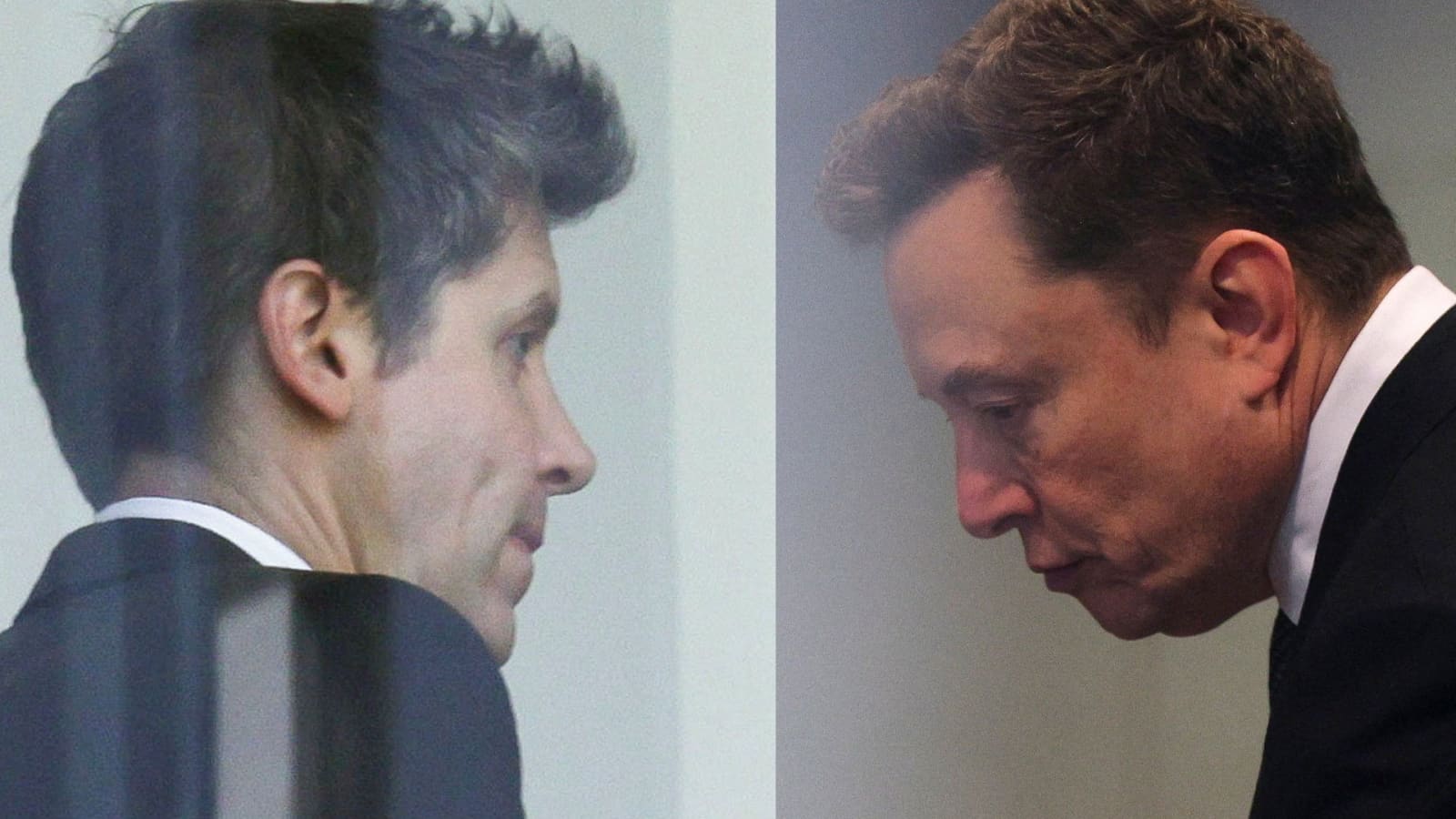
Few relationships in modern technology have transformed as dramatically as the one between Elon Musk and Sam Altman. More than a decade ago, the two entrepreneurs stood side by side promoting a bold vision for artificial intelligence that they believed could protect humanity and prevent technology from falling under the control of a single corporate giant.
Today, that relationship has turned into a public and legal confrontation involving billions of dollars, competing AI empires, courtroom battles, and fundamentally different visions for the future of artificial intelligence.
What started as a partnership to build AI for public benefit has become one of the biggest power struggles in the technology industry.
The Beginning of OpenAI and a Shared Mission
The story began in 2015 when discussions around artificial intelligence were accelerating across Silicon Valley.
At the time, concerns were growing about whether a handful of major technology companies would dominate advanced AI development. Elon Musk, already a globally recognized entrepreneur through Tesla and SpaceX, had repeatedly warned about the risks associated with uncontrolled artificial intelligence.
Sam Altman, meanwhile, was leading startup accelerator Y Combinator and had become one of Silicon Valley's most influential technology investors.
Their shared concern eventually led to the creation of OpenAI.
The organization launched in December 2015 as a nonprofit research lab with an ambitious mission: develop artificial intelligence in a way that benefits humanity rather than maximizing profits.
The original initiative attracted some of the biggest names in technology and research, including Greg Brockman and Ilya Sutskever.
At the time, Musk publicly committed up to $1 billion in support for the organization.
The goal was clear:
• Advance AI safely
• Keep research open
• Prevent monopoly control
• Build technology for broad public benefit
For a period, the partnership appeared strong.
Public appearances showed Musk and Altman promoting OpenAI together while discussing the enormous possibilities and risks of artificial intelligence.
Early Success Could Not Hide Internal Tensions
As OpenAI began making progress, internal challenges started emerging.
Building advanced AI systems required extraordinary computing power and funding.
Training increasingly sophisticated models demanded:
• High-performance GPUs
• Large-scale cloud infrastructure
• Massive datasets
• Significant research spending
The cost of remaining competitive in AI development began increasing rapidly.
While OpenAI continued producing promising research breakthroughs, questions emerged around sustainability.
Leadership discussions increasingly shifted toward funding and organizational structure.
At the center of many discussions was a difficult question:
Who should control OpenAI?
According to testimony and legal filings, Musk reportedly pushed for stronger control over the organization and discussed structures that would give him significant influence within a future for-profit model.
Other leaders within OpenAI reportedly disagreed.
Their concern was straightforward: no individual should have unilateral authority over technology that could eventually surpass human-level capabilities.
That disagreement became one of the major turning points in the relationship.
Financial Pressure Intensified the Conflict
OpenAI's computational needs were expanding rapidly.
Developing cutting-edge AI was becoming more expensive every year, and the organization required larger funding sources to compete with technology giants.
Despite early commitments, Musk's financial contributions reportedly totaled approximately $38 million, significantly below the originally discussed $1 billion figure.
At the same time, discussions around restructuring the organization intensified.
One proposal involved integrating OpenAI into Tesla.
Supporters believed Tesla's resources and AI expertise could strengthen OpenAI's future.
Others worried that such a move would fundamentally change the organization's mission.
Altman later argued that folding OpenAI into Tesla could have effectively ended the nonprofit vision behind the company.
The proposal ultimately failed.
Soon after, Musk stepped away from OpenAI leadership and left the company's board in 2018.
At the time, OpenAI publicly stated that the departure helped avoid potential conflicts as Tesla increased its own AI ambitions.
ChatGPT Changed Everything
For several years after Musk left, the tension between both figures remained relatively quiet.
Public interactions between them appeared mostly positive.
Altman occasionally praised Musk publicly, while OpenAI continued expanding its research work.
Then came ChatGPT.
The release of ChatGPT in late 2022 changed the AI industry almost overnight.
The platform rapidly became one of the fastest-growing technology products ever introduced.
Millions of users joined within days.
Businesses rushed to integrate generative AI into products and services.
Investors poured billions into the sector.
The broader AI industry entered a new era.
Soon after, Microsoft invested approximately $10 billion into OpenAI, strengthening its position as one of the world's dominant AI companies.
OpenAI's valuation eventually surged beyond $850 billion, transforming it from a research lab into one of the most valuable technology organizations globally.
Meanwhile, Musk was building his own AI ambitions.
His company xAI later merged with SpaceX's AI initiatives, creating a business reportedly valued at approximately $1.25 trillion.
What had once been a shared mission became a direct competitive battle.
The Legal Dispute Takes Center Stage
In 2024, Musk filed legal action against OpenAI and its leadership.
At the center of the dispute is Musk's claim that OpenAI moved away from the original nonprofit mission that formed the foundation of the organization.
Musk argues that the company transformed from an open initiative designed for public benefit into a profit-driven enterprise.
Altman and OpenAI strongly dispute those claims.
Their position is that no promises were made guaranteeing OpenAI would permanently maintain a specific corporate structure.
Court testimony over recent weeks has brought years of internal discussions, emails, and private conversations into public view.
The proceedings have highlighted disagreements over:
• Control and ownership
• Funding commitments
• Organizational structure
• AI governance
• Commercialization strategy
A jury is now tasked with deciding whether Musk's allegations surrounding charitable obligations and organizational commitments have legal merit.
A Rivalry That Reflects a Larger AI Debate
The legal battle extends beyond personal conflict.
It reflects a broader debate happening throughout the technology industry.
Questions surrounding artificial intelligence increasingly include:
Who controls AI?
How should it be funded?
Should powerful AI systems prioritize public benefit or shareholder value?
How much influence should any individual or company possess?
These questions have become central issues as artificial intelligence moves deeper into global economies and everyday life.
From Partners to Competitors
The story of Musk and Altman is no longer simply about two technology leaders who had a disagreement.
It has evolved into a larger narrative about power, money, technology, and the future of AI.
More than ten years ago, two ambitious entrepreneurs joined forces to prevent concentrated control over artificial intelligence.
Today, they lead competing visions for that same future.
And as AI continues reshaping industries around the world, their rivalry may end up influencing far more than just Silicon Valley.
.webp)
Popular articles



Subscribe to unlock premium content
Frozen Riches on Kamchatka

The Hidden Wealth of Conflict-Free Spices

From Remote Runways to Billion-Dollar Gateways
Frozen Riches on Kamchatka
The Hidden Wealth of Conflict-Free Spices
Frozen Riches on Kamchatka
.png)