France Faces Deepening Political Turmoil as Macron Scrambles for a Solution

France Faces Deepening Political Turmoil as Macron Scrambles for a Solution
By
Calder Monroe
Last updated:
October 8, 2025
First Published:
November 30, 2025

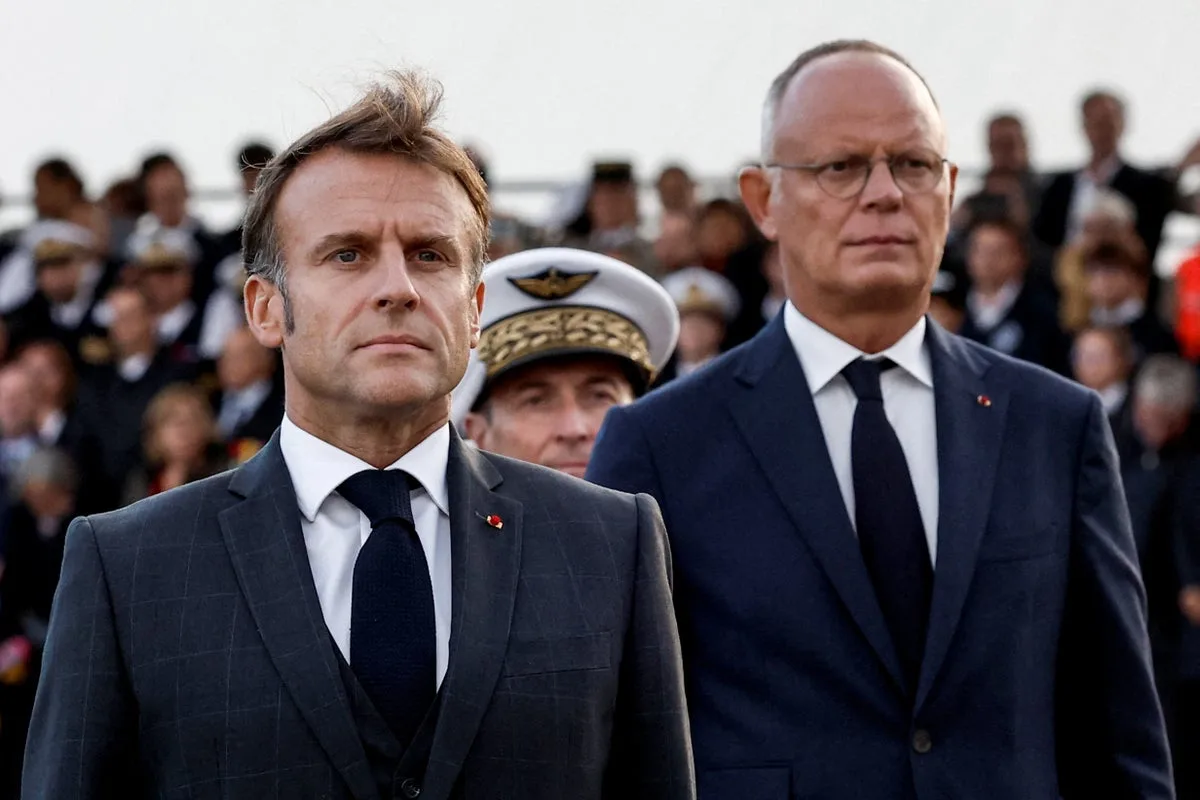
Photo: Yahoo News Australia
French President Emmanuel Macron is grappling with yet another political storm following the abrupt resignation of Prime Minister Sebastien Lecornu, who stepped down after just 27 days in office. The former defense minister cited an inability to lead a center-right minority government amid deadlocked negotiations with rival parties over budgets and policy priorities.
“Each political party is behaving as if they have their own majority in parliament,” Lecornu said, noting that the “conditions were not fulfilled” to continue in office.
A Crisis Rooted in Parliament
The political deadlock traces back to Macron’s decision to dissolve parliament last year, aiming to clarify the makeup of France’s fractured National Assembly. The elections that followed only deepened divisions, leaving neither the left nor right with a decisive majority. Since then, Macron has relied on loyalists to lead fragile minority governments, all vulnerable to no-confidence motions.
Lecornu’s resignation marks the third failed administration following the short-lived governments of Michel Barnier and Francois Bayrou. The recurring obstacle has been disagreements over budgetary measures, particularly spending cuts and tax increases needed to rein in France’s 2024 budget deficit of 5.8% of GDP.
In a last-minute attempt to salvage the situation, Macron granted Lecornu 48 additional hours to negotiate with other parties before making a final report.
What Are Macron’s Options?
Macron faces three main paths forward:
- Appoint a new prime minister – potentially the sixth in under two years. Analysts note that choosing a PM outside his own centrist circle could help form a coalition but may prove politically uncomfortable.
- Call new parliamentary elections – a risky move, as polls show Marine Le Pen’s National Rally leading with around 32%, while the left-wing New Popular Front holds 25%. Fresh elections could exacerbate polarization and erode support for Macron’s centrist party.
- Resign – currently considered unlikely, as Macron has repeatedly ruled out stepping down before the next presidential elections in 2027.
Douglas Yates, political science professor at INSEAD, said, “Macron is unlikely to resign. Naming another prime minister from his circle is the path of least resistance, even if it leads to another short-lived government.”
Potential for a Cross-Party PM
There is speculation Macron could nominate a prime minister from the center-left Socialist Party or even the Greens, aiming to navigate the impasse and avoid another censure motion. Selecting a candidate from either the far-left France Unbowed or far-right National Rally is considered highly improbable, as both parties are calling for Macron’s dismissal.
Budget and Economic Implications
While political maneuvering continues, France’s 2026 budget remains in limbo. Economists suggest that the government may temporarily maintain 2025 spending levels, resulting in a projected deficit of 5.0–5.4% of GDP.
Deutsche Bank’s Yacine Rouimi noted that a new cross-party prime minister could revisit structural reforms, such as pension adjustments or previously proposed fiscal measures, potentially leading to slimmer cuts and altered growth policies. Berenberg Bank economist Salomon Fiedler added that appointing a PM from a different party could trigger painful reversals of prior pro-growth reforms, impacting both fiscal discipline and long-term economic strategy.
Looking Ahead
France’s political future remains uncertain, with a combination of minority governments, parliamentary deadlock, and upcoming budgetary challenges. Macron’s next decisions will be critical not only for his presidency but also for economic stability, investor confidence, and the trajectory of France’s structural reforms. The nation watches closely as the centrist president navigates one of the most turbulent periods of his term.
.webp)
Popular articles



Subscribe to unlock premium content
Immersive Worlds on Stage
Freedom on Wheels in Portugal

a very very descriptive final thoughts

Immersive Worlds on Stage
Freedom on Wheels in Portugal
Immersive Worlds on Stage