Ford Targets Mass-Market Breakthrough With Eyes-Off Driving Technology by 2028

Ford Targets Mass-Market Breakthrough With Eyes-Off Driving Technology by 2028
By
Leah Rosenfeld
Last updated:
January 8, 2026
First Published:
January 8, 2026

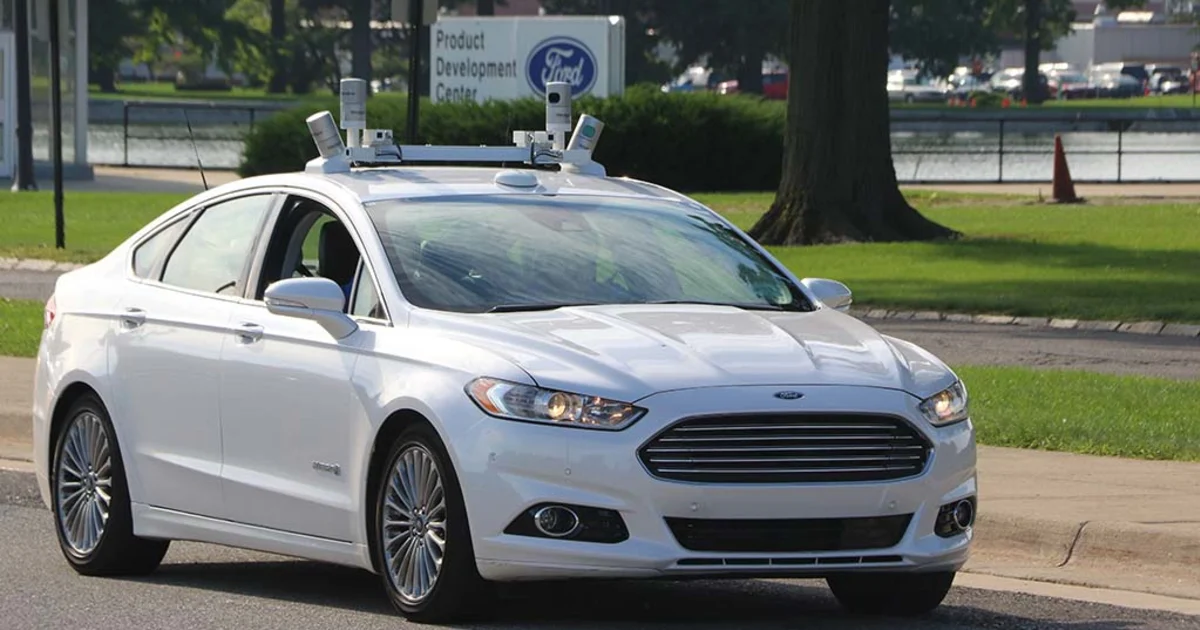
Photo: NBC News
Ford Enters the Eyes-Off Automation Race
Ford Motor has laid out plans to introduce eyes-off driving technology by 2028, marking a significant escalation in the race toward more advanced vehicle automation. Unlike many competitors, Ford aims to launch the technology on a mainstream all-electric vehicle priced around $30,000, signaling a strategy focused on scale and accessibility rather than exclusivity.
The announcement places Ford alongside Tesla, General Motors, and Rivian Automotive in pursuing so-called Level 3 driving automation, a category viewed by investors and industry analysts as a crucial bridge between today’s driver-assist systems and fully autonomous vehicles.
A Different Approach to Rolling Out New Technology
Historically, automakers debut cutting-edge features on premium vehicles before pushing them downmarket. Ford is deliberately breaking that pattern. Company leadership says the goal is to put its most advanced technology where volumes are highest and where customers are most price-sensitive.
Executives argue that democratizing automation could accelerate adoption and give Ford an edge as competition intensifies in the global EV market. By targeting a $30,000 price point, Ford is positioning itself to reach a much broader customer base than rivals offering similar capabilities only in vehicles priced well above six figures.
Universal EV Platform at the Core
The first Ford vehicle to feature the eyes-off system will be built on the company’s next-generation Universal EV platform, designed to underpin multiple vehicle types and powertrains. The first model on this architecture is expected to be a midsize electric pickup truck arriving in 2027, though Ford has not confirmed whether that truck will be the first to receive the eyes-off capability.
Ford says the new platform is central to its cost-reduction strategy. Compared with traditional vehicle architectures, the company claims the platform cuts overall parts by roughly 20%, reduces fasteners by about 25%, eliminates 40% of factory workstations, and shortens assembly time by approximately 15%. These efficiencies are critical to delivering advanced features at a lower price point.
Competing in a Crowded Automation Field
Ford’s move brings it into more direct competition with General Motors, which has announced plans to launch eyes-off driving on its electric Cadillac Escalade IQ around 2028, a vehicle that currently starts above $127,000. Tesla continues to pursue its Full Self-Driving ambitions, while Rivian is steadily expanding its driver-assistance capabilities across its lineup.
By contrast, Ford’s strategy centers on making advanced automation a mass-market feature rather than a luxury differentiator, a bet that could reshape expectations across the industry if execution matches ambition.
Financial Pressure and the Skunkworks Bet
The eyes-off driving initiative is part of a broader turnaround effort at Ford following years of heavy losses and shifting strategies in electric vehicles. The company has spent billions on EV development, faced quality and production challenges, and recently scaled back some investments in large electric trucks and SUVs.
In response, Ford created a dedicated “skunkworks” team to develop the Universal EV platform and its supporting software stack. The company has committed roughly $5 billion to U.S. manufacturing facilities to produce the new vehicles and their batteries. Leadership describes the project as a calculated bet that has gained momentum in recent months as internal development speeds improved.
Ford has also disclosed it expects to record about $19.5 billion in special charges through 2027 related to restructuring and EV strategy changes, underscoring the high stakes of its next-generation vehicle push.
What Eyes-Off Driving Means for Drivers
The planned system falls under Level 3 automation, as defined by SAE International. At this level, the vehicle can handle driving tasks under specific conditions without requiring the driver to monitor the road continuously, though human intervention is still needed when the system requests it.
Ford currently offers Level 2 driver-assistance technology through its BlueCruise system, which allows hands-free driving on certain highways but still requires drivers to remain attentive. The move to Level 3 represents a major leap in capability, responsibility, and regulatory complexity.
Ford says its eyes-off system will rely on a combination of in-house software and a suite of sensors designed to keep costs lower than competing solutions. The long-term objective is to commoditize the technology and expand it across multiple vehicle lines over time.
AI Assistant and a New Digital Brain
Alongside automation, Ford is rolling out a new AI-powered digital assistant and a redesigned vehicle software architecture. The AI assistant is scheduled to launch through Ford and Lincoln mobile apps in early 2026, followed by a fully integrated in-vehicle experience in 2027.
The assistant is designed to be vehicle-specific, using each car’s unique data to deliver tailored capabilities. Examples include analyzing a photo of a trailer to confirm towing compatibility or estimating how much cargo a vehicle can carry.
Supporting these features is what Ford calls an integrated digital platform, effectively a unified “brain” inside the vehicle. The system combines infotainment, driver-assistance, audio, and networking into a single high-performance module, aiming to deliver more consistent performance, faster updates, and improved reliability over a vehicle’s lifetime.
A High-Risk, High-Impact Strategy
Ford’s decision to bring eyes-off driving to a $30,000 EV reflects a broader shift toward affordability, software differentiation, and long-term scalability. If successful, it could pressure competitors to rethink how and where they deploy advanced automation.
However, execution risks remain high. Regulatory approval, real-world performance, and consumer trust will all determine whether Ford’s mass-market automation strategy becomes a defining advantage or another costly experiment in the rapidly evolving EV landscape.
.webp)
Popular articles



Subscribe to unlock premium content
Iceland’s Geothermal Revolution

Bali’s Digital Detox Revolution

Step Into the Future of Art
Iceland’s Geothermal Revolution
Bali’s Digital Detox Revolution
Iceland’s Geothermal Revolution