Federal Reserve Delivers Third Rate Cut but Signals a Cautious Path Forward

Federal Reserve Delivers Third Rate Cut but Signals a Cautious Path Forward
By
Calder Monroe
Last updated:
December 11, 2025
First Published:
December 11, 2025

Getty Images
The Federal Reserve approved a quarter point interest rate cut on Wednesday, marking its third consecutive reduction this year, yet the decision underscored deep internal divisions and a far more uncertain trajectory for monetary policy. The move brought the federal funds rate to a range of 3.5 percent to 3.75 percent, aligning with expectations for a hawkish cut aimed at balancing slowing inflation with still fragile economic data.
The vote revealed significant fractures within the Federal Open Market Committee. Three members dissented, the largest number of “no” votes since 2019. Governor Stephen Miran pushed for a deeper half point cut, reflecting dove leaning concerns about slowing economic momentum. Conversely, regional Fed presidents Jeffrey Schmid of Kansas City and Austan Goolsbee of Chicago voted to hold rates steady, emphasizing risks of cutting prematurely while inflation remains elevated. Miran’s dissent was his third in a row, while Schmid dissented for the second consecutive meeting.
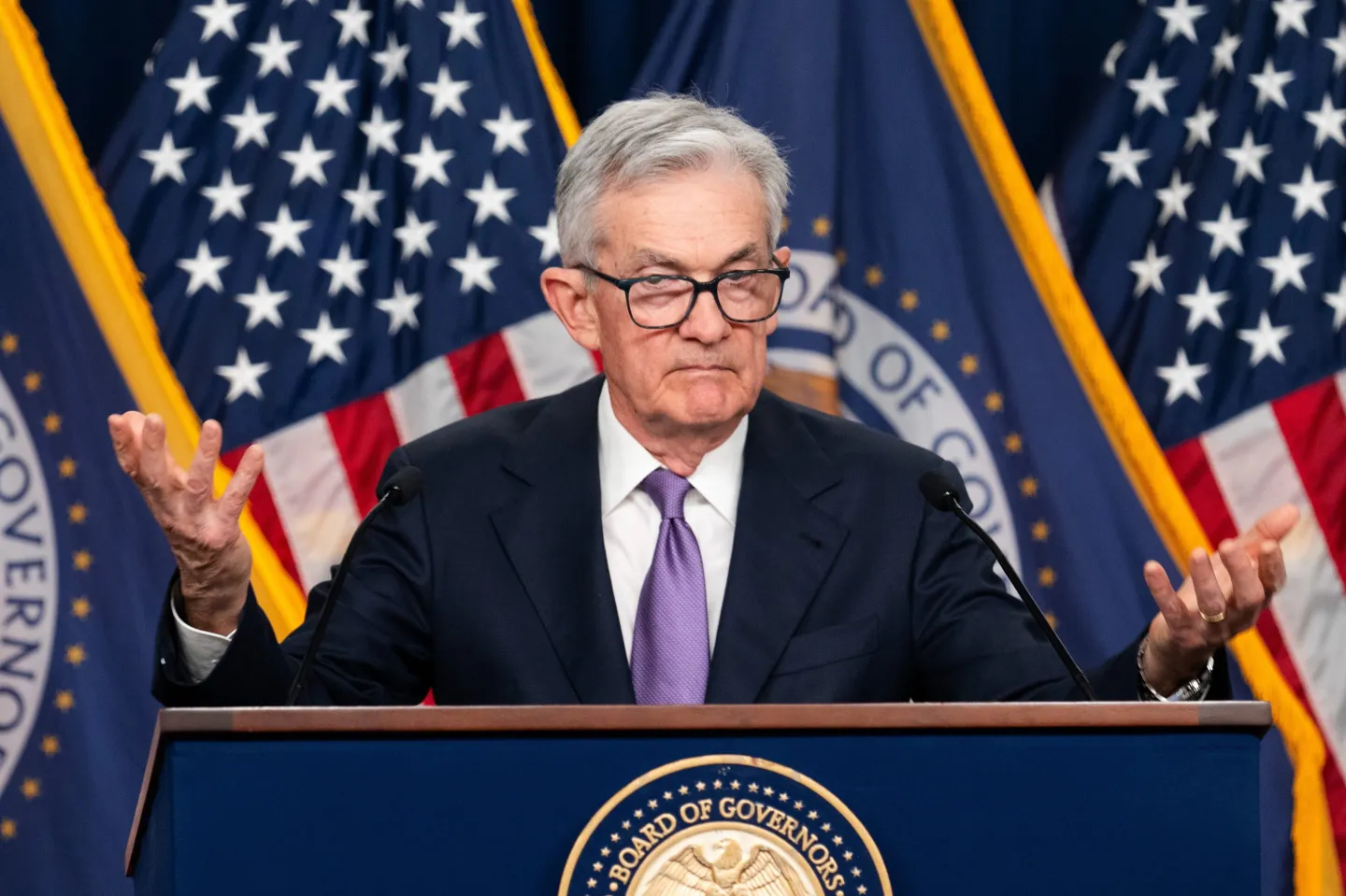
Despite the split vote, the committee reiterated its focus on monitoring incoming data and balancing inflation risks with labor market conditions. The statement revived wording used in late 2024 that previously signaled a pause in rate movements. Chair Jerome Powell emphasized that the Fed is in a comfortable holding position, stating that policymakers are well positioned to observe unfolding economic trends before determining next steps.
Financial markets reacted positively to the decision. The Dow Jones Industrial Average gained nearly 500 points while Treasury yields edged lower as investors interpreted Powell’s comments as confidence in stabilizing economic conditions. Powell also described current rates as near the upper boundary of the neutral range, though he cautioned that no decisions have been made regarding the January meeting.
The Fed’s updated projections show a notably slower pace of easing ahead. The latest dot plot indicates only one additional cut in 2026 and another in 2027, keeping the long run policy rate anchored around three percent. Seven officials signaled they anticipate no cuts next year. Four nonvoting participants expressed softer dissents, highlighting broader disagreement within the full group of nineteen meeting attendees.
On economic performance, the Fed upgraded its outlook for gross domestic product growth in 2026, raising its previous estimate by half a percentage point to 2.3 percent. However, inflation is still expected to remain above the central bank’s two percent target through at least 2028. The Fed’s preferred inflation gauge registered 2.8 percent year over year in September, well below the peak levels seen during the inflation surge of recent years but still uncomfortably high.
In addition to the rate change, the central bank announced that it will resume buying Treasury securities. This follows its decision in October to halt balance sheet runoff. The Fed will begin by purchasing forty billion dollars in Treasury bills starting Friday, responding to concerns about strain in overnight funding markets. Purchases are expected to stay elevated for several months before tapering significantly.
The policy decisions come at a politically sensitive moment. Chair Powell is nearing the end of his second term, with only three meetings remaining before President Donald Trump appoints his successor. Market speculation currently points to National Economic Council Director Kevin Hassett as the leading candidate, with prediction markets assigning him a probability above seventy percent. A new chair more aligned with the president’s preference for lower rates could influence the central bank’s future policy direction.
Fed officials have also been navigating data challenges resulting from a six week government shutdown that ended in mid November. Many official indicators have been delayed or incomplete, complicating efforts to assess real time labor market and inflation conditions. Available data suggests a labor market characterized by low hiring and low firing, although private sector metrics indicate layoffs may rise as announced job cuts surpassed 1.1 million through November according to Challenger, Gray & Christmas.
The latest rate cut reinforces the Fed’s attempt to balance moderate easing with persistent inflation risks. With dissent among policymakers rising and political transitions approaching, the path forward is likely to be defined by heightened uncertainty, cautious policy adjustments and close scrutiny of economic indicators in the months ahead.

Popular articles


Subscribe to unlock premium content
London’s Gourmet Playgrounds

From Bean to Buzz in Thailand

The Secret Life of Pop-Up Luxury Restaurants in Paris

London’s Gourmet Playgrounds
From Bean to Buzz in Thailand
London’s Gourmet Playgrounds