E.l.f. Beauty Reconsiders Price Hikes as Consumer Spending Pressures Begin to Slow Demand

E.l.f. Beauty Reconsiders Price Hikes as Consumer Spending Pressures Begin to Slow Demand
By
Leah Rosenfeld
Last updated:
May 21, 2026
First Published:
May 21, 2026

Getty Images
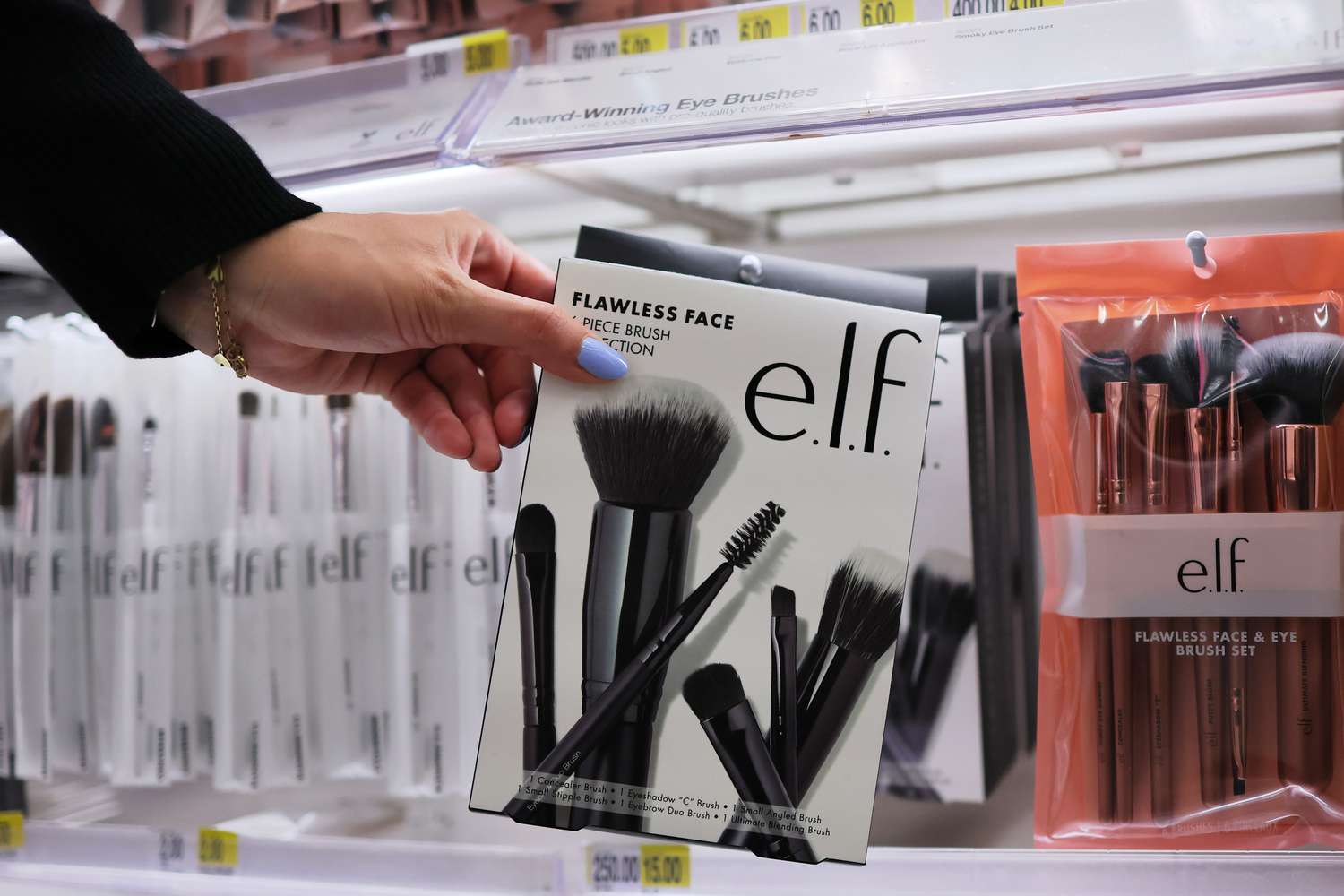
E.l.f. Beauty is adjusting its pricing strategy as economic pressure on consumers begins affecting shopping habits. After previously raising prices to offset higher tariff-related costs, the company now plans to reverse some of those increases in an effort to restore demand and reinforce its value-focused brand identity.
The decision comes as shoppers across multiple income groups continue dealing with elevated costs for essentials such as fuel, food, and daily expenses. While E.l.f. recently delivered stronger-than-expected quarterly results, management acknowledged that changing consumer behavior has become increasingly visible in recent months.
The shift signals a broader trend across retail, where companies are balancing profitability with maintaining affordability in an environment where customers are becoming more selective about spending.
Consumer Pressure Begins Affecting Product Demand
E.l.f. executives indicated that unit sales have softened as consumers face mounting financial pressures.
Although price increases often carry some risk of slowing demand, management noted that the recent pullback in purchasing activity has been more noticeable than anticipated.
Several economic factors continue influencing consumer behavior:
• Higher gasoline prices
• Persistent inflation pressure
• Elevated household costs
• Increased spending on necessities
• Softer discretionary spending activity
As budgets become tighter, customers appear increasingly sensitive to even relatively small pricing changes.
For a brand that built its reputation around affordability, maintaining strong value perception remains critical.
Product Testing Revealed Significant Price Sensitivity
One of the clearest signals came from a pricing test involving one of E.l.f.'s popular products.
The company recently reduced the price of its Halo Glow skin tint product from $18 by approximately $4 as part of a market test.
The response surprised management.
Following the lower pricing strategy, the product reportedly experienced nearly a 40% increase in business activity.
The results reinforced how sensitive customers currently are to price adjustments.
The findings have encouraged the company to expand similar tests across additional product categories and collections.
Future pricing experiments are expected to focus on identifying areas where lower prices could stimulate stronger unit growth while preserving broader profitability goals.
Previous Tariff Driven Price Increases Are Being Reassessed
Last year, E.l.f. implemented a broad price increase across its product lineup.
Most products saw prices rise by approximately $1 as the company attempted to offset rising costs associated with tariffs and broader supply chain pressures.
The increases initially contributed positively to margins and financial performance.
However, the environment surrounding consumer spending has changed.
Retailers increasingly face a difficult balance:
• Protect profit margins
• Maintain competitive pricing
• Preserve customer loyalty
• Support long-term volume growth
As economic conditions evolve, management now appears focused on ensuring price points remain aligned with customer expectations.
Strong Quarterly Earnings Beat Expectations
Despite concerns surrounding demand trends, E.l.f. delivered quarterly results that exceeded Wall Street projections.
Financial performance for the quarter included:
• Adjusted earnings per share: 32 cents versus 29 cents expected
• Revenue: $449 million versus $423 million expected
• Year-over-year sales growth: approximately 35%
Following the earnings announcement, investors responded positively and shares gained roughly 7% in after-hours trading.
The results showed that despite softer unit trends, the company continues generating strong top-line growth.
Profitability Impacted by Strategic Acquisition Costs
Although revenue remained strong, the company reported a quarterly loss driven primarily by acquisition-related expenses.
E.l.f. posted a net loss of approximately $49.4 million during the quarter compared with net income of approximately $28.3 million during the same period a year earlier.
The decline largely resulted from costs associated with its acquisition of Rhode.
The company incurred approximately $57.6 million in charges related to stronger-than-expected performance from the acquired business under the terms of the agreement.
Excluding acquisition costs and other one-time items, adjusted earnings remained positive.
Adjusted net income reached approximately $19.4 million.
Margins Remain Strong Despite Pricing Adjustments
One area where E.l.f. continued performing well involved profitability metrics.
Gross margin expanded by approximately 1.4 percentage points, reaching roughly 73%.
The improvement was largely supported by previous pricing actions and operational efficiencies.
Management also indicated that expected tariff-related refunds could help offset the financial impact of lower pricing initiatives.
The company reportedly expects approximately $55 million in tariff refunds, which may provide flexibility while maintaining profit performance.
For the upcoming year, E.l.f. expects gross margins to remain relatively stable despite ongoing cost pressures.
Guidance Raises Some Investor Questions
While quarterly results exceeded expectations, the company's outlook for the upcoming fiscal year appeared more cautious.
E.l.f. projected:
• Revenue between $1.84 billion and $1.87 billion
• Adjusted earnings per share between $3.27 and $3.32
The earnings outlook came in below broader market expectations and suggests that management is preparing for continued economic uncertainty and spending pressure.
Factors affecting guidance include:
• Ongoing tariff exposure
• Consumer demand variability
• Investment spending
• Rhode expansion initiatives
Although tariff costs have moderated from earlier levels, management still expects to operate under a challenging cost environment.
Rhode Emerges as a Major Growth Driver
Much of E.l.f.'s recent momentum has been fueled by Rhode, the beauty brand that has quickly become one of the company's most important assets.
Over the past year, Rhode reportedly generated approximately 80% sales growth, supported by expansion across major retail channels.
The brand has strengthened its presence through partnerships involving:
• Sephora North America
• Sephora UK
• Mecca Beauty
Rhode has reportedly reached the top brand position across several of these retail platforms.
The company also plans additional international expansion.
This fall, Rhode is expected to enter 19 European markets through Sephora, creating significant opportunities for further growth.
Management views international markets as an important source of long-term expansion.
E.l.f.'s Growth Strategy Is Evolving
Historically, E.l.f.'s growth story centered around viral product launches and affordable beauty products that attracted younger consumers.
Today, the strategy appears broader.
Future growth is expected to come from multiple sources:
• Existing E.l.f. products
• Rhode expansion
• International growth opportunities
• Retail partnerships
• Potential future acquisitions
Management also indicated that acquisitions remain part of long-term plans, although future deals will likely face strict evaluation standards.
Affordability Is Becoming a Competitive Advantage Again
E.l.f.'s latest pricing adjustment reflects a larger shift occurring across consumer industries.
During periods of economic pressure, affordability often becomes one of the strongest competitive advantages.
Consumers may still spend, but they increasingly evaluate purchases through the lens of value rather than impulse buying.
For E.l.f., reinforcing its value proposition may prove just as important as launching new products or expanding internationally.
The company's willingness to reconsider earlier price increases suggests that even brands with strong growth are adapting quickly to changing consumer realities.
.webp)
Popular articles



Subscribe to unlock premium content
Golden Skies Above the City

Conquering Ice in Absolute Luxury

Truffles and Treasures in the Forest

Golden Skies Above the City
Conquering Ice in Absolute Luxury
Golden Skies Above the City