Dell and HPE Shares Slide as Morgan Stanley Issues Broad Hardware Downgrades

Dell and HPE Shares Slide as Morgan Stanley Issues Broad Hardware Downgrades
By
Rachel Steinberg
Last updated:
November 18, 2025
First Published:
November 30, 2025

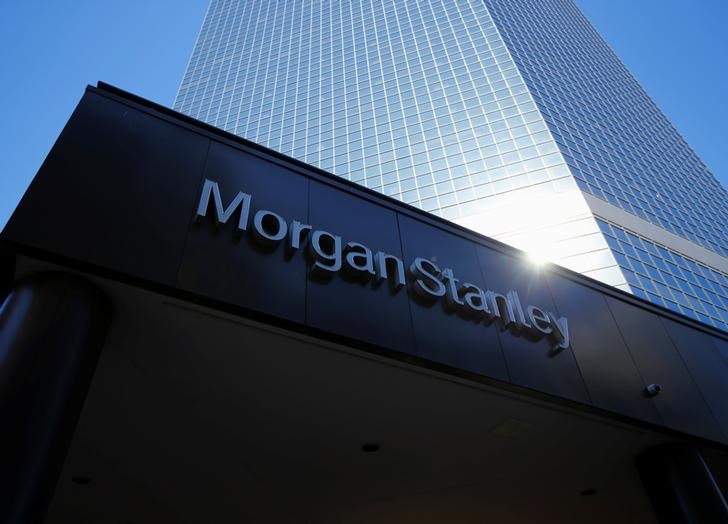
Shares of major computer hardware companies, including Dell and Hewlett Packard Enterprise (HPE), fell sharply on Monday after Morgan Stanley downgraded seven manufacturers amid growing fears that rising component costs will squeeze earnings through 2026. The investment bank warned that an aggressive pricing surge across the memory industry is now creating a significant risk for companies heavily exposed to DRAM and NAND components.
Morgan Stanley shifted its rating on Dell from overweight to underweight in a rare double-downgrade, while HPE was lowered from overweight to equal weight. Both stocks reacted swiftly, with Dell closing down 8 percent and HPE dropping 7 percent. Several other hardware firms—HP Inc., Asustek, Pegatron, Gigabyte, and Lenovo—were also downgraded, each seeing declines of up to 6 percent.
A risky “supercycle” pushes valuations and costs higher
Analysts described the current market as an unprecedented pricing supercycle, driven by hyperscalers racing to expand their data centers to meet rising AI infrastructure demand. This rapid expansion has inflated valuations across the hardware sector, but it has also tightened memory supplies to critical levels.
Prices for both DRAM and NAND flash memory have surged throughout 2024 and into 2025. Samsung, one of the world’s largest memory manufacturers, has reportedly raised chip prices by up to 60 percent since September, according to industry reports. Supply constraints, elevated AI workloads, and stronger server shipments have contributed to rising component costs.
Morgan Stanley noted that memory fulfillment rates could fall as low as 40 percent in the next two quarters, posing significant risks to manufacturers whose products rely heavily on DRAM and NAND—components that can represent 10 to 70 percent of total bill-of-materials costs.
Lessons from the last memory spike
Analysts compared the current situation to the 2016–2018 memory cycle, when DRAM and NAND spot prices jumped 80 to 90 percent. During that period, rising device prices failed to keep pace with soaring input costs, resulting in sharply compressed margins for OEMs and ODMs.
Companies with limited pricing power took the biggest hit. Meanwhile, firms able to pass cost increases directly to customers outperformed the broader hardware market. Dell was highlighted as especially vulnerable, with the bank noting that its gross margin contracted by 95 to 170 basis points during the previous memory squeeze.
Dell’s exposure and the impact on AI hardware
Dell today is deeply intertwined with the AI ecosystem, serving as one of Nvidia’s largest systems partners. The company integrates Nvidia’s GPUs and specialized AI hardware into its servers, selling them to cloud providers such as CoreWeave. Although AI-related demand is booming, Dell’s reliance on high-cost memory components leaves it exposed to significant margin erosion in the coming year.
Morgan Stanley analysts emphasized that companies experiencing margin compression tend to underperform peers with similar growth but more stable profitability. They expect the rising cost of DRAM and NAND to weigh on major PC and server makers, particularly Dell, for at least 12 to 18 months.
A challenging outlook for hardware stocks
As AI continues to reshape demand for data center components, competition for memory supply is intensifying, making cost pressures unavoidable for the foreseeable future. With memory producers prioritizing high-performance AI chips, traditional PC and server manufacturers may face persistent disadvantage in supply allocation and pricing.
Given the current trajectory, analysts warn that the hardware sector could face extended volatility—especially for companies unable to offset rising costs or diversify their component exposure.
.webp)
Popular articles



Subscribe to unlock premium content
Pedal in Style in Amsterdam

From Bean to Boutique: Ghana’s Cocoa Revolution

Green Escapes in the Heart of London

Pedal in Style in Amsterdam
From Bean to Boutique: Ghana’s Cocoa Revolution
Pedal in Style in Amsterdam