
Dana White Pressures Trump to Scrap Gambling Tax Cap as Betting Industry Warns of Economic Fallout

Dana White Pressures Trump to Scrap Gambling Tax Cap as Betting Industry Warns of Economic Fallout
By
David Goldfarb
Last updated:
May 15, 2026
First Published:
May 15, 2026

Getty Images
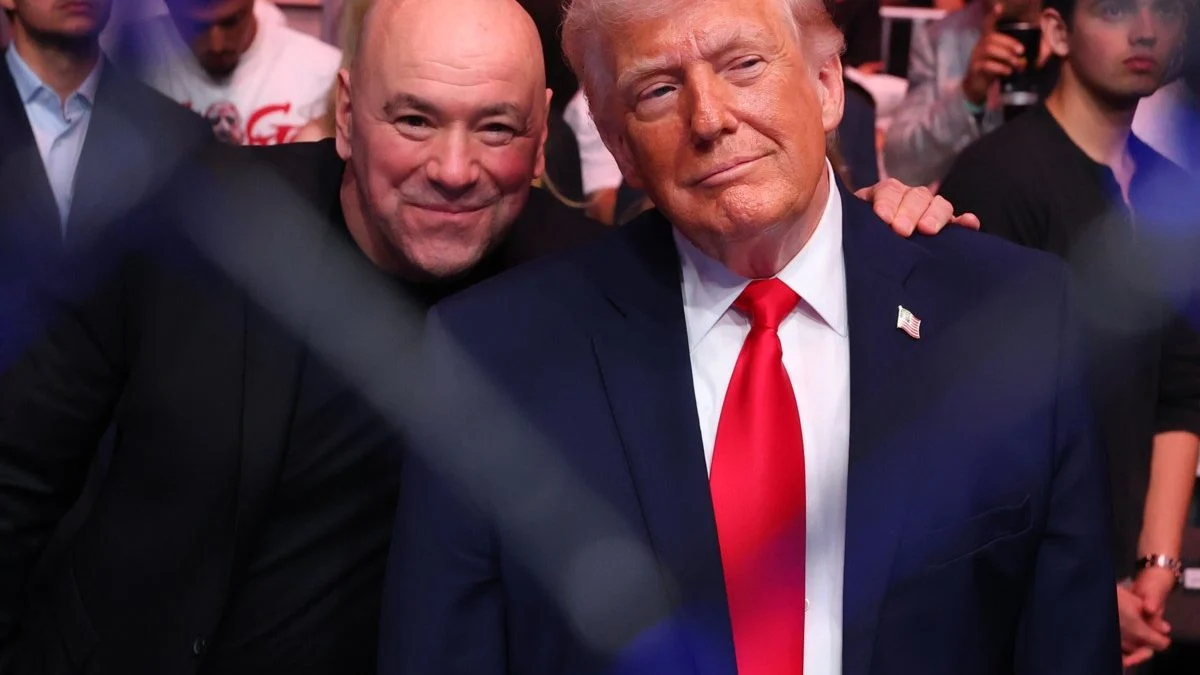
Dana White, president of Ultimate Fighting Championship, is urging U.S. President Donald Trump to reverse a controversial gambling tax provision that has triggered growing backlash across the sports betting and gaming industries.
In a letter addressed directly to Trump, White called on the administration to eliminate a recently approved cap on gambling loss deductions that was included in the president’s signature tax package, arguing that the rule unfairly penalizes bettors and threatens the legal gambling ecosystem that has rapidly expanded across the United States in recent years.
The issue quickly gained traction across financial and betting circles after news of the letter became public. On prediction market platform Kalshi, traders sharply increased their expectations that the law could eventually be reversed.
Before reports of White’s letter surfaced, Kalshi traders estimated only about a 20% chance that the gambling tax provision would be repealed this year. Those odds later surged to roughly 37% before easing back to around 29%, highlighting how influential political developments can immediately impact betting and prediction markets.
At the center of the controversy is a major change to how gambling losses are deducted for tax purposes.
Under the previous system, gamblers could fully deduct losses against winnings. For example, a person who won $5,000 during the year but also lost $5,000 would not owe taxes because the gains and losses effectively canceled each other out.
The new law changes that formula by capping gambling loss deductions at 90% of winnings. Under the same example, a bettor could now only deduct $4,500 in losses, leaving $500 in taxable income even though they technically broke even overall.
Critics argue the policy creates situations where gamblers may owe taxes despite not making any actual profit or, in some cases, face tax bills that exceed their real net winnings.
White praised Trump’s broader tax legislation in his letter but warned that this specific provision could damage both consumers and the rapidly growing regulated betting industry.
According to excerpts from the letter, White argued that the rule makes legal betting economically irrational for many players because taxpayers can end up paying taxes even during losing years.
He also warned that discouraging legal gambling could unintentionally push activity back toward offshore and unregulated betting markets that state regulators and licensed operators have spent years trying to eliminate.
The U.S. sports betting market has expanded dramatically since the Supreme Court struck down the federal ban on sports wagering in 2018. Since then, more than 35 states have legalized sports betting in some form, generating billions of dollars in tax revenue and creating thousands of jobs across casinos, sportsbooks, hospitality businesses, and technology companies.
According to industry estimates, Americans wagered more than $150 billion legally on sports last year alone, while online betting platforms continue to attract millions of active users nationwide.
Nevada, home to Las Vegas and UFC headquarters, remains one of the most influential gaming economies in the country, making the tax debate particularly sensitive for politicians and businesses tied to tourism and entertainment.
Several lawmakers from Nevada have already voiced support for reversing the deduction cap.
Catherine Cortez Masto, a Democratic senator from Nevada, has introduced legislation aimed at undoing the provision alongside Republican Senator Ted Cruz.
The bipartisan push reflects broader concern that the tax change could negatively affect casinos, sportsbooks, tourism businesses, and gaming related employment in states heavily dependent on the gambling economy.
Cortez Masto argued the provision harms not only bettors but also workers and businesses connected to the broader gaming industry, including hotel operators, restaurants, entertainment venues, and sportsbook employees.
Industry organizations are also stepping up pressure on Washington.
The American Gaming Association praised White for drawing national attention to the issue and emphasized that regulated gambling markets depend on policies that encourage consumers to remain within legal betting systems.
The gambling deduction cap was reportedly included in the larger tax package primarily for procedural reasons tied to Senate budget rules. According to tax policy experts, the adjustment helped the overall legislation satisfy reconciliation requirements needed to pass the Senate with only Republican support.
Although the change may appear technical, tax analysts say it could have significant consequences for professional gamblers, poker players, sports bettors, and high volume gaming participants who depend on deducting losses accurately to calculate taxable income.
The issue has also become a broader debate over how governments should regulate and tax the fast growing digital gambling economy.
Over the past several years, sports betting has become deeply integrated into mainstream American culture through partnerships involving professional sports leagues, media companies, streaming platforms, casinos, and technology firms.
Major leagues such as the NFL, NBA, UFC, and MLB now maintain official relationships with sportsbooks and betting operators, while live odds and betting content have become common across sports broadcasts and social media platforms.
As legal betting expands, lawmakers are increasingly balancing the economic benefits of gambling tax revenue against concerns involving addiction, regulation, consumer protection, and taxation fairness.
Prediction markets such as Kalshi have also become increasingly influential in measuring political and regulatory sentiment in real time. Traders often respond immediately to major developments involving legislation, elections, economic policy, and legal disputes.
The reaction to White’s letter demonstrated how closely investors and bettors are watching the future of gambling regulation under the Trump administration.
For now, the controversial deduction cap remains in place, but pressure from industry leaders, gaming states, and bipartisan lawmakers appears to be growing rapidly.
Whether the administration chooses to revise the law could have major implications not only for gamblers, but also for the future economics of America’s booming legal betting industry.
.webp)
Popular articles



Subscribe to unlock premium content
AI-Curated Luxury Shopping Experiences Transform the Market

Limited-Run Anime Originals Redefining Global Entertainment

Micro-Vertical Farming Becomes Corporate Gold
.png)
AI-Curated Luxury Shopping Experiences Transform the Market
Limited-Run Anime Originals Redefining Global Entertainment
AI-Curated Luxury Shopping Experiences Transform the Market


