Claude Tops Apple’s Free App Charts as Government Dispute Puts Anthropic in the Spotlight

Claude Tops Apple’s Free App Charts as Government Dispute Puts Anthropic in the Spotlight
By
Leah Rosenfeld
Last updated:
March 2, 2026
First Published:
March 2, 2026

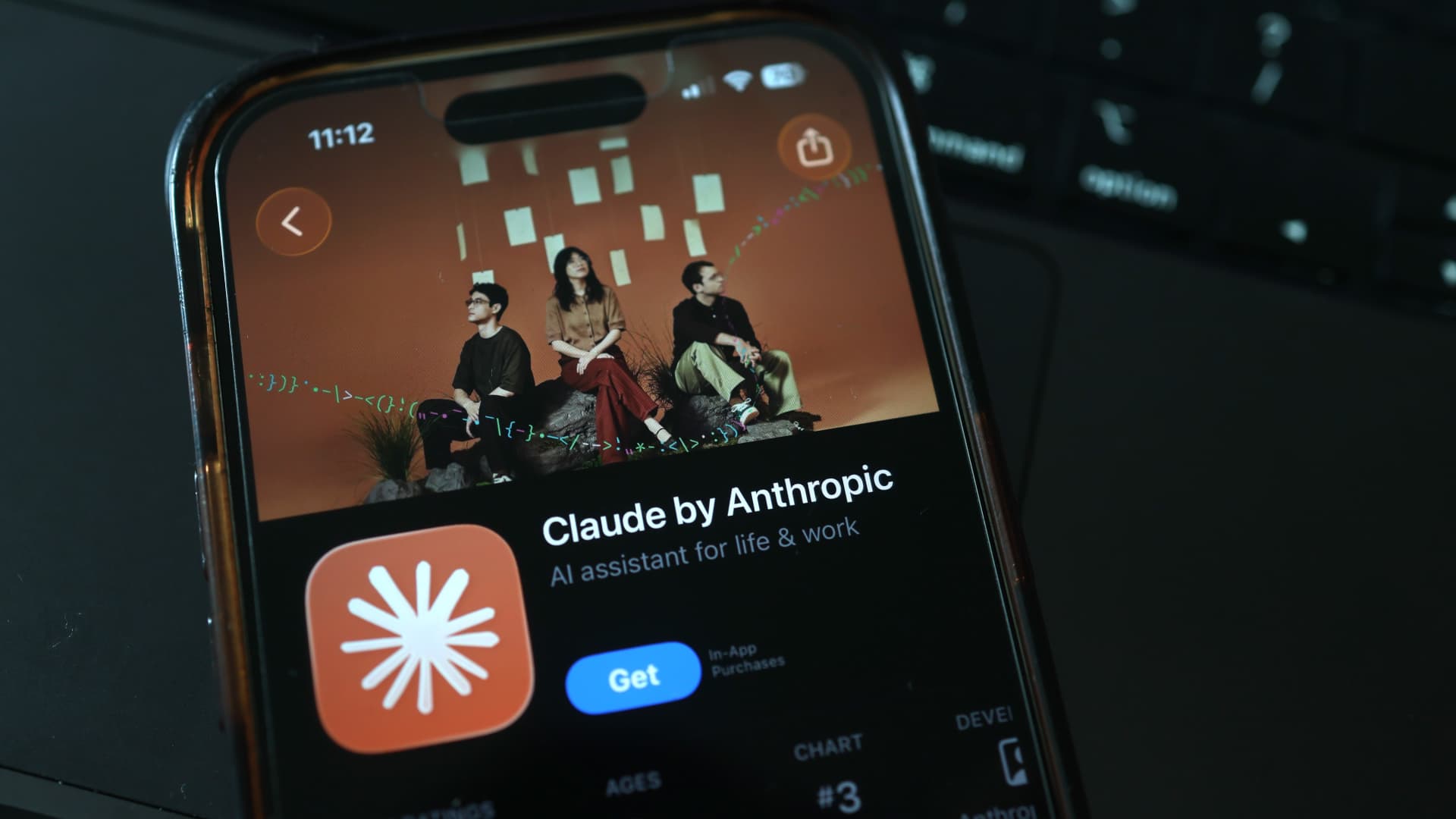
In this illustration, the Claude AI app is seen in the app store on a phone on February 16, 2026 in New York City. According to reports from the Wall Street Journal, the Defense Department used Anthropic’s Claude Ai, via its Palantir contract, to help with the attack on Venezuela and capture former President Nicolás Maduro.
Michael M. Santiago | Getty Images
Anthropic’s AI assistant Claude has climbed to the top of Apple’s U.S. free app rankings, marking a significant milestone for the fast-growing startup. The surge in downloads comes just days after a high-profile dispute between the company and the U.S. Department of Defense thrust Anthropic into the national spotlight.
By Saturday evening, Claude had reached the No. 1 position on the U.S. App Store’s list of most downloaded free apps, surpassing OpenAI’s ChatGPT at No. 2 and Google’s Gemini at No. 4. The shift in rankings signals how rapidly consumer interest can respond to political controversy and media attention in the AI sector.
Political Tensions Amplify Public Attention
The app’s ascent follows escalating tensions between Anthropic and the Pentagon over how its large language models could be used. According to public statements, Anthropic declined to permit certain applications of its AI systems related to mass domestic surveillance or fully autonomous weapons. That stance triggered a backlash from some government officials.
U.S. Defense Secretary Pete Hegseth reportedly requested that Anthropic be labeled a supply-chain risk to national security, a move that could restrict defense contractors from deploying the company’s tools. Meanwhile, Donald Trump publicly criticized the startup on social media, intensifying the debate.
Anthropic CEO Dario Amodei responded by emphasizing that the company’s technology provides substantial value while maintaining that the Defense Department has the authority to select vendors aligned with its objectives. The episode has ignited broader discussion about ethical boundaries in AI deployment and the role of private companies in national security infrastructure.
A Dramatic Rise in Downloads
Prior to the controversy, Claude had been steadily gaining traction but remained outside the very top tier of consumer AI apps. On Jan. 30, the iOS version ranked No. 131 among free U.S. apps. Over the following weeks, it climbed into the top 20 before vaulting to No. 1.
Analytics data indicates that ChatGPT had held the leading position for much of the previous month, reflecting its dominant market presence. However, Anthropic’s recent spike highlights how rapidly competitive dynamics can shift in the consumer AI space.
The company reports that its free user base has grown by more than 60 percent since January. Daily sign-ups have tripled since November, reaching record highs this week. Paid subscriptions to Claude Pro have more than doubled this year, signaling that increased visibility is translating into monetization.
Competitive Landscape in Generative AI
Anthropic, founded in 2021 by former OpenAI researchers, has increasingly positioned itself as a provider of advanced AI models for coding, enterprise applications, and conversational use. While it remains smaller than OpenAI in overall reach, its growth trajectory has been notable.
OpenAI’s ChatGPT now reportedly serves more than 900 million weekly users globally, underscoring the scale gap between the two companies. In response to rising competition, OpenAI has deepened partnerships with major consulting firms and expanded enterprise integrations.
At the same time, Google continues to integrate its Gemini models across search, cloud services, and consumer products, creating a multi-front AI race among U.S.-based technology leaders.
Media Visibility and Cultural Momentum
Anthropic’s rise has also been amplified by broader cultural moments. High-profile social media posts referencing Claude’s subscription tier circulated widely over the weekend, adding to the visibility generated by the government dispute.
In the digital economy, controversy can serve as an accelerant. Increased news coverage often leads to surging search queries, app downloads, and trial sign-ups. For AI companies competing for mindshare in an increasingly crowded marketplace, brand recognition can be as critical as technical capability.
What This Means for the AI Industry
Claude’s temporary leap to the top of Apple’s rankings illustrates how closely intertwined technology, politics, and public perception have become. The episode highlights several key industry trends:
- Ethical boundaries around AI deployment are moving into mainstream political debate
- Government procurement decisions can influence private-sector brand dynamics
- Consumer adoption of AI tools remains highly sensitive to media narratives
- The generative AI market is still fluid, with leadership positions capable of shifting rapidly
Whether Claude can maintain its top ranking remains to be seen. Sustained growth will depend on product performance, enterprise partnerships, and ongoing trust from users.
For now, Anthropic has achieved something significant: converting a moment of political friction into unprecedented consumer visibility in one of the most competitive technology sectors in the world.

Popular articles


Subscribe to unlock premium content
London’s Gourmet Playgrounds

From Bean to Buzz in Thailand

The Secret Life of Pop-Up Luxury Restaurants in Paris

London’s Gourmet Playgrounds
From Bean to Buzz in Thailand
London’s Gourmet Playgrounds